Sixty-four percent of American consumers have thrown away perfectly good food simply because they didn't know what to do with it. That single data point — from a 1,000-person survey commissioned by Ziploc and conducted in July 2026 — is the engine behind Surprise Seconds, a joint campaign launched September 3 with Too Good To Go, the surplus-food marketplace platform with 120 million registered users and 200,000 active food-business partners across 20 countries.
For restaurant operators, the news matters less as a consumer lifestyle story and more as a signal about where CPG and surplus-food tech brands are placing their co-marketing weight — and which restaurant partners they want standing next to them.
The Campaign Architecture
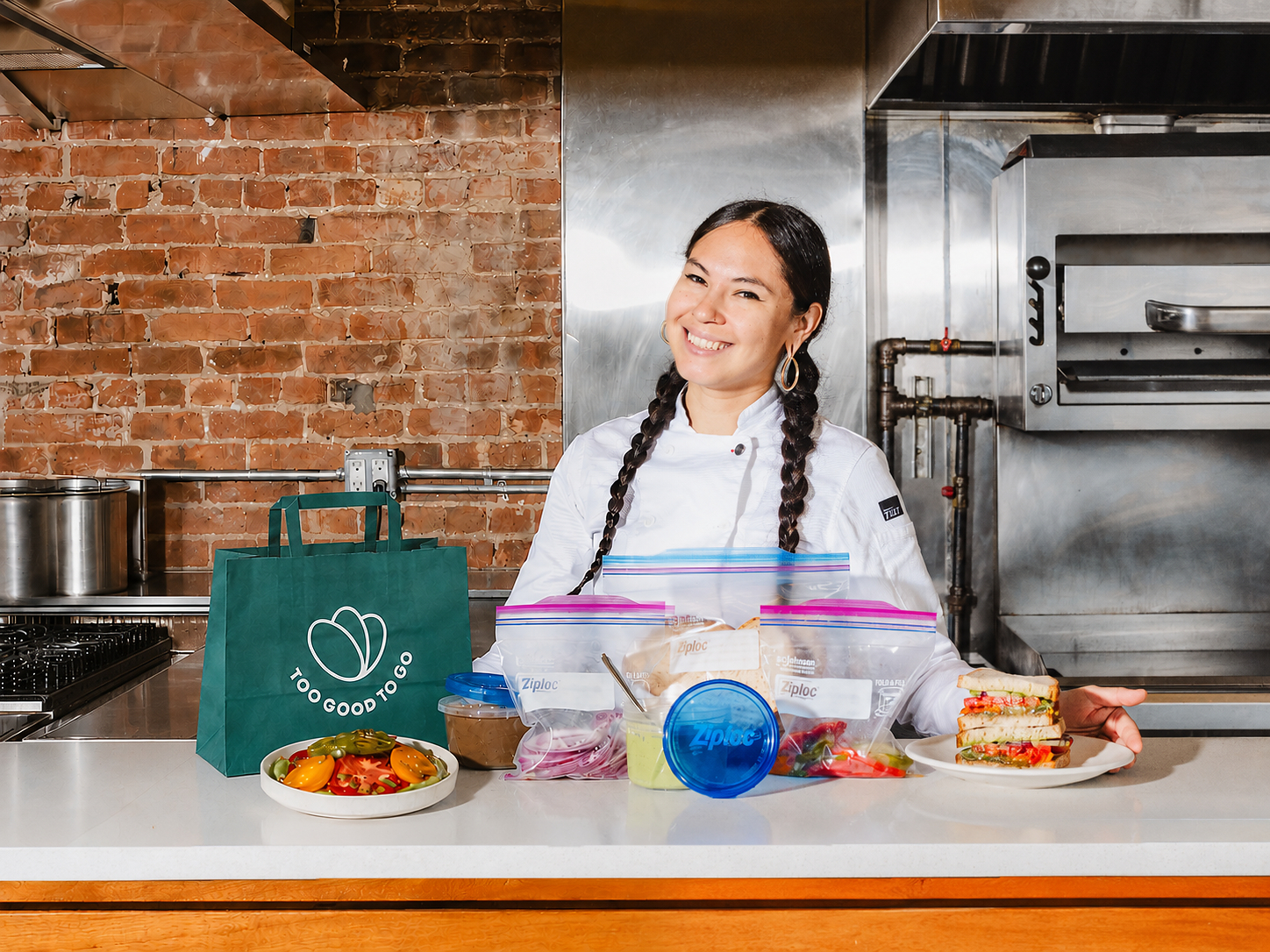
Surprise Seconds runs across three activation layers. A digital hub at ziploc.com/food-for-thought anchors the campaign with recipes, storage guidance, and chef content. An out-of-home series called First And Seconds shows food moving from its original form through proper storage and into a reimagined dish, with QR codes routing to the hub. The third layer is a September 30 food-truck event in New York City — Wheel of Sandwiches — led by chef Yara Herrera, chef-partner at Hellbender, the Mexican American restaurant in Ridgewood, Queens. Herrera reimagines dishes from participating Too Good To Go restaurant partners as original sandwiches, using the leftover-as-ingredient framework to make the concept visceral rather than theoretical.
The social-content split across Ziploc, Too Good To Go, Herrera, and participating creator accounts is designed to serve distinct audience segments simultaneously: home cooks through Ziploc's channels, restaurant-adjacent consumers through Too Good To Go's app ecosystem, and food-culture followers through Herrera's reach.
What Operators Should Watch
The survey data has direct relevance for foodservice. If 91.0% of consumers say avoiding food waste matters to them but only 26.0% actually transform leftovers into new meals, there is a documented gap between intent and behavior — and restaurants are positioned inside that gap every time a guest takes food home. Too Good To Go's model already converts that gap into a transactional product (Surprise Bags sold at a discount through its app), but Surprise Seconds extends the narrative further down the value chain, into the home kitchen.
For operators currently partnered with Too Good To Go, participation in campaigns like this represents earned media and brand visibility that doesn't require a separate marketing budget. For operators evaluating surplus-food platforms, Too Good To Go's willingness to co-fund brand campaigns with CPG partners like SC Johnson — Ziploc's parent, founded in 1886 — suggests the platform is investing in demand-side consumer education, not just supply-side food recovery. That changes the value proposition: partners aren't just moving leftover inventory, they're being embedded in a funded content and OOH campaign ecosystem.
The out-of-home component is also worth noting for operators thinking about contextual advertising and geo-fenced media. QR-code-activated OOH tied to a digital hub is a playbook that translates directly to restaurant-level campaigns — particularly for brands trying to connect physical touchpoints with measurable digital attribution. The mechanics Ziploc is deploying here are the same ones operators can use to drive repeat visits or promote seasonal menu changes.
For food and beverage brands evaluating co-marketing and retail readiness strategies, the Ziploc-Too Good To Go structure is a replicable template: anchor on a consumer insight with survey data, add a credible culinary voice, layer in a live activation, and distribute across owned, earned, and paid channels simultaneously.
Written by Michael Politz, Author of Guide to Restaurant Success: The Proven Process for Starting Any Restaurant Business From Scratch to Success (ISBN: 978-1-119-66896-1), Founder of Food & Beverage Magazine, the leading online magazine and resource in the industry. Designer of the Bluetooth logo and recognized in Entrepreneur Magazine's "Top 40 Under 40" for founding American Wholesale Floral, Politz is also the Co-founder of the Proof Awards and the CPG Awards and a partner in numerous consumer brands across the food and beverage sector.