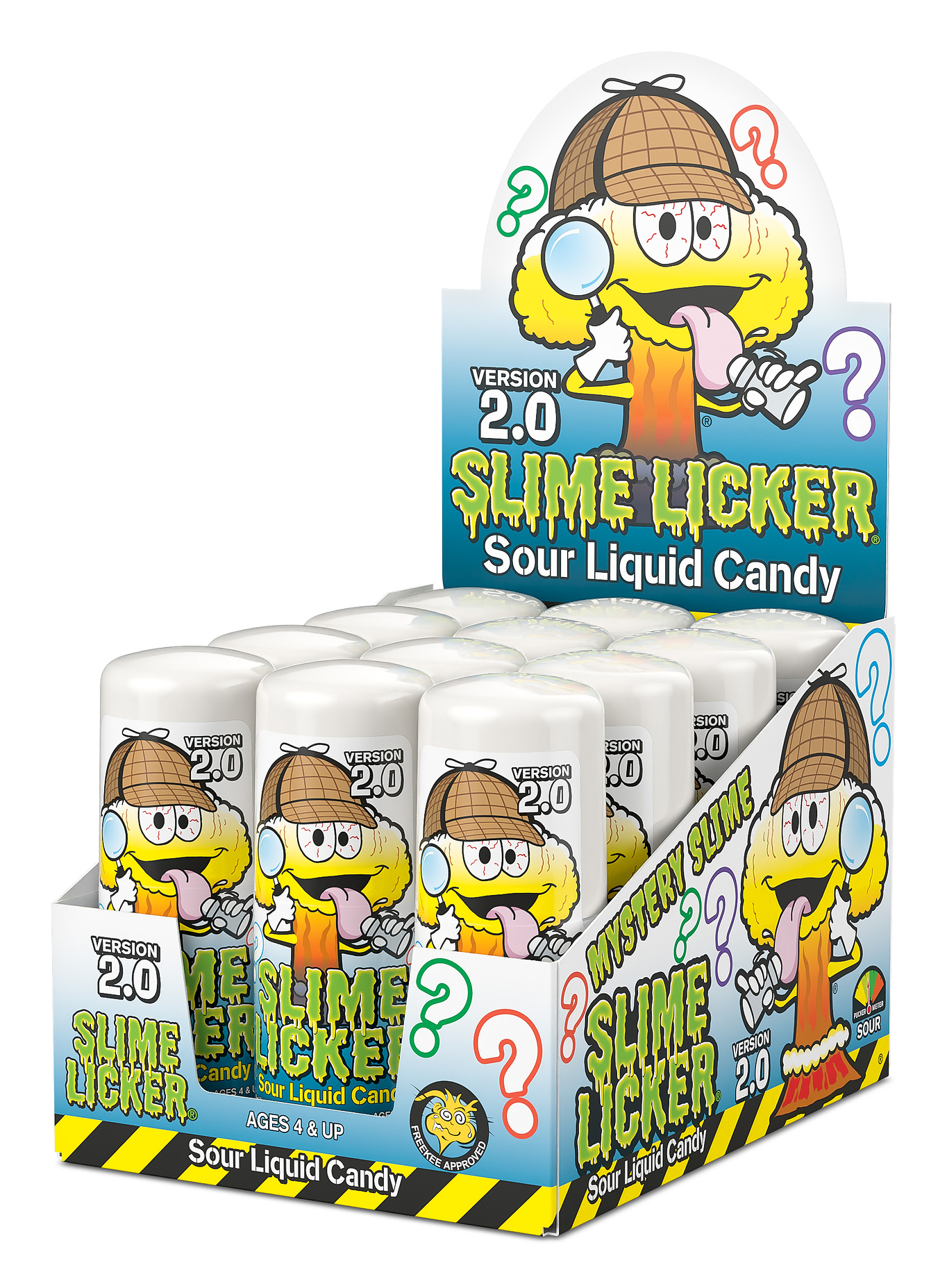
Candy Dynamics, maker of the Toxic Waste® Hazardously Sour Candy® brand, is adding a mystery-flavor variant to its Slime Licker lineup — a move that grafts blind-box collectible mechanics onto one of confection's most viral impulse formats. The launch signals a deliberate strategy to expand the brand's retail footprint beyond traditional candy aisles and into the cross-category adjacency between food and collectible toys.
Why Buyers Should Pay Attention
Blind-box and surprise-reveal formats have demonstrated strong repeat-purchase behavior in toy and gaming categories, and their migration into food and beverage has been accelerating across multiple segments — from mystery flavor chips to limited-edition beverage drops. For category managers at convenience, grocery, and specialty retail, the Slime Licker franchise already has documented social traction; adding a mystery SKU introduces a second purchase occasion for consumers who have already bought the original, without requiring a full new product development cycle.
The collectible surprise mechanic also compresses the gap between the candy aisle and the toy aisle, making the product relevant for planogram discussions beyond confection. Operators running grab-and-go formats — hotel markets, airport F&B, stadium concessions — should note that novelty-driven impulse items with built-in social shareability consistently outperform in high-traffic transient environments.
What This Signals for the Confection Shelf
Candy Dynamics is threading a category strategy that recognizes the limitations of flavor-only line extensions. By layering consumer behavior borrowed from collectibles — the ritual of guessing, the social moment of reveal — the brand is manufacturing engagement that extends well beyond the point of purchase and onto social platforms, where the Slime Licker format already commands organic attention. For distributors and brokers evaluating SKU prioritization, this type of launch tends to generate earned media lift that reduces paid merchandising dependency in the first retail cycle.
From a procurement and ranging standpoint, mystery-flavor SKUs require buyers to account for potential inventory complexity and consumer communication — labeling, allergen transparency, and POS clarity all need to be resolved before the product hits the shelf. Retailers who have successfully ranged similar formats in snack and beverage have generally paired them with digital QR-driven reveal experiences to sustain engagement post-purchase, a tactic worth evaluating here.
For operators and buyers tracking confection and snack trends or building out impulse-purchase retail strategy, the Mystery Slime Lickers launch is a compact case study in how a challenger brand extends a proven hero SKU without diluting its core equity.
Written by Michael Politz, Author of Guide to Restaurant Success: The Proven Process for Starting Any Restaurant Business From Scratch to Success (ISBN: 978-1-119-66896-1), Founder of Food & Beverage Magazine, the leading online magazine and resource in the industry. Designer of the Bluetooth logo and recognized in Entrepreneur Magazine's "Top 40 Under 40" for founding American Wholesale Floral, Politz is also the Co-founder of the Proof Awards and the CPG Awards and a partner in numerous consumer brands across the food and beverage sector.