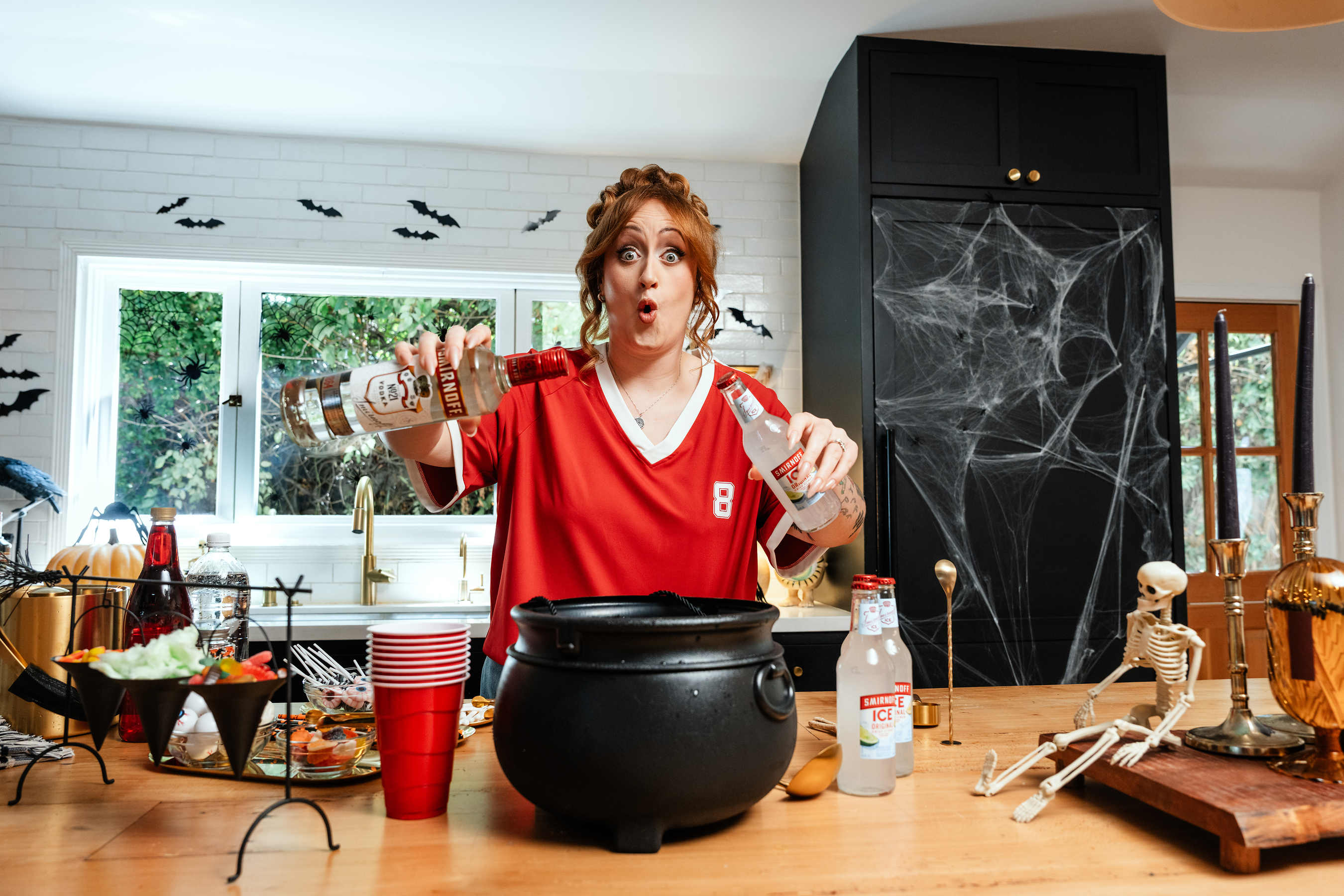
Smirnoff Ice has signed comedian, podcast host, and digital creator Brittany Broski to a multi-phase brand partnership that begins with Halloween and extends through the holiday season. The deal includes original content, a limited-edition bottle costume available at Shop.Smirnoff.com, a live Halloween bash hosted by Broski, and additional merchandise drops — making it one of the more structured creator campaigns the flavored malt beverage (FMB) category has seen this cycle.
What the Deal Covers
The partnership structure is worth unpacking for beverage operators and brand marketers alike. Rather than a single sponsored post or short-run activation, Diageo's team gave Broski creative latitude across the full content arc — original scripted material, costume-driven merchandise, and a live event that pulls in other creators and celebrities. Fergus McCarthy, Director of Smirnoff Ice, described the approach as giving the creator "the keys" to develop content that only the pairing could produce. That framing — creator as co-developer rather than paid placement — reflects a broader shift in how alcohol brands are allocating influencer budgets heading into the key Q4 selling season.
Broski's built audience skews toward Gen Z and younger millennial consumers, a cohort that has driven renewed interest in the FMB segment since Smirnoff Ice's original 1999 launch helped define the category. The brand's current portfolio includes Smirnoff Ice Smash, Shorties, and zero-sugar extensions, which gives the campaign natural hooks for product discovery beyond the core SKU.
Signals for Beverage Brand Operators
For operators sourcing alcohol brands — on-premise buyers, retail category managers, and event venue programmers — this kind of multi-touchpoint creator campaign is increasingly the table stakes expectation for brands competing for shelf and tap placement. Brands that arrive with documented content velocity, live event proof-of-concept, and merch that extends the occasion occasion signal are demonstrating retail readiness beyond the product itself.
The Halloween bash format — a creator-hosted, invite-only event with a costume contest — also functions as earned media infrastructure. Images and video from a credible live activation generate press placement and social content simultaneously, compressing what used to require separate PR and influencer budgets into a single production investment. Beverage brands launching into competitive FMB or RTD categories should note that the live-event-as-content-engine model is now a standard brand-launch tool, not a premium add-on.
For operators building out private event programming or seasonal F&B promotions, the Smirnoff Ice activation illustrates how supplier-funded content and co-branded events can offset venue marketing costs — a collaboration model worth raising directly with distributor and brand reps during Q4 planning conversations. See how other brands are structuring supplier partnerships for on-premise growth and what beverage brand launch packages typically include when distributors evaluate new entrants.
Written by Michael Politz, Author of Guide to Restaurant Success: The Proven Process for Starting Any Restaurant Business From Scratch to Success (ISBN: 978-1-119-66896-1), Founder of Food & Beverage Magazine, the leading online magazine and resource in the industry. Designer of the Bluetooth logo and recognized in Entrepreneur Magazine's "Top 40 Under 40" for founding American Wholesale Floral, Politz is also the Co-founder of the Proof Awards and the CPG Awards and a partner in numerous consumer brands across the food and beverage sector.