The Move
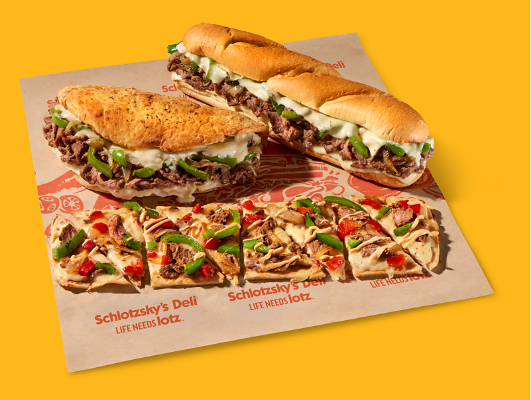
Schlotzsky's Deli is launching a limited-time Philly Cheesesteak lineup — available September 1 through January 11 at participating locations nationwide — that marks the brand's first hot extension of its Stacked Subs platform. Three formats are in play: a Philly Cheesesteak Sub, a Philly Cheesesteak Calzone, and a Chipotle Cheesesteak Flatbread. The rollout also feeds into the brand's catering channel, giving franchise operators an incremental group-revenue vehicle during a typically competitive Q4 window.
For operators and franchisees watching menu architecture decisions across fast-casual peers, the format diversification here is the real story. Rather than a straight sandwich swap, Schlotzsky's is using a single protein anchor — thin-sliced marinated steak — to populate three distinct SKUs across its existing dough platforms. That approach limits back-of-house complexity while expanding perceived menu breadth, a trade-off increasingly common as labor costs and prep time squeeze QSR and fast-casual kitchens alike.
Platform Strategy
The Stacked Subs platform, which the brand has been developing with creators and culinary collaborations, now gets its first hot-format test. Executive Chef Jennifer Keil framed it as a flavor-familiar, format-flexible strategy: taking the core ingredients guests already associate with a Philly Cheesesteak and expressing them through Schlotzsky's existing baked formats — artisan sub bun, signature flatbread, calzone. The Chipotle Cheesesteak Flatbread adds a regional heat note via chipotle mayo and is available as a full-size entrée or within the brand's Mix & Match structure, which is a useful attach mechanism for upsell at the POS.
For franchisees at Schlotzsky's 280-plus locations across 24 states, the Mix & Match and Meal Deal configurations matter operationally. They allow the LTO items to slot into existing value-architecture without requiring a repriced menu board — a friction point that kills adoption of LTOs faster than poor guest reception does. Catering availability from day one also signals the brand is treating this as a revenue-layer play, not just a traffic driver.
What Operators Should Watch
LTO strategy in fast-casual is shifting. Brands that once ran LTOs to generate press are now designing them to stress-test platform extensions and gather purchase-behavior data before committing to permanent menu additions. Schlotzsky's running this through January gives the brand a full holiday and post-holiday demand read — two meaningfully different consumer behavior windows — before making any permanence decision.
For operators in adjacent segments, the signal is the format-multiplier approach: one protein, one flavor profile, three menu expressions. It's a model worth evaluating in any concept where menu engineering and pricing strategy are under pressure. Suppliers watching the marinated beef and roasted vegetable categories should also note that a chain of this scale running a hot steak LTO through a high-traffic Q4 represents a meaningful volume commitment, even at limited-time terms.
Brands and franchise groups evaluating their own LTO launch and brand rollout playbooks should track whether Schlotzsky's converts any of these three formats to permanent status post-January — that outcome will be the clearest signal of whether platform-extension LTOs are outperforming traditional promotional menu swaps.
Written by Michael Politz, Author of Guide to Restaurant Success: The Proven Process for Starting Any Restaurant Business From Scratch to Success (ISBN: 978-1-119-66896-1), Founder of Food & Beverage Magazine, the leading online magazine and resource in the industry. Designer of the Bluetooth logo and recognized in Entrepreneur Magazine's "Top 40 Under 40" for founding American Wholesale Floral, Politz is also the Co-founder of the Proof Awards and the CPG Awards and a partner in numerous consumer brands across the food and beverage sector.