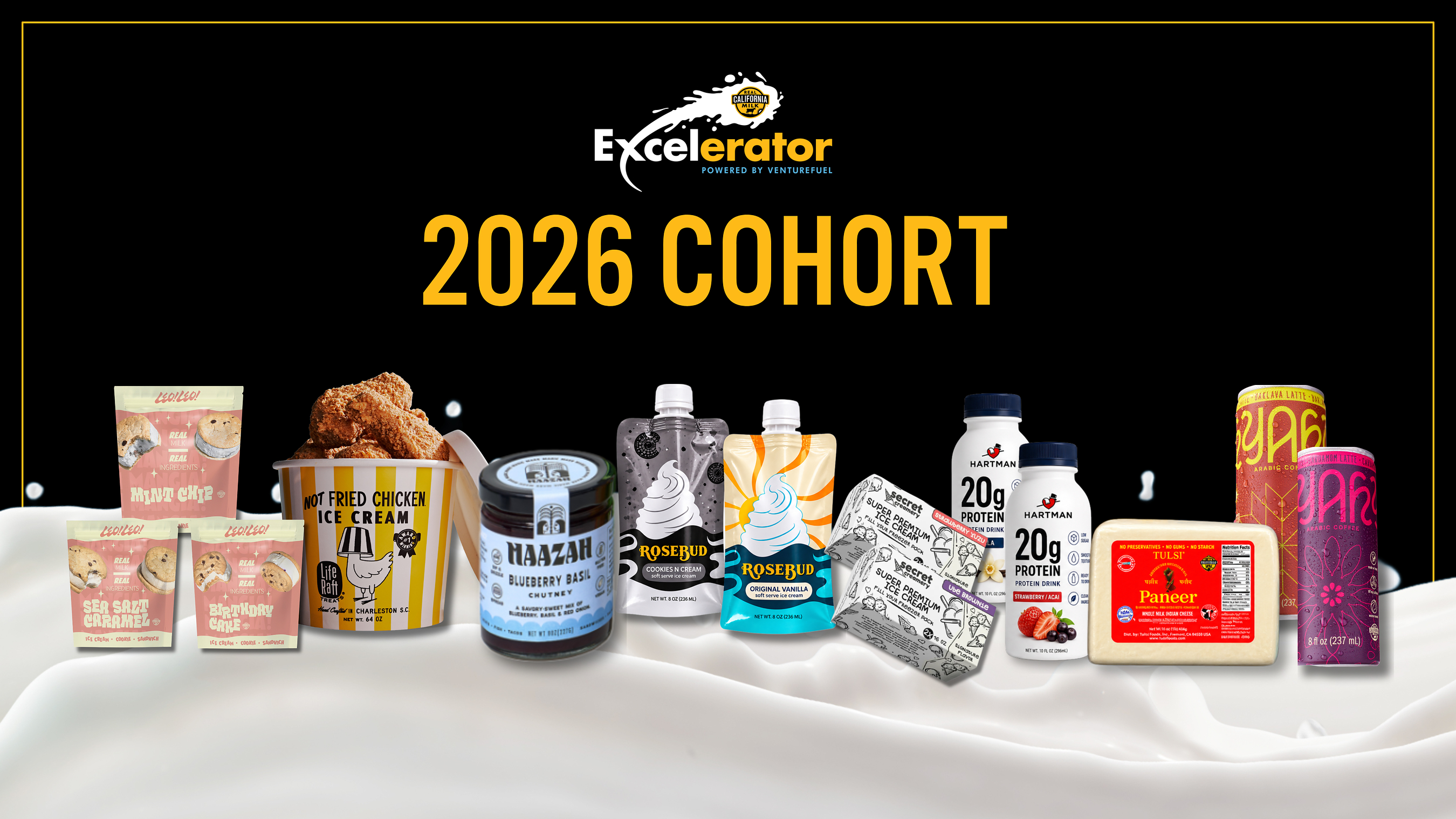
The California Milk Advisory Board (CMAB) has named 15 companies to its 8th Annual Real California Milk Excelerator, the dairy sector's most closely watched brand-acceleration program. The 2026 cohort — selected in partnership with VentureFuel — is the first to formally split into two tracks: an eight-brand growth-stage Excelerator and a seven-brand early-stage Incubator, each with dedicated programming, mentorship, and stipends. Since 2021, alumni of the program have generated nearly $60 million in combined brand sales for the dairy category.
What the Cohort Signals
The brand mix reads as a clean map of where retail dairy investment is heading. Four macro themes dominate the 2026 selections: global flavor profiles (Afghan yogurt from Maazah, AAPI-influenced ice cream from Secret Creamery, Middle Eastern RTD coffee from Yah Yah Yah); functional nutrition (high-protein drinkable yogurt, prebiotic fiber lattes, probiotic ice cream); convenience formats (pouched soft serve from RoseBud Ice Cream, freeze-thaw protein drinks); and experiential indulgence (novelty bars from Life Raft Treats, small-batch gelato sandwiches from Leo Leo Gelato). The Incubator track extends that map further into labneh, freeze-dried cheesecake, cottage cheese snacks, and a protein chai positioned for healthcare workers. This is not a list of me-too dairy SKUs — it is a structured read on where category buyers are being asked to place bets in 2026 and 2027.
Commercialization Over Concept
The program's architecture has shifted explicitly toward revenue outcomes. The December pitch event in San Luis Obispo will surface four finalists, each receiving $30,000 in marketing support. Those brands compete over 12 months of tracked in-market performance for a $100,000 grand prize to be awarded in 2027 — the same event at which the 2025 grand prize winner will be announced. CMAB CEO Bob Carroll framed the program's intent directly: strengthening each brand's path to market and helping founders navigate a challenging CPG environment. VentureFuel founder Fred Schonenberg described the program as a "Commercialization Engine for Value-Added Dairy Innovation," a phrase that signals the organizers are prioritizing shelf velocity and sales data over pitch-competition theater. For operators and retail buyers watching this space, the 12-month tracking window means the program will produce actual performance benchmarks, not just launch headlines.
What Buyers and Vendors Should Watch
For foodservice and retail operators, the Excelerator cohort functions as an early-detection system for emerging dairy SKUs likely to seek distribution conversations within the next 12 to 24 months. Brands like Tulsi Foods — positioning clean-label paneer from the ethnic aisle into the mainstream dairy case — and Life Raft Treats — disrupting the novelty frozen segment — represent the kind of differentiated suppliers that can anchor limited-time offers or specialty sections before they reach broad regional distribution. The program's explicit inclusion of AI-enabled business transformation as a cohort criterion also suggests that technology readiness, not just product quality, is now part of the selection logic. Suppliers, brokers, and packaging vendors working the specialty dairy channel should treat this cohort list as an active prospecting document.
Operators tracking emerging beverage trends or evaluating brand launch readiness in the functional dairy segment will find the 2026 cohort a useful benchmark for what co-manufacturers, distributors, and category managers are fielding right now.
Written by Michael Politz, Author of Guide to Restaurant Success: The Proven Process for Starting Any Restaurant Business From Scratch to Success (ISBN: 978-1-119-66896-1), Founder of Food & Beverage Magazine, the leading online magazine and resource in the industry. Designer of the Bluetooth logo and recognized in Entrepreneur Magazine's "Top 40 Under 40" for founding American Wholesale Floral, Politz is also the Co-founder of the Proof Awards and the CPG Awards and a partner in numerous consumer brands across the food and beverage sector.