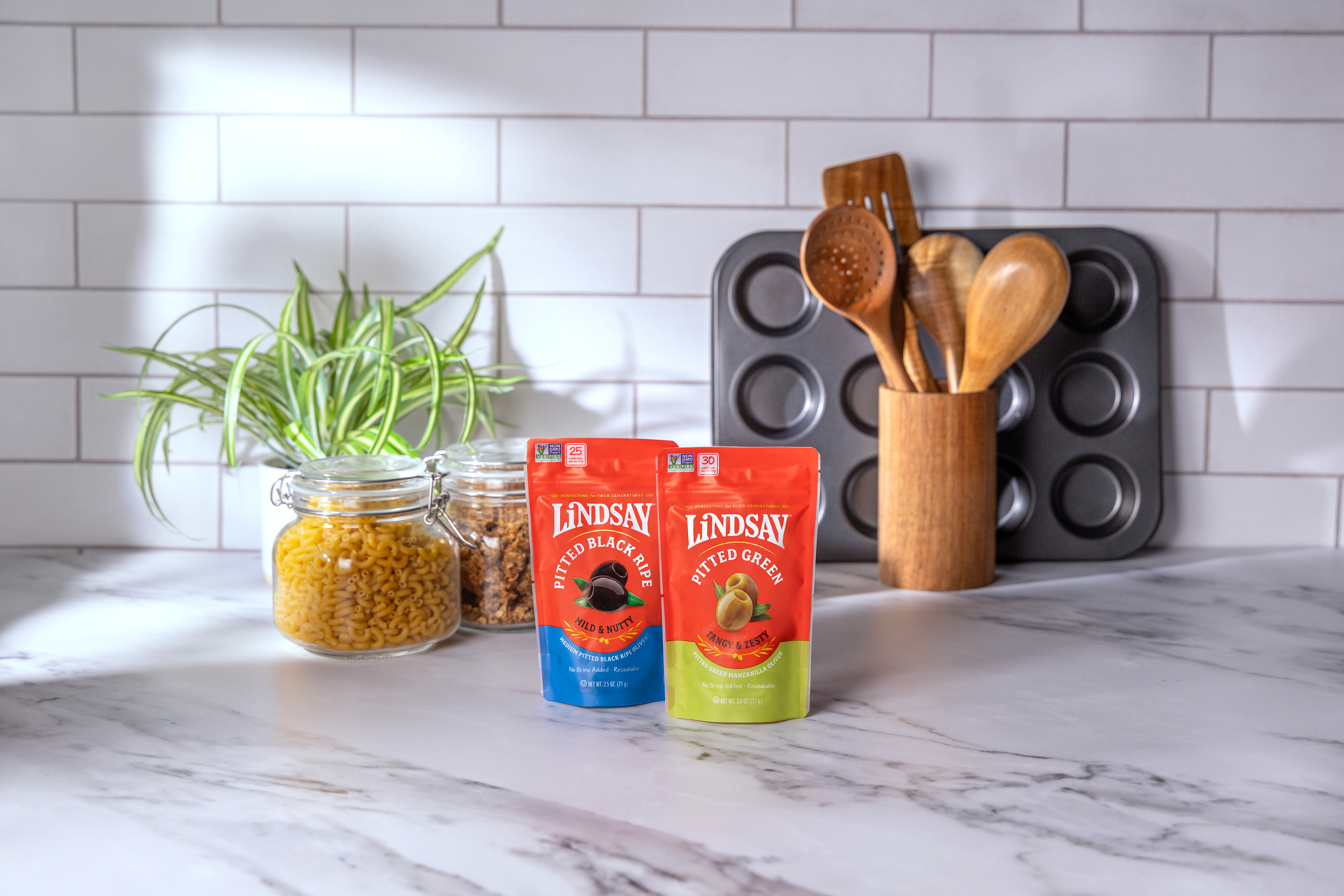
Bell-Carter Foods is moving Lindsay Olives beyond the can. The California producer — one of the largest table olive suppliers in the U.S. — has launched Lindsay Olive Pouches, 2.5 oz resealable single-serve packs available in Black Ripe Pitted Olive and Spanish Pitted Green Olive varieties. The pouches are priced at $2.99–$3.49 and are currently on shelf at Albertsons/Safeway, ShopRite, and Food Lion locations nationwide.
For foodservice buyers and retail category managers, the format move is worth noting. No brine to drain, resealable closure, shelf-stable, single-serve weight — this is a classic pantry brand engineering its way into snack sets and lunchbox occasions without cannibalizing its existing can business. It also positions Lindsay squarely against the growing ambient snacking segment, where nuts, dried fruit, and charcuterie components have been gaining linear feet for the past several years.
Why the Format Matters
The pouch format removes the primary friction point that has historically kept olives out of on-the-go and desk-side occasions: the brine. Resealable packaging also allows partial use, which matters for operators building snack boards or small-plate programs where portion control and waste reduction are real cost concerns. Scott McCoy, Vice President at Bell-Carter Foods, framed the launch as an extension of how the brand fits into daily eating: "Lindsay Olive Pouches build on the flavors people already know and love while creating more opportunities to enjoy olives throughout the day."
The retail footprint — Albertsons/Safeway, ShopRite, Food Lion — covers significant geographic and demographic range, from the Northeast to the Southeast and across the West. That distribution pattern suggests Bell-Carter is testing velocity across distinct shopper profiles before a potential wider rollout. Buyers at independent grocers, club channels, or natural-and-specialty chains should expect a pitch deck to follow if initial velocity supports it.
Signals for Operators and Buyers
For foodservice and hospitality operators, the pouch format opens a practical sourcing option for grab-and-go snack programs, amenity setups, or catering add-ons where individual olive portions have been logistically awkward. Hotel F&B directors building grab-and-go cases or stadium concession operators running Mediterranean snack SKUs now have a shelf-stable, individually portioned olive option from a recognized consumer brand — which simplifies both procurement and guest-facing presentation.
This launch also reflects a broader trend in brand launch strategy where legacy food brands are using convenience packaging as a vehicle to access new retail adjacencies — snack aisles, checkout zones, club multipacks — without reformulating the core product. It is a lower-risk innovation lever than new flavors or new product lines, and one that category buyers at major chains have been receptive to as they look to differentiate ambient snack sets. Operators tracking grocery and retail trends should watch whether the pouch format migrates into foodservice-specific SKUs or club-channel multipacks as Bell-Carter assesses early sell-through data.
Written by Michael Politz, Author of Guide to Restaurant Success: The Proven Process for Starting Any Restaurant Business From Scratch to Success (ISBN: 978-1-119-66896-1), Founder of Food & Beverage Magazine, the leading online magazine and resource in the industry. Designer of the Bluetooth logo and recognized in Entrepreneur Magazine's "Top 40 Under 40" for founding American Wholesale Floral, Politz is also the Co-founder of the Proof Awards and the CPG Awards and a partner in numerous consumer brands across the food and beverage sector.