The Move
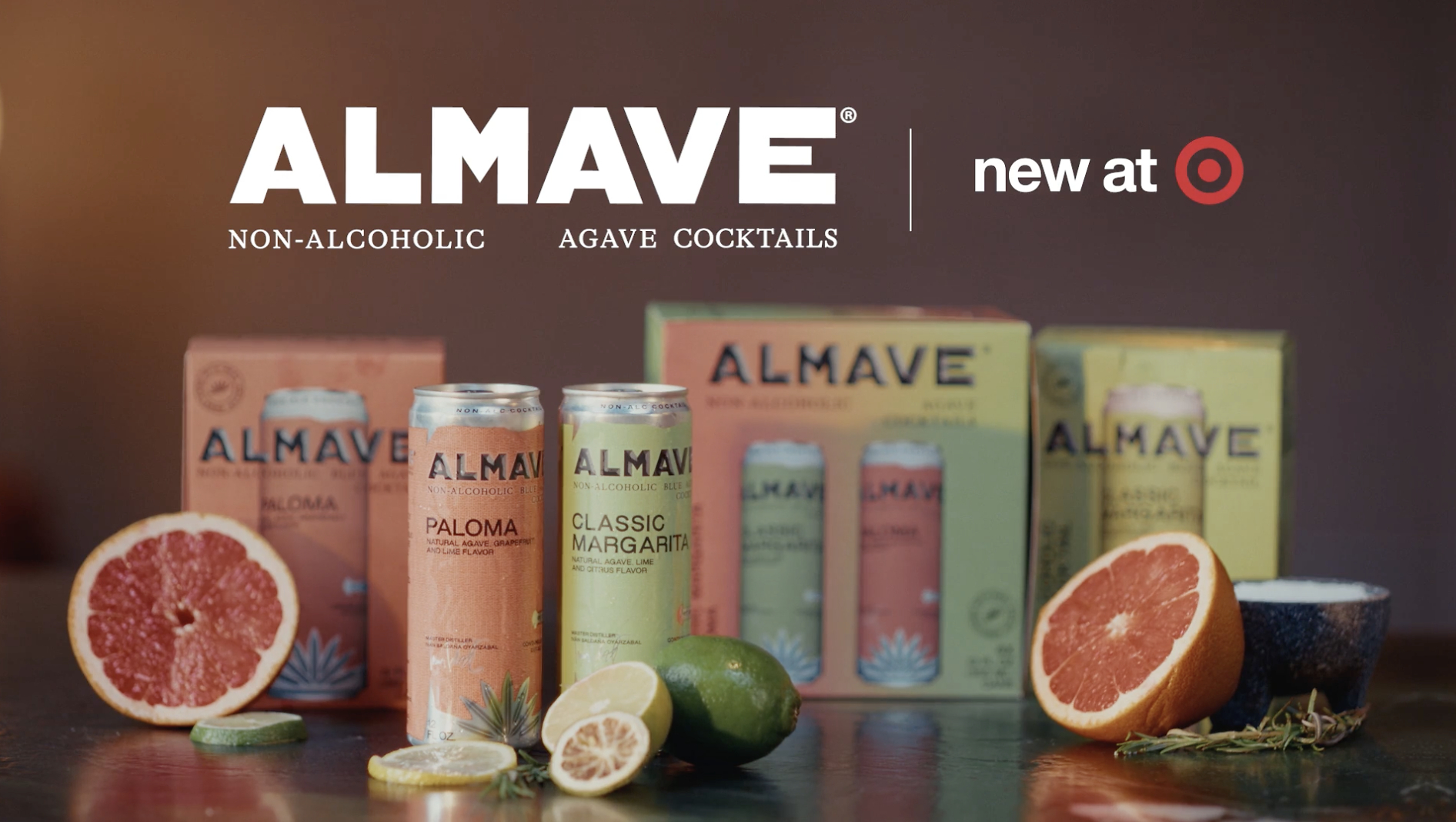
Almave, the non-alcoholic blue agave spirit co-founded by Lewis Hamilton and Casa Lumbre Master Distiller Dr. Iván Saldaña, is now on Target shelves in ready-to-drink format — a Classic Margarita and a Paloma, both zero-proof and built on real blue agave sourced from the highlands of Jalisco, Mexico. Four-packs retail at $12.99 and a six-pack variety (three cans of each) at $17.99. The launch is Target-exclusive at launch, timed to the holiday selling window.
For operators and buyers tracking the non-alc segment, this is less a celebrity-brand headline and more a channel-strategy signal: a premium non-alc spirit that built its credibility through on-premise placements and bottled expressions — Blanco, Ámbar, and Humo — is now betting that mass retail is the volume lever. The RTD format removes the bartender from the equation and puts the brand directly in the consumer's hands at a $3-per-can accessible price point.
Why Retail Timing Matters
The holiday window is not incidental. Non-alc category velocity historically accelerates in Q4 as hosts look for inclusive beverage options that perform at the table without requiring a skilled pour. By anchoring to margarita and paloma formats — the two highest-recognition agave cocktails among U.S. consumers — Almave is competing on familiarity rather than novelty. That's a deliberate shelf-consideration play: a buyer who already reaches for a Paloma mixer understands the category immediately.
For beverage directors and food-and-beverage procurement teams at hotel properties, event venues, and casual dining operators, the Target placement is worth noting as a velocity indicator. If the SKUs earn repeat purchase at mass retail, it validates consumer willingness to pay a premium for non-alc RTDs in the $3–$4 per-can range — a price ceiling that has historically challenged the segment. Strong Target sell-through would also signal readiness for broader foodservice distribution and on-premise canned cocktail menus.
What It Signals for Operators
The non-alc beverage category continues to mature beyond novelty. Almave's RTD entry is part of a broader pattern of premium non-alc spirits brands moving to capture the convenience occasion — the same consumer who orders a mocktail at a hotel bar now wants that experience at home or at a gathering without a bartender involved. Operators who have been building non-alc cocktail programs on-premise should watch retail velocity data on launches like this closely; it's among the cleaner proxies available for consumer demand depth in the category.
For brands and distributors considering non-alc RTD development, Almave's approach — credentialed ingredients (real blue agave, PhD distiller oversight), recognizable cocktail formats, mass-retail exclusivity at launch — offers a replicable brand-launch architecture worth benchmarking. It also reinforces the value of building on-premise reputation before pursuing retail shelf space, a sequencing strategy covered in our brand launch coverage and consistent with how premium spirits brands have historically crossed over into CPG.
Buyers and category managers evaluating non-alc RTD vendors for hotel minibars, airline catering, or event programming should monitor this Target window. An exclusive retail launch is also a data-collection event — Almave and Casa Lumbre will have cleaner sell-through metrics by Q1 2027 than most emerging non-alc brands can offer a prospective foodservice distributor. See also our operator intelligence on non-alc beverage trends for broader category context.
Written by Michael Politz, Author of Guide to Restaurant Success: The Proven Process for Starting Any Restaurant Business From Scratch to Success (ISBN: 978-1-119-66896-1), Founder of Food & Beverage Magazine, the leading online magazine and resource in the industry. Designer of the Bluetooth logo and recognized in Entrepreneur Magazine's "Top 40 Under 40" for founding American Wholesale Floral, Politz is also the Co-founder of the Proof Awards and the CPG Awards and a partner in numerous consumer brands across the food and beverage sector.
Frequently Asked Questions
What's Almave's retail pricing and pack configuration at Target?
Four-packs of Classic Margarita or Paloma retail at $12.99, and a six-pack variety (three of each) runs $17.99. That's $3.25 per can in the four-pack and $3 per can in the six-pack—a deliberate play at the mass-retail price ceiling for premium non-alc RTDs.
Why did Almave choose margarita and paloma formats for its RTD launch?
These are the two highest-recognition agave cocktails among U.S. consumers, so Almave competes on familiarity rather than novelty. A buyer who already reaches for a Paloma mixer understands the category immediately—it's a shelf-consideration win, not a consumer-education play.
Is this Target launch exclusive, or will Almave RTDs roll into other channels?
Target exclusivity at launch—timed to the holiday selling window. For F&B procurement teams, watch this as a velocity indicator; if repeat purchase validates consumer willingness to pay $3–$4 per can for premium non-alc RTDs, broader distribution will follow.
Who's behind Almave, and what's the brand's on-premise credibility?
Co-founded by Lewis Hamilton and Casa Lumbre Master Distiller Dr. Iván Saldaña, Almave already built legitimacy through on-premise placements and bottled expressions—Blanco, Ámbar, and Humo. The RTD move removes the bartender from the equation and puts the product directly into consumer hands.
Why does Q4 timing matter for a non-alc RTD launch?
Non-alc category velocity historically accelerates in Q4 as hosts seek inclusive beverage options that perform at the table without skilled execution. Holiday entertaining demands premium non-alc options, and Almave's $3-per-can price point captures that demand window at scale.