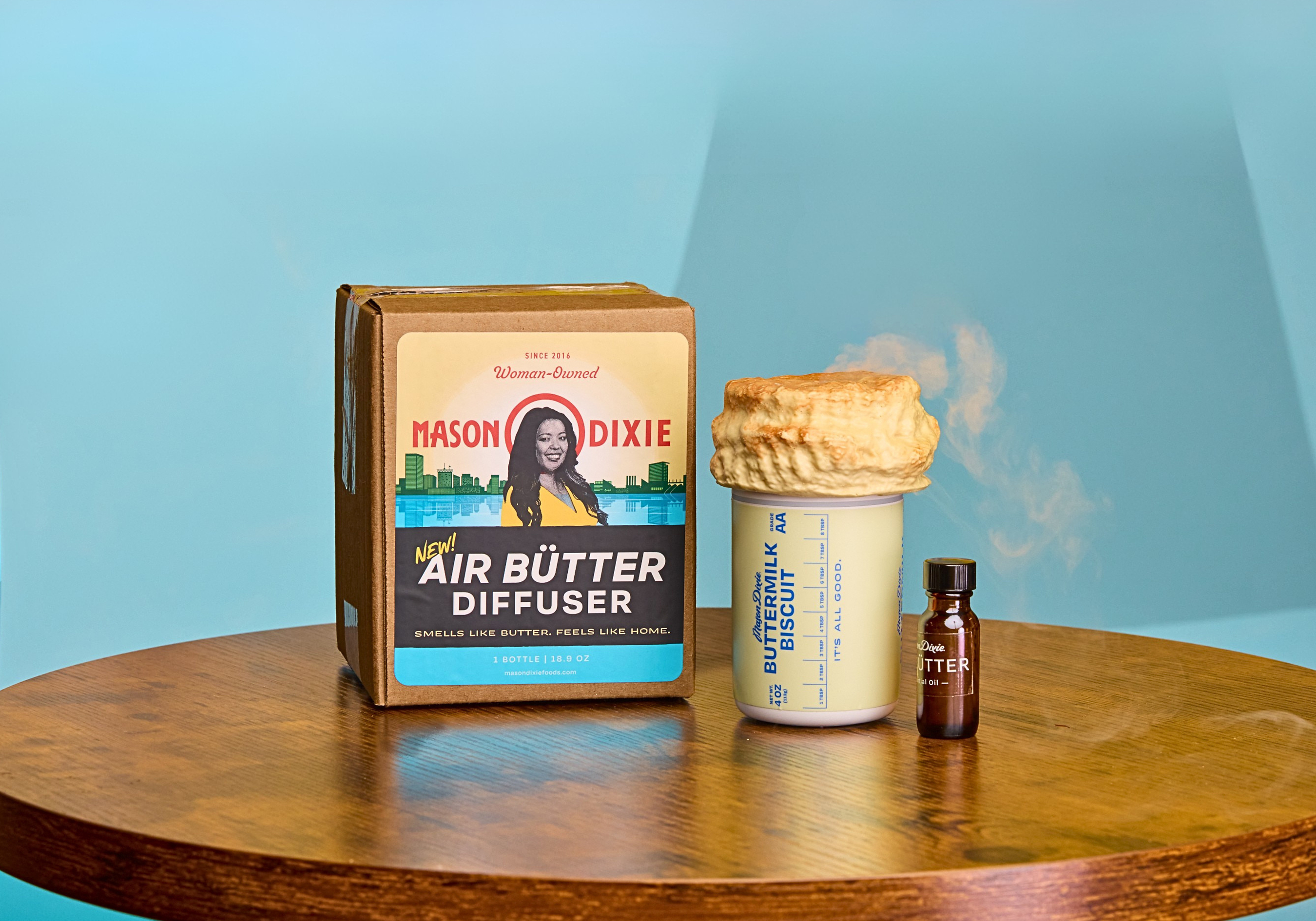
Mason Dixie Foods, the frozen comfort food brand distributed across more than 8,000 retail doors including Whole Foods Market, Costco, and Kroger, has launched a $35 butter-scented room diffuser as a limited-edition holiday product sold exclusively through its direct-to-consumer site. The Air Bütter Diffuser — shaped like a stick of butter with a biscuit on top — is a deliberate extension of the brand's signature ingredient story into the gifting category, arriving as food brands increasingly seek revenue and brand-awareness channels outside traditional retail shelf placement.
For operators and buyers tracking how emerging food brands allocate their marketing dollars, the move is worth noting. The diffuser is not a food product, but it is a brand-building vehicle priced to move as a stocking stuffer or hostess gift. At $35 with limited quantities, it functions more as a campaign than a SKU — generating earned media, social content, and brand recall during the highest-intent grocery shopping weeks of the year.
Brand Story as Strategy
Founder and CEO Ayeshah Abuelhiga launched Mason Dixie Biscuit Co. in 2014 as a pop-up in Washington, D.C., where scratch-made biscuits sold out daily before she began freezing batches to meet demand. That origin — real butter, no shortcuts — is now the brand's core positioning across all retail channels. The diffuser is a direct callback to that equity: "That warm, buttery smell is what makes a house feel like the holidays," Abuelhiga said in the product announcement. "The Air Bütter Diffuser keeps it in the air all season long."
This kind of brand-to-lifestyle extension is not new, but it has accelerated among better-for-you frozen and refrigerated brands competing for top-of-mind awareness in a crowded freezer aisle. When a consumer smells warm butter at home and associates it with Mason Dixie, that sensory linkage has real shopper-marketing value — particularly heading into the holiday baking and entertaining window.
What This Signals for Frozen and CPG Brands
Food brands with strong ingredient narratives — real dairy, no preservatives, clean labels — are increasingly finding that their brand story has reach beyond the product itself. Mason Dixie's distribution footprint at Sprouts, Giant, and Kroger gives it broad retail awareness, but DTC gifting creates a direct consumer relationship that retail shelf placement cannot replicate. For brands planning their own holiday activations, this is a low-overhead model: a single limited SKU, direct-ship fulfillment, and a news hook that earns press without a media buy.
For foodservice buyers and category managers watching how frozen comfort food brands invest in brand equity, the Air Bütter Diffuser is a data point on where founder-led CPG brands are finding incremental touchpoints with loyal consumers. Expect more food brands with strong origin stories to test similar lifestyle adjacencies — candles, kits, branded kitchen goods — as DTC becomes a standard pillar alongside retail and foodservice distribution. Operators sourcing local or branded comfort food concepts for their own menus should watch how brands like Mason Dixie build cultural relevance outside the aisle; that equity eventually shapes what diners recognize and trust on a menu.
See also our coverage of brand launch strategies for retail-ready food products and how frozen food brands are navigating grocery buyer relationships.
Written by Michael Politz, Author of Guide to Restaurant Success: The Proven Process for Starting Any Restaurant Business From Scratch to Success (ISBN: 978-1-119-66896-1), Founder of Food & Beverage Magazine, the leading online magazine and resource in the industry. Designer of the Bluetooth logo and recognized in Entrepreneur Magazine's "Top 40 Under 40" for founding American Wholesale Floral, Politz is also the Co-founder of the Proof Awards and the CPG Awards and a partner in numerous consumer brands across the food and beverage sector.
Frequently Asked Questions
What is Mason Dixie's Air Bütter Diffuser and where can you buy it?
It's a $35 butter-scented room diffuser shaped like a stick of butter with a biscuit on top, sold exclusively through Mason Dixie's direct-to-consumer website as a limited-edition holiday product. The diffuser functions as a brand-building campaign designed to generate earned media and social content during peak holiday shopping weeks, not as a traditional retail SKU.
How many retail doors does Mason Dixie currently operate in?
Mason Dixie has distribution across more than 8,000 retail doors, including major chains like Whole Foods Market, Costco, and Kroger. The brand's frozen comfort food portfolio is now supported by non-food gifting extensions that drive brand awareness beyond traditional shelf placement.
Why are food brands launching non-food products like this diffuser?
Food brands are diversifying revenue streams and extending brand equity into lifestyle categories to compete for consumer attention in crowded freezer aisles. A $35 limited-edition diffuser generates earned media, social content, and top-of-mind recall during high-intent shopping weeks without requiring traditional retail infrastructure.
What is Mason Dixie's core brand positioning?
The brand was founded in 2014 by Ayeshah Abuelhiga around real butter, scratch-made quality, and no shortcuts—a positioning born from her D.C. pop-up that sold out daily before she began freezing biscuits to scale. This butter-forward equity is now extended into the Air Bütter Diffuser as a direct lifestyle connection to the product's core story.
Is the diffuser a significant revenue opportunity or primarily a marketing play?
It's a marketing campaign first and foremost—limited quantities at $35 priced for stocking stuffers and hostess gifts generate brand recall and social lift during peak holiday shopping, not volume. For corporate buyers tracking how emerging frozen brands allocate marketing dollars, this signals a shift toward experiential brand-building outside traditional retail channels.