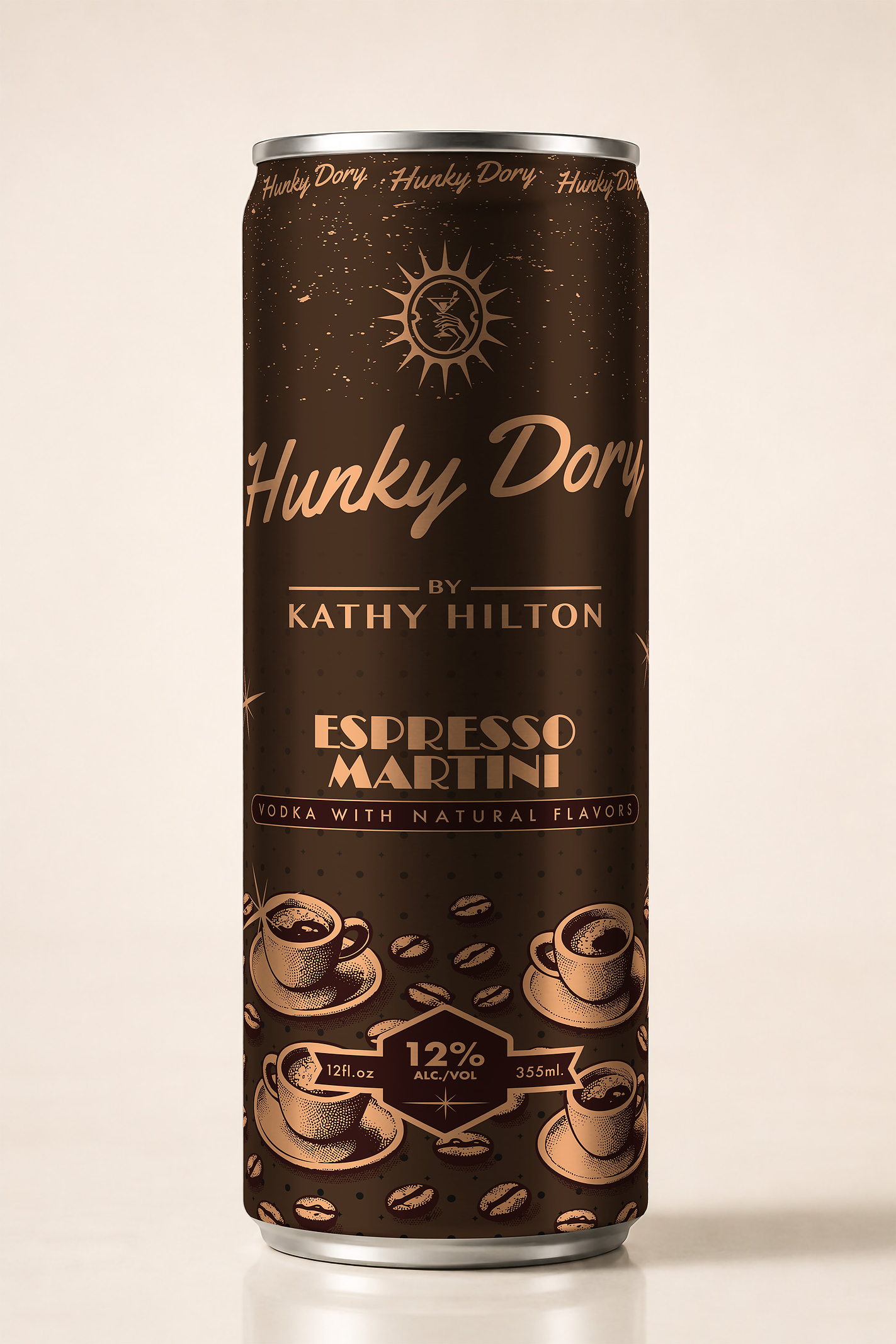
Kathy Hilton and business partner Nicola Verses have officially launched Hunky Dory Cocktails, a premium ready-to-drink martini brand now available in Florida, Connecticut, and via direct-to-consumer shipping in eligible U.S. states. The brand is targeting the upscale end of the RTD canned cocktail category — a segment that has seen sustained growth as on-premise quality expectations follow consumers home.
The core lineup consists of four 12% ABV, 12 fl. oz. canned martinis — Cosmo, Green Tea Martini, Citrus Blossom Martini, and Espresso Martini — retailing at $23.99 SRP for a 4-pack. All four are made with 6x-distilled premium vodka, 100% natural flavors, and pure cane sugar, and carry gluten-free, non-GMO, and vegan positioning. That clean-label profile is table stakes for premium RTD entrants right now, and Hunky Dory checks those boxes out of the gate.
Retail and DTC Strategy
Initial brick-and-mortar distribution runs through licensed wholesalers and spirits distributors in Florida and Connecticut, with BevMax locations named as a confirmed retail partner. The DTC channel is fulfilled through licensed third-party alcohol compliance partners, available to adults 21+ in compliant states — a structure operators and retail buyers will recognize as a standard compliance framework for emerging spirits brands navigating state ABC regulations. Limited-edition seasonal SKUs — including a Pom-Tini, a vodka-first Margarita, and holiday-specific offerings like a Peppermint Plot Twist and Crème Brûlée Espresso Martini — are slated as drops for a VIP Member Club subscription program that will also include curated gift boxes and branded lifestyle accessories.
What This Signals for Buyers
The Hunky Dory launch reflects a continuing pattern in the RTD spirits segment: celebrity-anchored brands using fashion-forward packaging and lifestyle positioning to carve out premium shelf placement against established players. For on-premise operators and retail buyers, the relevant variables are the 12% ABV bar-strength formulation — which differentiates it from lower-ABV hard seltzer adjacents — and the DTC subscription infrastructure, which signals an intent to build a direct consumer relationship rather than relying purely on wholesale velocity. Buyers evaluating the brand for hospitality retail or hotel minibar programs should note the current geographic footprint is narrow; expansion timelines have not been disclosed.
For operators building private-label or curated RTD cocktail programs, Hunky Dory fits the mold of what premium RTD brands are bringing to on-premise buyers right now: clean ingredients, recognizable celebrity provenance, and packaging designed to merchandise well on a tray or shelf. The subscription and collectibles layer is a retention mechanic more common in DTC lifestyle goods than beverage, and it will be worth watching whether that model converts at scale in a regulated alcohol channel. Operators interested in emerging RTD brands with strong consumer media footprints may also want to review how AI-driven beverage trend data is shifting procurement decisions.
Written by Michael Politz, Author of Guide to Restaurant Success: The Proven Process for Starting Any Restaurant Business From Scratch to Success (ISBN: 978-1-119-66896-1), Founder of Food & Beverage Magazine, the leading online magazine and resource in the industry. Designer of the Bluetooth logo and recognized in Entrepreneur Magazine's "Top 40 Under 40" for founding American Wholesale Floral, Politz is also the Co-founder of the Proof Awards and the CPG Awards and a partner in numerous consumer brands across the food and beverage sector.
Frequently Asked Questions
What's the price point and how does Hunky Dory position against competitors like White Claw Surge or Truly Hard Seltzer?
Hunky Dory retails at $23.99 SRP for a 4-pack of 12 fl. oz. cans — that's roughly $6 per serve. This isn't competing with mass-market RTD; it's targeting the premium canned cocktail space where brands like Cutwater ($8–10 per serve) and Drinkcraft operate. The 12% ABV and vodka-forward formulation signal serious margin opportunity for your spirits section, not your beer cave.
Which retailers are stocked right now, and what's the distribution roadmap beyond Florida and Connecticut?
BevMax is confirmed as a retail partner in the initial launch states. The brand is using licensed wholesalers and spirits distributors for on-premise placement, which means your existing spirit rep relationships will handle ordering. No national expansion timeline was announced, but the DTC-first model for non-adjacent states tells you they're building direct consumer data before scaling wider.
Is this just celebrity branding, or does the product formula actually differentiate?
The 6x-distilled premium vodka base, 100% natural flavors, and pure cane sugar (no artificial sweeteners) are legitimate differentiators in a category crowded with corn syrup and citric acid. Every can hits gluten-free, non-GMO, and vegan checkboxes — that's not fluff, that's what your upscale consumer demographic verifies on their phone before checkout.
How does the VIP Member Club subscription angle impact my ordering strategy?
Hunky Dory is building direct relationships through a subscription membership model with limited-edition seasonal SKUs like the Pom-Tini and Peppermint Plot Twist. This means some volume will flow DTC and bypass your shelf — factor that into your planogram. Conversely, it creates FOMO urgency for consumers who see limited drops, which can drive your in-store velocity on core SKUs.
What compliance framework do I need to know about if I'm in an eligible state?
Hunky Dory uses licensed third-party alcohol compliance partners for DTC fulfillment — the same framework established brands like Drizly and Reservebar operate under. All shipments require 21+ verification and state ABC compliance; your wholesaler handles this on the B2B side, so you don't need to manage additional regulatory overhead.