The Packaging Shift
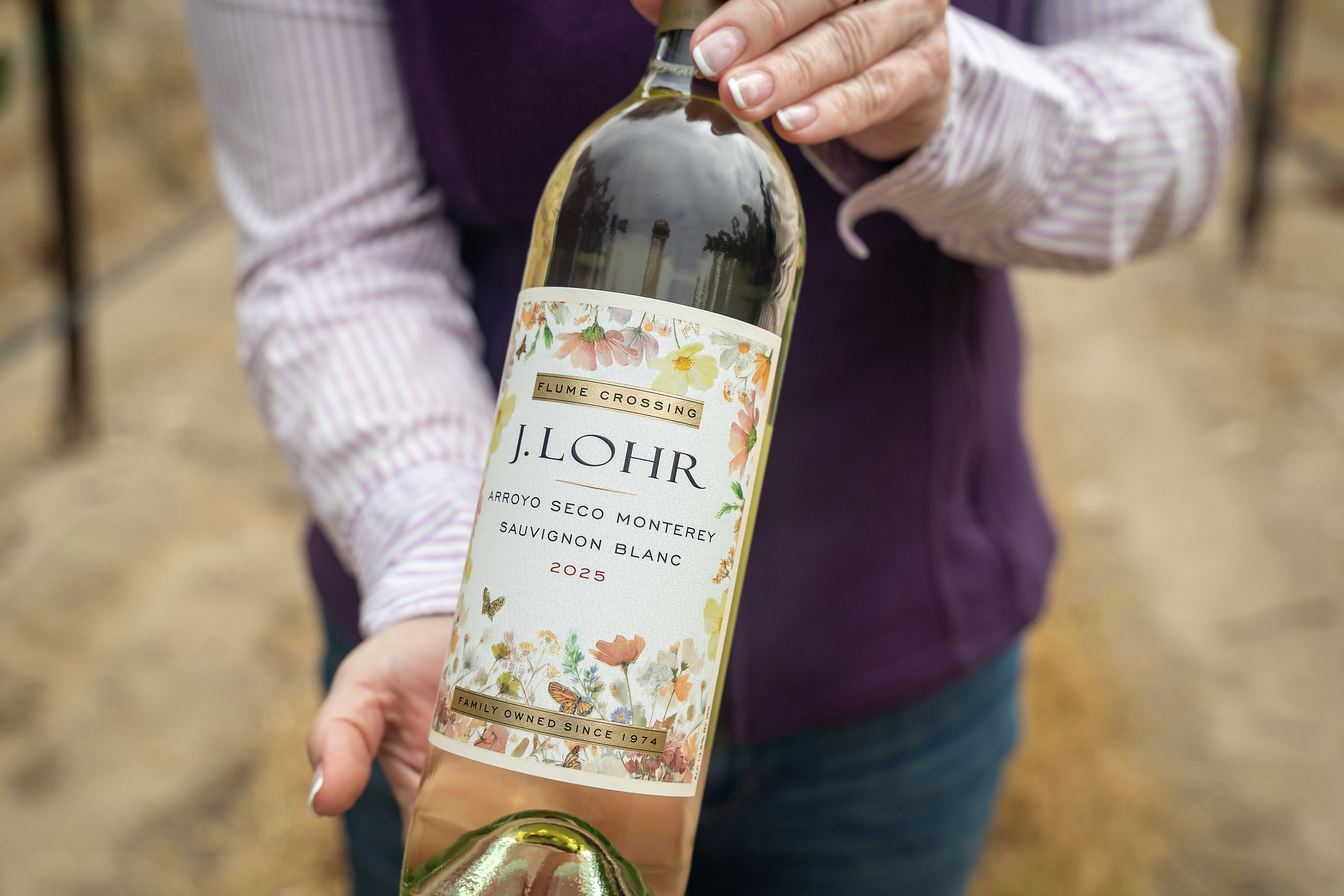
J. Lohr Vineyards & Wines is introducing a redesigned label for its J. Lohr Estates Flume Crossing Sauvignon Blanc — the 2025 vintage — rolling into retail and on-premise accounts over the coming months. The new look moves to a single-label format on a lightly green-tinted eco-flint bottle, botanical illustrations of Arroyo Seco wildflowers and butterflies replacing the prior design. Critically for buyers and category managers, the refresh is a deliberate shelf-synergy play: the new Flume Crossing label mirrors the award-winning redesign J. Lohr rolled out for its Riverstone Chardonnay, consolidating visual identity across the brand's white wine set at retail.
At a $14 suggested retail price with national distribution, Flume Crossing sits in one of the most competitive slots in the wine case — the $10–$15 California white tier. The packaging update is a direct response to accelerating consumer demand for Sauvignon Blanc, which the brand cites as one of California's fastest-growing white wine categories. For on-premise operators, J. Lohr is also extending Flume Crossing availability through its reusable stainless steel keg program, a format that reduces waste, cuts glass costs, and supports by-the-glass margin on high-velocity pours.
What Operators Should Watch
This move reflects a broader pattern in brand launch strategy for mid-tier wine: coordinated visual identity across SKUs functions as a category anchor, making it easier for retailers to merchandise and for on-premise buyers to build a recognizable house pour program around a single producer. When a winemaker aligns two high-volume whites under a cohesive aesthetic, it signals intent to compete for end-cap and cold-box real estate — not just individual shelf facings.
The sustainability angle is also increasingly a procurement lever, not just a marketing one. The Certified California Sustainable seal on the back label addresses growing retailer and foodservice operator requirements for sourcing transparency. For hotel F&B directors, group purchasing organizations, and chain restaurant buyers evaluating wine programs, certified sustainable credentials are moving from a nice-to-have to a baseline expectation in vendor decks and category reviews.
Keg Program Intelligence
The on-tap keg availability deserves specific attention from operator intelligence readers. J. Lohr's reusable stainless steel keg format reduces per-pour cost, eliminates single-bottle breakage and waste, and simplifies by-the-glass inventory management — advantages that compound in high-volume restaurant, hotel bar, and event catering contexts. For beverage directors managing tight labor and back-of-house efficiency, a nationally distributed, $14-SRP Sauvignon Blanc available on tap from an established family winery is a practical option worth evaluating in the next purchasing cycle.
Winemaker Kristen Barnhisel framed the redesign around place: "The Arroyo Seco corridor is a unique biome, home to an incredible tapestry of plant and animal species; these healthy ecosystems are as important to producing high-quality wines as are our time-tested, traditional winemaking techniques." The 2025 vintage is 100% Sauvignon Blanc, with 63% fermented in stainless steel and 37% in acacia and neutral French oak — a production spec designed to balance freshness and complexity at an accessible price point.
Written by Michael Politz, Author of Guide to Restaurant Success: The Proven Process for Starting Any Restaurant Business From Scratch to Success (ISBN: 978-1-119-66896-1), Founder of Food & Beverage Magazine, the leading online magazine and resource in the industry. Designer of the Bluetooth logo and recognized in Entrepreneur Magazine's "Top 40 Under 40" for founding American Wholesale Floral, Politz is also the Co-founder of the Proof Awards and the CPG Awards and a partner in numerous consumer brands across the food and beverage sector.