The Move
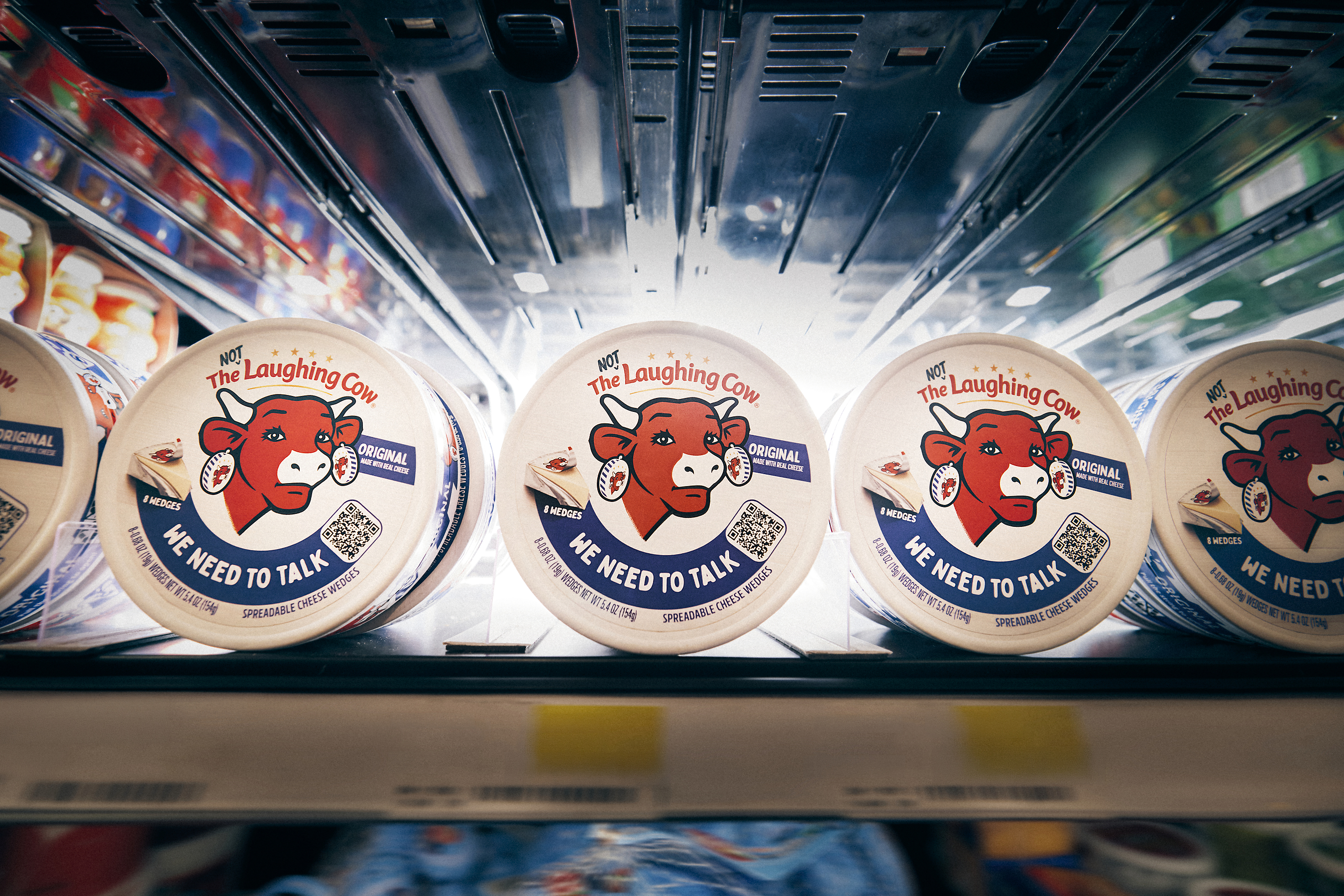
Bel Brands USA replaced the grinning mascot on select packages of The Laughing Cow Creamy Original cheese wedges with a visibly somber version — dubbed "The Not Laughing Cow" — marking the first packaging departure in the brand's 100-plus-year history. The swap landed in grocery aisles nationwide the week of September 22, 2026, alongside out-of-home sightings at diners and parks and a coordinated rollout across the brand's social channels.
The campaign is intentionally unresolved. No explanation has been offered for the mascot's mood shift, and a dedicated site at www.TheNotLaughingCow.com is live but sparse. Jamee Pearlstein, Chief Marketing Officer of Bel Brands US Cheese, offered only a tease: "Whatever finally got to her must be worth talking about. We'll let her explain when she's ready."
Why Operators Should Care
For foodservice buyers, retail category managers, and hospitality F&B directors, this kind of mystery-marketing architecture has measurable downstream effects. When a brand with national grocery penetration generates organic social speculation, it lifts top-of-mind awareness in exactly the channels — diners, grab-and-go, amenity programs — where operators stock the SKU. The Laughing Cow's spreadable wedge format already has strong placement in hotel amenity kits, airline catering, and QSR kids' meal adjacencies; a viral moment tied to the core package amplifies the brand equity operators are renting when they put it on a menu or a tray.
The tactic mirrors recent playbook moves from legacy CPG brands that have used mascot disruption — character retirement, persona pivots, limited packaging swaps — to generate press cycles that cost a fraction of a paid-media campaign. The earned-media ROI on that approach can outperform standard display and programmatic spends for heritage brands with strong brand recognition, according to reporting tracked across brand-launch campaigns in the food and beverage sector.
What the Signal Means
For procurement and brand partners evaluating snack suppliers or co-branded hospitality programs, campaigns like this are worth indexing as a measure of a brand's marketing investment posture. Bel Group — the 160-year-old, family-owned parent behind Babybel, GoGo squeeZ, and Boursin in addition to The Laughing Cow — has historically been conservative with above-the-line spend. A coordinated, multi-channel mystery campaign with custom packaging, OOH activations, and a dedicated microsite signals a shift toward more aggressive brand-building in the U.S. market.
Operators in premium hospitality who use Boursin or Babybel in cheese programs should note that sibling brand momentum often opens negotiating windows: distributors and brokers tend to bundle Bel portfolio SKUs more aggressively when a marquee brand is in an active promotional cycle. Watch distributor rep conversations over Q4 for bundled placement incentives tied to the The Laughing Cow reveal. For more on how snack brand campaigns are reshaping operator-intelligence sourcing decisions, see our recent coverage of single-serve dairy placement trends.
Written by Michael Politz, Author of Guide to Restaurant Success: The Proven Process for Starting Any Restaurant Business From Scratch to Success (ISBN: 978-1-119-66896-1), Founder of Food & Beverage Magazine, the leading online magazine and resource in the industry. Designer of the Bluetooth logo and recognized in Entrepreneur Magazine's "Top 40 Under 40" for founding American Wholesale Floral, Politz is also the Co-founder of the Proof Awards and the CPG Awards and a partner in numerous consumer brands across the food and beverage sector.