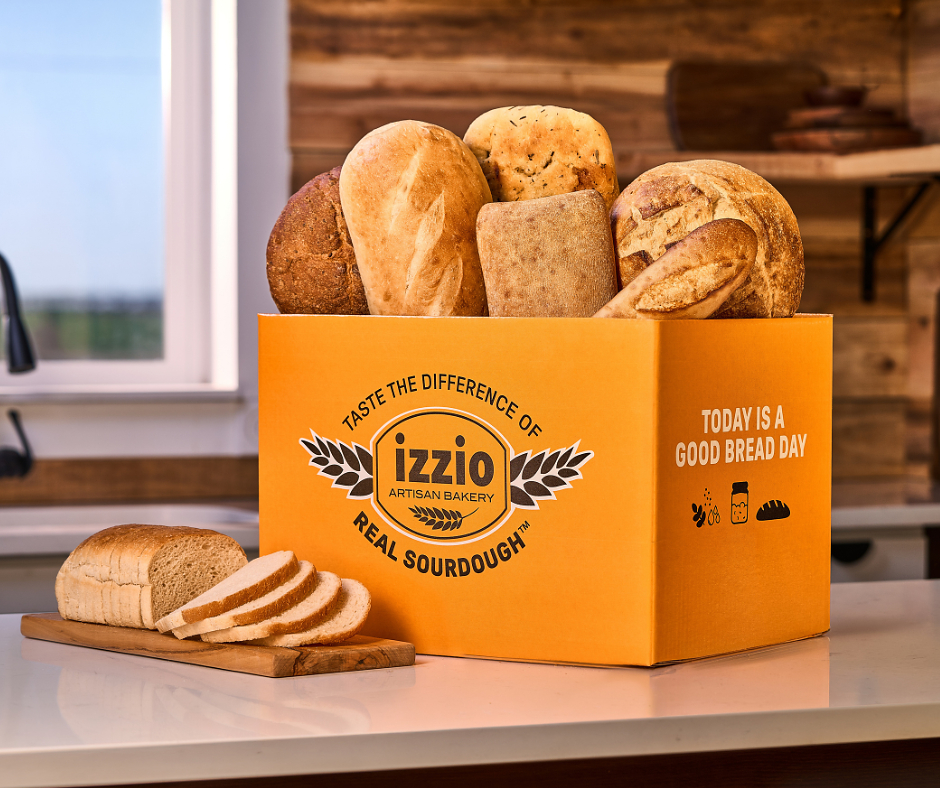
Colorado-based izzio artisan bakery has launched a direct-to-consumer subscription program that ships small-batch sourdough breads to customers across the contiguous U.S. — a structural move that gives the family-owned brand a margin-friendly revenue channel independent of retail shelf placement. The program launched in September 2026 with two tiers: a curated monthly box and a fully customizable option, both priced with free shipping built in.
The timing is deliberate. A 2025 Mintel report found that 62.0% of U.S. consumers have used a food or beverage subscription service, making the channel one of the more measurable bets a specialty food brand can place right now. For bakeries in particular — where freshness, SKU variety, and regional distribution gaps all create friction — a subscription model that promises 48-hour delivery from bakery to door addresses a genuine product-to-market problem.
The Two Tiers
The Real Sourdough Edit by izzio™ delivers a baker-curated rotating assortment of six breads monthly, including recipe cards, limited-edition SKUs, and seasonal gifts. The inaugural October box, available to subscribers who enrolled by September 30, retails at $105 per month. It features six breads — including a preview of the new Organic Italian Sourdough Sandwich Bread — plus a complimentary jar of NuttZo Organic Paleo Power Fuel nut butter. The first 50 subscribers also received an izzio tote bag, a low-cost acquisition tactic that trades on scarcity and brand affinity.
The Build Your Custom Box tier runs $115 per month and lets subscribers select any six breads from the izzio lineup, with delivery frequency options of every two, four, six, or eight weeks. That cadence flexibility is a meaningful retention lever: subscription fatigue is a documented churn driver in the food box category, and variable frequency reduces the likelihood that consumers pause or cancel due to over-inventory.
What This Signals for Operators
Izzio's move into DTC subscriptions is worth watching beyond the bakery category. The brand is explicitly positioning against third-party baking facilities — a differentiation argument that translates well in both DTC copy and retail buyer conversations. For food brands evaluating channel strategy, this kind of omnichannel proof point — where DTC subscription data informs retail assortment decisions — is increasingly how emerging brands justify SKU expansion requests to buyers.
For operators in foodservice procurement, izzio's subscription infrastructure also hints at a future B2B play. Brands that build reliable direct-ship logistics for consumer subscriptions often repurpose that infrastructure for hospitality and office catering accounts. That's a vendor pipeline worth tracking, particularly for hotel F&B directors and corporate dining operators sourcing premium bread programs.
On the brand launch side, the limited-enrollment October box is a textbook soft-launch approach: cap early volume, generate scarcity, collect first-party data on which SKUs subscribers actually want, then use that data to refine the curation algorithm and pitch retail buyers with real demand signals. Brands exploring similar DTC-to-retail pathways should note that izzio controls the full baking and fulfillment chain — no co-packer diluting the quality story — which keeps the brand narrative clean across channels.
For more context on how specialty food brands are using subscription and growth marketing strategies to build direct audiences before scaling into retail, this channel shift is an instructive case study in sequencing market entry.
Written by Michael Politz, Author of Guide to Restaurant Success: The Proven Process for Starting Any Restaurant Business From Scratch to Success (ISBN: 978-1-119-66896-1), Founder of Food & Beverage Magazine, the leading online magazine and resource in the industry. Designer of the Bluetooth logo and recognized in Entrepreneur Magazine's "Top 40 Under 40" for founding American Wholesale Floral, Politz is also the Co-founder of the Proof Awards and the CPG Awards and a partner in numerous consumer brands across the food and beverage sector.