Richard Laver, the serial entrepreneur behind medical nutrition brand Kate Farms and Lucky Energy, launches his third and final consumer brand on December 22: IAN, a longevity-focused wellness company entering the market with a daily gummy stack formulated around 24 curated ingredients. For food and beverage operators, buyers, and brand-launch teams, IAN's debut is a clean read on where functional-format investment is concentrating as healthy aging moves from niche to mainstream.
The Product and Positioning
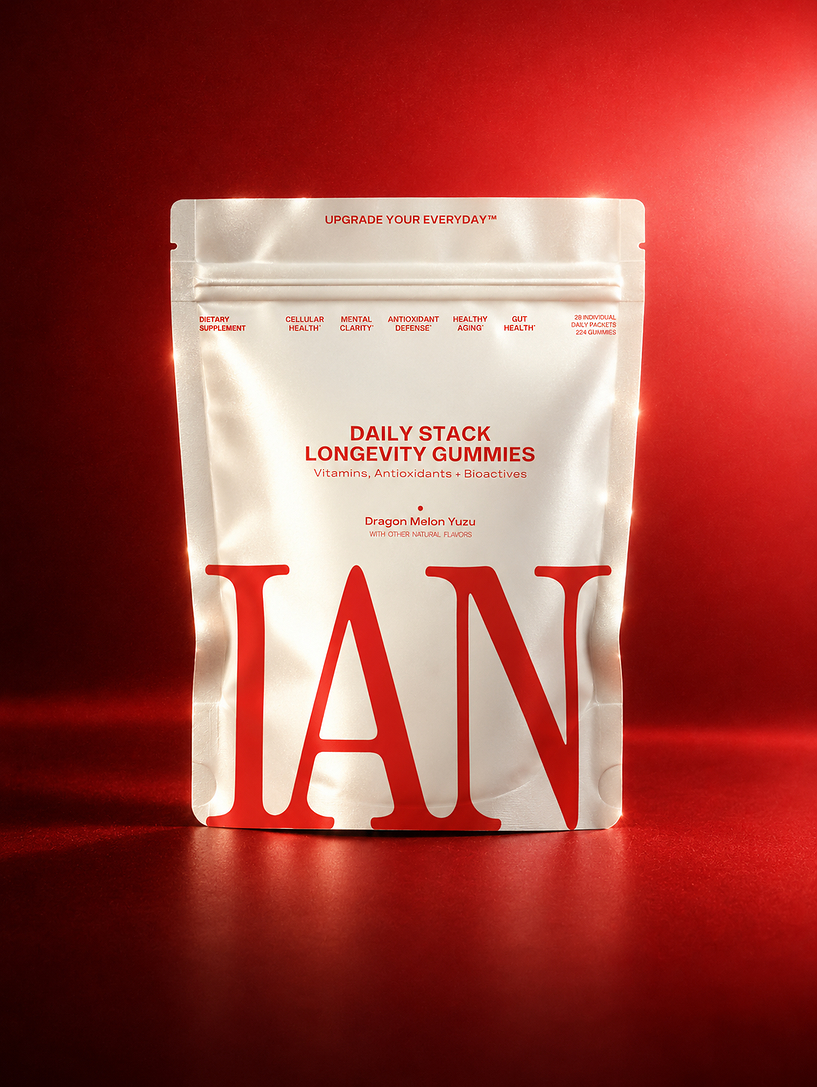
IAN's first product is an eight-gummy sachet — marketed as a "daily stack" — available in Dragon Melon Yuzu. Each sachet delivers 10 grams of fiber, 3 grams of sugar, and 40 calories, targeting what Laver calls "high performers" who want health investment without behavioral friction. The 24-ingredient formulation spans mental clarity, antioxidant defense, gut health, and healthy aging support. The company's brand identity and packaging are designed to travel from morning routine to on-the-go use, an explicit positioning signal for buyers evaluating convenience-channel and fitness-retail placement.
Laver named the brand after his father, Ian, who died in a commercial airline crash when Laver was 12 — the plane's youngest survivor. That backstory gives IAN an origin narrative that is unusually specific and media-ready, an asset for a brand-launch team pitching earned placement and influencer alignment in a crowded functional-food market.
What the Category Data Says
The timing is deliberate. McKinsey & Company's 2025 Future of Wellness survey found that up to 60.0% of consumers across markets rank healthy aging as a top or very important priority. SNS Insider estimates the U.S. longevity market at $9.16 billion in 2025 and projects growth to $20.17 billion by 2035 — a compound trajectory that explains why experienced CPG founders are allocating capital and credibility here rather than in legacy beverage or snack formats.
The gummy delivery format is itself a strategic call. Gummies have already displaced capsules and tablets in several supplement subcategories because they lower the perceived barrier to daily compliance — which is exactly the "small habits you actually keep" logic Laver articulates in IAN's brand platform. For distributors and buyers, the sachet format also opens convenience, travel retail, and gym-channel opportunities that bottled supplements rarely access efficiently.
Operator and Buyer Intelligence
IAN's launch structure follows a pre-registration model — early access sign-ups at TryIan.co before December 22 — which is a standard DTC seeding play designed to build a first-party data asset before any wholesale or retail distribution discussions. Operators and category buyers evaluating longevity-positioned SKUs for hotel minibar programs, fitness club retail, or corporate wellness amenities should track how IAN's initial channel strategy evolves in Q1 2027.
Laver's prior exits give IAN unusual credibility in buyer conversations. Kate Farms scaled into clinical nutrition and hospital procurement channels; Lucky Energy competed in a saturated functional beverage market. IAN enters a less crowded daily-supplement format with a founder whose distribution relationships and category literacy are already established. That pedigree shortens the typical new-brand due-diligence cycle for buyers who have dealt with Laver's previous companies.
For brand-launch and media teams watching the functional food space, IAN is also a case study in founder-story-led positioning — a differentiator that matters more in the longevity segment, where ingredient claims are increasingly commoditized and consumer trust is the scarcer asset. Teams building retail readiness and buyer deck strategy for emerging wellness brands should note how IAN leads with mission before formula.
Operators building functional beverage and supplement menus for wellness-oriented hospitality programs will find IAN's format — portable, low-sugar, fiber-forward — well-aligned with the direction hotel F&B directors are moving for in-room and spa retail assortments.
Written by Michael Politz, Author of Guide to Restaurant Success: The Proven Process for Starting Any Restaurant Business From Scratch to Success (ISBN: 978-1-119-66896-1), Founder of Food & Beverage Magazine, the leading online magazine and resource in the industry. Designer of the Bluetooth logo and recognized in Entrepreneur Magazine's "Top 40 Under 40" for founding American Wholesale Floral, Politz is also the Co-founder of the Proof Awards and the CPG Awards and a partner in numerous consumer brands across the food and beverage sector.
Frequently Asked Questions
What exactly is IAN launching, and what's the go-to-market format?
IAN debuts December 22 with an eight-gummy daily stack in Dragon Melon Yuzu—a single sachet delivery format designed for convenience and on-the-go positioning. Each sachet carries 10 grams of fiber, 3 grams of sugar, and 40 calories, built around 24 ingredients targeting mental clarity, antioxidant defense, gut health, and healthy aging.
Who is Richard Laver, and why does his track record matter for this launch?
Laver is a serial entrepreneur behind Kate Farms (medical nutrition) and Lucky Energy, now launching his third and final consumer brand. His portfolio signals serious operational and distribution chops in functional foods—this isn't a first-time founder testing the market.
What does the longevity market actually look like in dollars and growth?
SNS Insider sizes the U.S. longevity market at $9.16 billion in 2025, projecting expansion to $20.17 billion by 2035—a 120% jump. McKinsey's 2025 Future of Wellness survey found 60% of consumers rank healthy aging as a top or very important priority, validating category tailwinds.
Where should buyers expect to see IAN stocked?
IAN's packaging and positioning are explicitly designed for convenience channels and fitness retail—the brand treats the sachet as a travel-ready daily ritual piece rather than a traditional vitamin bottle. Expect placement targeting high-performer demographics in natural, specialty, and performance-lifestyle channels.
Why does the IAN origin story matter for retail and influencer strategy?
Laver named the brand after his father, Ian, who died in a commercial airline crash when Laver was 12—Laver was the plane's youngest survivor. That narrative is unusually specific and media-ready, giving brand teams a differentiated earned-placement and influencer-alignment hook in a crowded functional-food market.