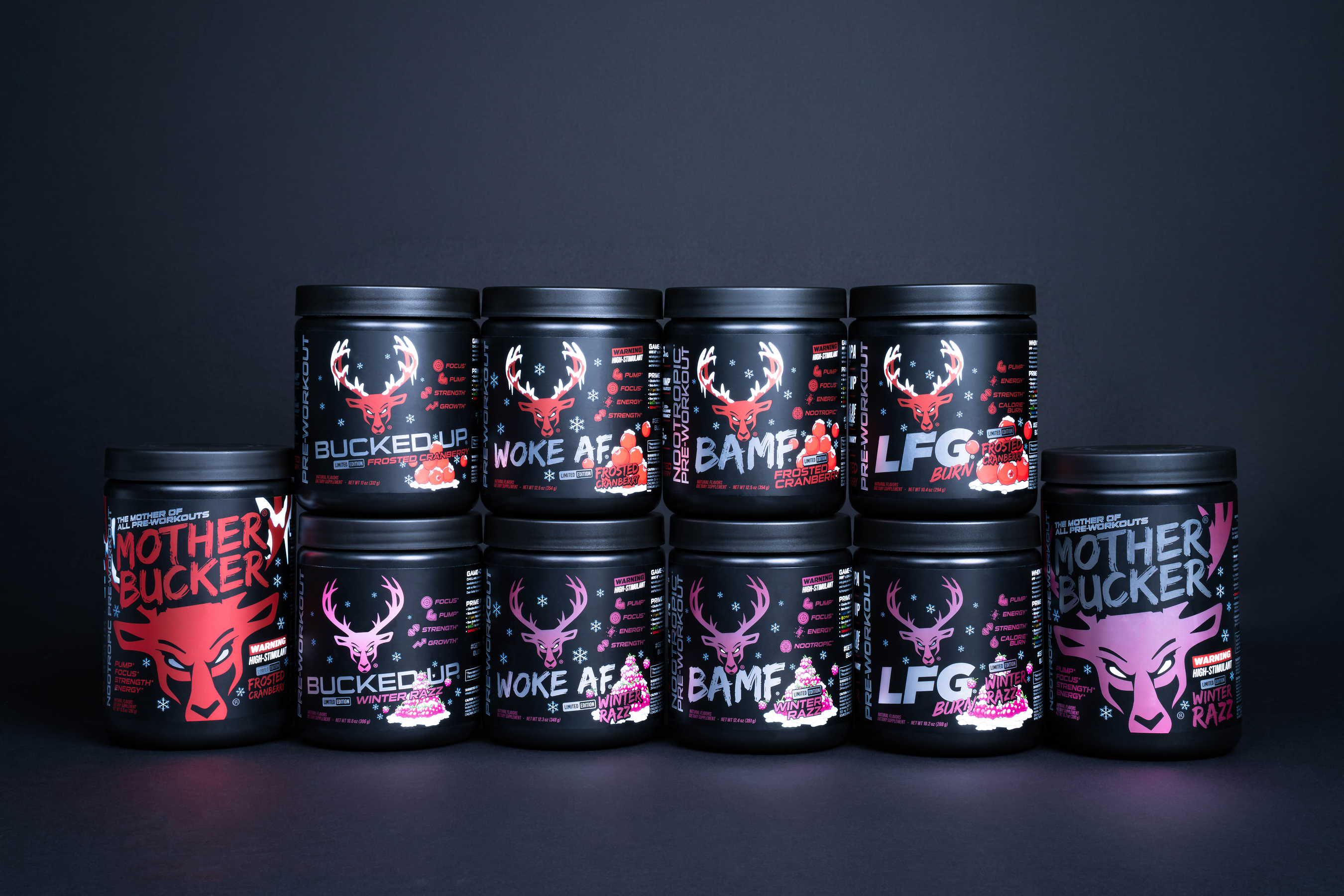
Limited-edition flavor drops are common in the energy and pre-workout category. Running one simultaneously across an entire five-SKU formula stack is not. Bucked Up®, the brand ranked No. 1 in U.S. pre-workout by SPINS data through September 2026, is launching Winter Razz (raspberry grape) and Frosted Cranberry (cranberry lychee) on every formula in its lineup — from the entry-level 200mg caffeine Bucked Up® base formula through the 400mg Mother Bucker® — creating ten limited-edition SKUs available only while supplies last.
The move is live at buckedup.com and select fitness retailers as of November 6, with the new flavors also folded into Bucked Up's Black Friday sale and ambassador early-access window starting November 15.
The Retail Logic
For buyers and category managers, the structure here is worth unpacking. Most seasonal flavor campaigns concentrate volume in one or two anchor SKUs, limiting shelf disruption while testing seasonal demand. Bucked Up is treating seasonal flavors as a full-funnel activation: every consumer already on the stim ladder — beginner, intermediate, or high-stim — gets a seasonal option at their existing intensity tier rather than being pointed to a new product. That reduces switching friction and keeps the consumer within the brand ecosystem rather than sampling a category competitor.
Distribution at 100,000-plus retail doors including Target, GNC, Vitamin Shoppe, and Walmart gives this drop meaningful reach. The scarcity mechanic — no reorder once a SKU sells through — creates urgency at shelf without requiring a markdown. For fitness specialty and mass grocery buyers evaluating Q4 planogram resets, that combination of velocity pressure and built-in exit is a relatively clean promotional structure.
What This Signals for Operators and Vendors
The Bucked Up approach reflects a broader pattern in the better-for-you beverage segment: brands are using limited-edition windows not just for novelty but for data harvesting. A simultaneous drop across five formulas tells the brand — and its retail partners — exactly which formula tier has the most engaged seasonal buyer. That information has real value for spring planogram negotiations and Q1 promotional planning.
For packaging vendors, flavor houses, and co-manufacturers working in the sports nutrition and functional beverage space, this is a signal that leading brands are demanding compressed development timelines. Releasing ten coordinated SKUs with unified seasonal pack art — snow, frost, and icicle antlers across all formats — requires supply chain alignment that many smaller operators still struggle to execute. Brands that can run this play cleanly will increasingly use it as a competitive moat.
For food and beverage operators building their own seasonal launch calendars, the Bucked Up model is a useful benchmark: anchor the seasonal story to an existing formula architecture rather than a standalone product, build the scarcity mechanic into supply planning from day one, and time ambassador early access to generate organic content before the retail push hits. Those three mechanics together are replicable at smaller scale than most operators assume.
Operators evaluating brand launch strategy or retail readiness for functional beverage lines should note that the limited-edition playbook is shifting from novelty to intelligence gathering — and the brands executing it most effectively are those treating seasonal SKUs as a demand-sensing tool, not just a marketing moment.
Written by Michael Politz, Author of Guide to Restaurant Success: The Proven Process for Starting Any Restaurant Business From Scratch to Success (ISBN: 978-1-119-66896-1), Founder of Food & Beverage Magazine, the leading online magazine and resource in the industry. Designer of the Bluetooth logo and recognized in Entrepreneur Magazine's "Top 40 Under 40" for founding American Wholesale Floral, Politz is also the Co-founder of the Proof Awards and the CPG Awards and a partner in numerous consumer brands across the food and beverage sector.