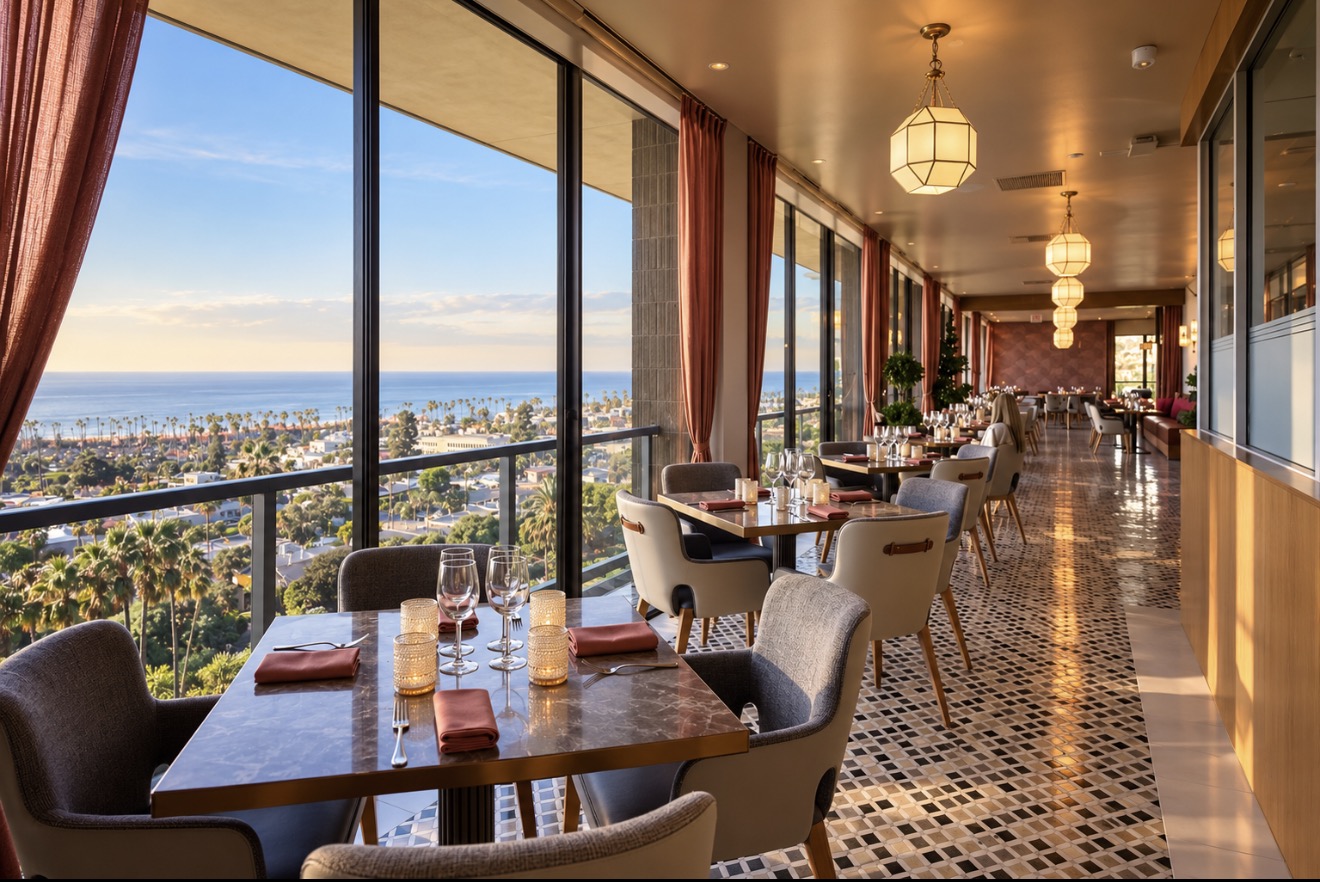
A $1 million-plus rooftop conversion at Hotel La Jolla, part of Hilton's Curio Collection, is the clearest signal yet that San Diego's coastal hospitality market is repositioning hotel F&B as a neighborhood draw rather than a guest amenity. Aries, an 11th-floor restaurant and lounge concept, opens November 11 under veteran restaurateur Alessandro Minutella and co-managing partner Giancarlo Guttilla, who also operate Zama and AKA in the Gaslamp Quarter.
The Investment Case
The capital commitment here is deliberate. A seven-figure buildout on a hotel rooftop is a bet that locals — not just overnight guests — will anchor the revenue model. That math only works if the concept differentiates sharply from surrounding competition, which Aries is attempting through three levers: culinary credibility via Chef James Montejano, whose résumé includes Michelin-starred kitchens and stints at L'Auberge and Four Seasons; a European Riviera design identity executed by Cassandra Builer of Huntress Decor, drawing references from Saint-Tropez and Cannes; and a Pan-Pacific menu positioned as an alternative to the region's dominant seafood-casual format.
For hotel operators and independent restaurateurs evaluating similar moves, the Aries model reflects a capital-allocation pattern gaining traction across upper-upscale and luxury segments: take underperforming or generic rooftop square footage and redevelop it as a ticketed social venue with private event capacity. The adjoining private dining room, built to accommodate up to 100 guests, is a direct revenue-diversification play — corporate buyouts, celebrations, and social gatherings typically carry margin structures well above à la carte.
What This Signals for Operators
The Aries launch fits a recognizable template for hotel F&B brand launches: a named chef with pedigree, a destination-interior narrative, and a programming layer (craft cocktails, curated entertainment) designed to generate repeat local visits. What operators should watch is how the team deploys community marketing — specifically whether they lean into geo-targeted digital campaigns and local influencer seeding to build walk-in traffic from La Jolla residents, or rely primarily on hotel channel bookings. The former approach is increasingly decisive in markets where hotel-restaurant concepts compete directly with independent fine-casual operators for discretionary dining spend.
San Diego's coastal dining corridor is not undersupplied, but it has historically skewed toward ocean-view seafood and casual California cuisine. A Pan-Pacific concept with European Riviera interiors at elevation is a deliberate positioning gap play. Whether Minutella and Guttilla can replicate the community traction they've built in the Gaslamp Quarter — a proven nightlife district — in a more residential coastal neighborhood is the operative question for the first 90 days.
For suppliers, vendors, and agencies tracking hospitality brand launches in Southern California, Aries represents a qualified independent operator with a multi-unit track record, meaningful capex already deployed, and an event-venue infrastructure ready to activate. That profile typically accelerates procurement cycles for beverage programs, linen and serviceware, and experiential marketing partnerships. Operators building similar concepts can read more about hotel F&B positioning strategy and rooftop venue growth tactics in our related coverage.
Written by Michael Politz, Author of Guide to Restaurant Success: The Proven Process for Starting Any Restaurant Business From Scratch to Success (ISBN: 978-1-119-66896-1), Founder of Food & Beverage Magazine, the leading online magazine and resource in the industry. Designer of the Bluetooth logo and recognized in Entrepreneur Magazine's "Top 40 Under 40" for founding American Wholesale Floral, Politz is also the Co-founder of the Proof Awards and the CPG Awards and a partner in numerous consumer brands across the food and beverage sector.