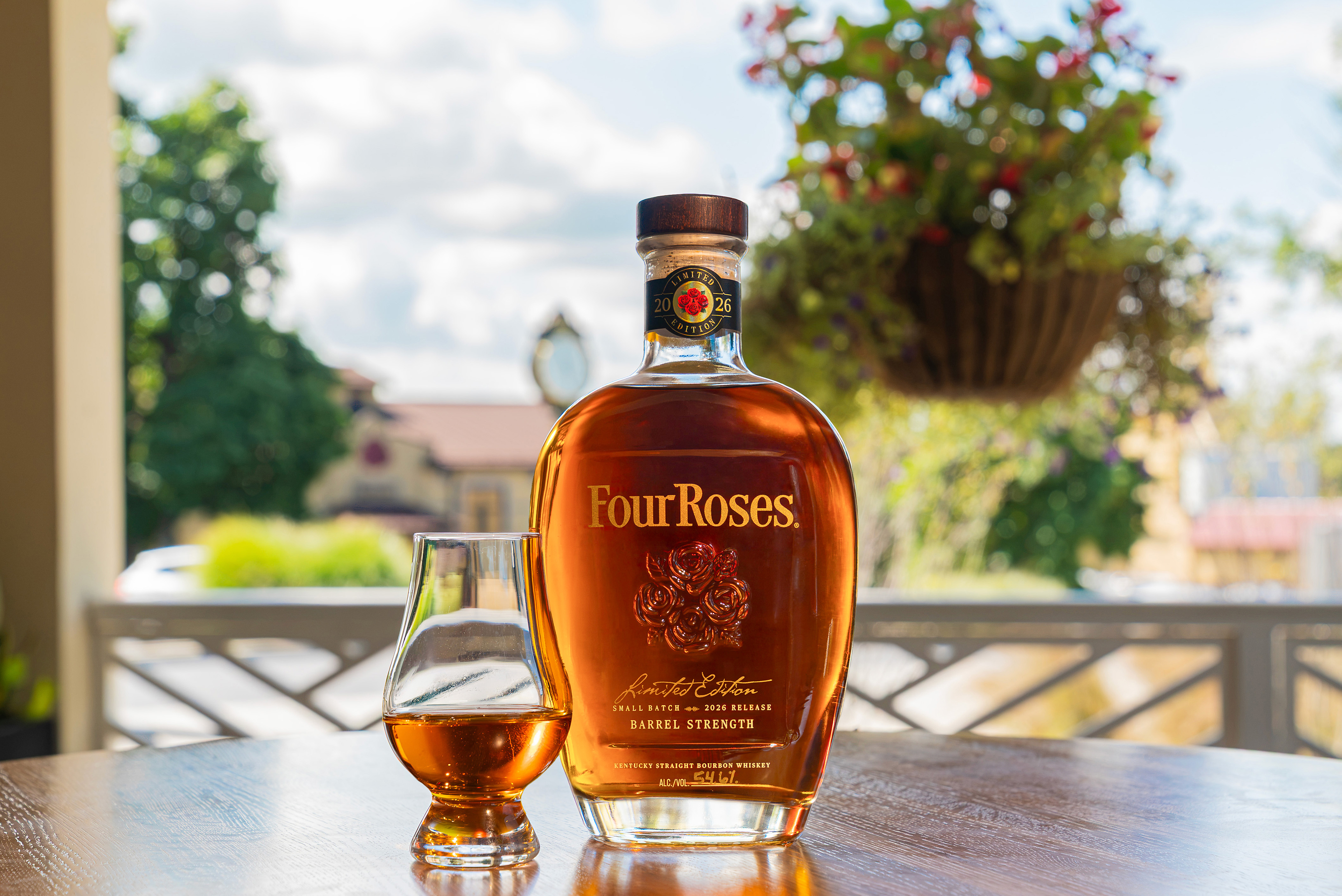
Four Roses Distillery](https://www.fourrosesbourbon.com/) will release its 2026 Limited Edition Small Batch Bourbon on October 10, marking the 19th consecutive year the Kentucky distillery has issued this collector-grade annual expression. For on-premise operators and specialty retail buyers, the release date is a procurement trigger — not a headline to bookmark and forget.
Bottled at 109.2 proof and non-chill filtered, the release draws from three of Four Roses' 10 distinct bourbon recipes across four hand-selected batches: a 14-year-old OBSK, a 14-year-old OESK, a 15-year-old OESV, and a 23-year-old OESK. Total production is approximately 16,800 bottles nationally at a suggested retail price of $249. That volume-to-demand ratio has historically made Four Roses limited releases among the faster-moving allocations in the super-premium bourbon segment.
Why Allocation Timing Matters
For bar directors and spirits buyers at independent restaurants and hotel F&B programs, the practical intelligence here is straightforward: distributor allocations for releases at this price point and production ceiling tend to be claimed within days of the sales window opening. Operators who rely on passive reorder relationships with their rep will frequently miss the cut. Proactive outreach to your spirits distributor contact — ideally before the October 10 street date — is the move.
Master Distiller Brent Elliott described the release as a return to foundational craft after what he characterized as an exploratory year for the brand. The blend's tasting profile runs from apricot and light oak on the nose through baking spice, honey, and wood on the palate, finishing with fruit, vanilla, and caramel. That flavor architecture positions it well for both neat pours and curated whiskey flight programs targeting guests in the $25-to-$35 per-pour range.
Retail and On-Premise Placement
Distribution will span select retailers nationwide and both Four Roses Visitor Centers in Lawrenceburg, Kentucky. For hospitality operators outside the distillery's home market, the national retail footprint means the window for on-premise exclusivity — acquiring bottles before they hit retail shelves — is narrow. Programs that can feature a limited release before it becomes broadly consumer-visible gain a meaningful experiential advantage.
The broader context: aged bourbon scarcity continues to shape the super-premium spirits market. Expressions with documented age statements above 14 years and credentialed production methods (barrel-strength, non-chill filtered, named recipe codes) are increasingly the standard for serious whiskey programming at independent restaurants, steakhouses, and hotel bars. A 23-year barrel component in a $249 SRP release still represents competitive value in a segment where single-barrel expressions regularly exceed $300.
Operators building or refreshing a beverage program around premium spirits should treat this release as a case study in scarcity-driven programming — limited volume, a defined street date, and a loyal collector base create the conditions for a high-margin, high-engagement feature. Pairing the release with a staff education moment or a guest-facing tasting event can extend the value well beyond the bottle price.
For operators thinking about how brand launch strategies from distillers translate to on-premise opportunity, annual limited releases are one of the cleaner playbooks in the category: consistent calendar cadence, built-in press, and a trained consumer audience ready to respond.
Written by Michael Politz, Author of Guide to Restaurant Success: The Proven Process for Starting Any Restaurant Business From Scratch to Success (ISBN: 978-1-119-66896-1), Founder of Food & Beverage Magazine, the leading online magazine and resource in the industry. Designer of the Bluetooth logo and recognized in Entrepreneur Magazine's "Top 40 Under 40" for founding American Wholesale Floral, Politz is also the Co-founder of the Proof Awards and the CPG Awards and a partner in numerous consumer brands across the food and beverage sector.