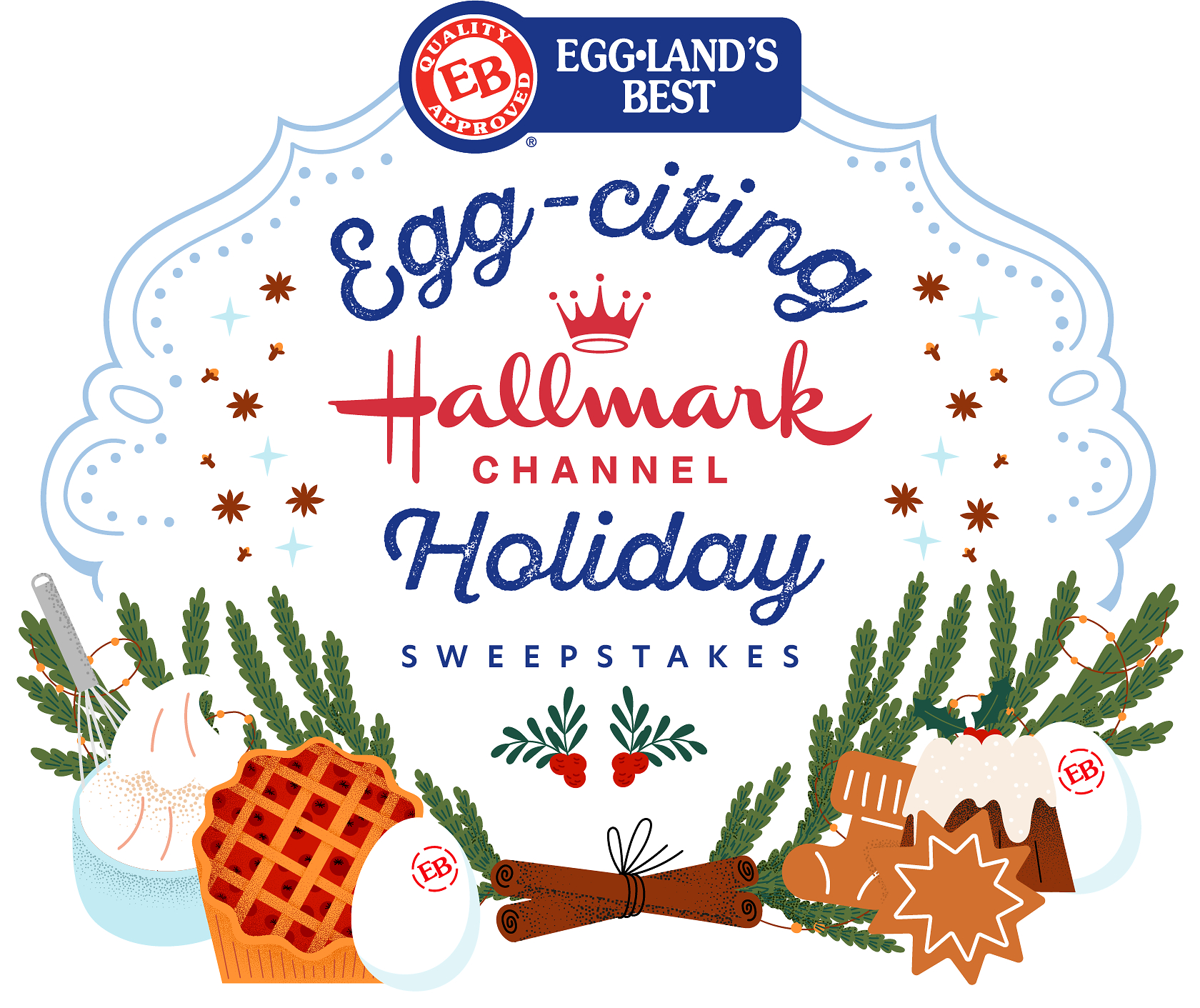
Eggland's Best is running its first-ever national partnership with Hallmark Channel this holiday season — a co-branded campaign that combines in-program vignettes, influencer-driven recipe content, and a consumer sweepstakes running from November 10 through December 22, 2026. For food and beverage operators watching how branded egg suppliers spend their marketing budgets, this deal is a useful case study in how a commodity-adjacent SKU uses premium media placement to reinforce a nutrition-and-quality positioning at scale.
The Campaign Structure
The partnership centers on Makin' It Easy vignette segments airing inside Hallmark Channel's Countdown to Christmas programming — one of cable's most reliably watched seasonal blocks. Those in-show placements are backstopped by a social content series featuring actress and producer Tamera Mowry-Housley, who is demonstrating two original recipes (a Christmas Morning Egg Bake and Salted Caramel Chocolate Chip Cookies) using Eggland's Best eggs. Registered Dietitian Dawn Jackson Blatner, RDN, is layered in separately to anchor the nutritional messaging with wellness-focused tips and protein-forward recipes. The sweepstakes — hosted at EBFamilySweeps.com — offers a $5,000 grand prize and seven weekly $250 grocery gift-card prizes, with bonus entries awarded for user-generated recipe submissions.
What This Signals for Operators
For foodservice buyers and retail grocery operators, the structure of this campaign is worth unpacking. Eggland's Best is not simply running a TV spot — it is using a media partnership to generate layered consumer touchpoints: broadcast reach, social amplification, earned UGC via the recipe submission mechanic, and registered dietitian credibility to defend a price premium over commodity eggs. That layered approach is increasingly the template for CPG brands trying to hold shelf space and justify price points in a category where private-label competition is aggressive.
The timing is deliberate. Egg consumption indexes sharply upward during the holiday baking and entertaining season, making Q4 the logical window for a brand like Eggland's Best to invest in awareness. Pairing that investment with Hallmark Channel's Countdown to Christmas — which draws a highly engaged, home-centered adult audience — concentrates media spend against the exact consumer profile most likely to be baking, hosting, and comparing egg brands at retail.
For operators running hotel breakfast programs, catering operations, or retail food concepts, the influencer-plus-RD combination is also worth noting as a content strategy. Mowry-Housley provides aspirational, shareable recipe content; Blatner provides the clinical credibility that helps buyers and wellness-oriented consumers rationalize a premium purchase. That two-layer influencer structure — entertainment reach paired with professional authority — is increasingly standard in food brand launches and seasonal campaigns, and mirrors how brand launch teams structure media kits for retail buyers.
The UGC mechanic embedded in the sweepstakes is also operationally smart: bonus entries for sharing original Eggland's Best-inspired recipes turn the consumer base into a content distribution network at zero incremental media cost. Food and beverage brands running similar seasonal promotions should note that recipe-sharing mechanics tend to generate higher-quality UGC than simple entry forms, and that content can be repurposed across owned channels well past the campaign window.
Operators sourcing premium eggs — whether for a hotel F&B program, a fast-casual breakfast concept, or a retail grab-and-go set — will find that supplier campaigns of this scale tend to influence shopper expectations at the point of purchase. When a supplier's brand is embedded in a consumer's holiday media diet, the brand premium becomes easier to defend at the case price level. That dynamic is worth factoring into annual procurement conversations with egg distributors. For more on how supplier marketing investment intersects with procurement leverage, see our operator intelligence coverage on CPG trade spend.
Written by Michael Politz, Author of Guide to Restaurant Success: The Proven Process for Starting Any Restaurant Business From Scratch to Success (ISBN: 978-1-119-66896-1), Founder of Food & Beverage Magazine, the leading online magazine and resource in the industry. Designer of the Bluetooth logo and recognized in Entrepreneur Magazine's "Top 40 Under 40" for founding American Wholesale Floral, Politz is also the Co-founder of the Proof Awards and the CPG Awards and a partner in numerous consumer brands across the food and beverage sector.