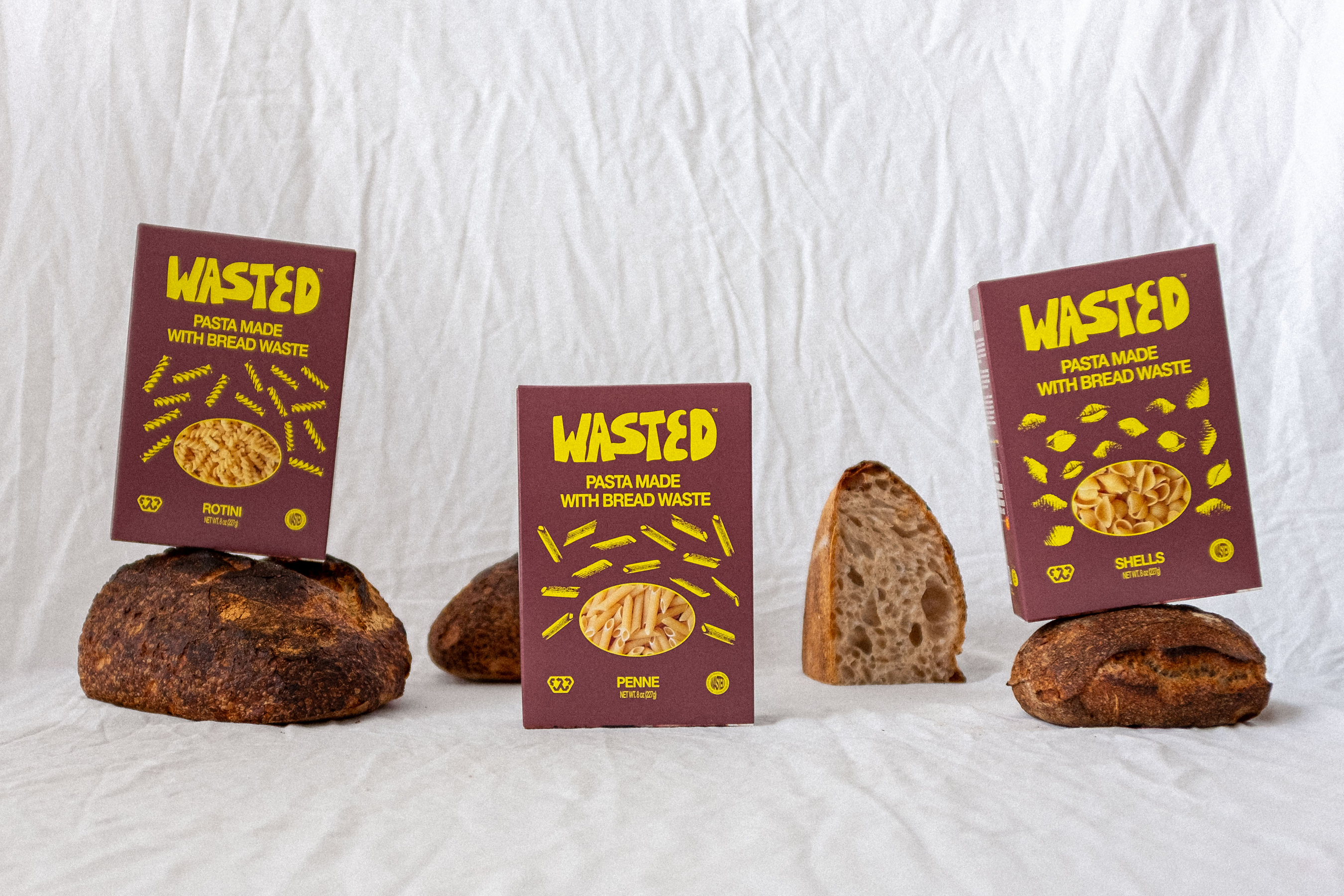
Copenhagen-based Eat Wasted is entering the U.S. market through a combination of experiential dinners in New York City and retail placement at Misfits Market and Whole Foods Market — a sequenced launch strategy that operators and buyers in the specialty food space should watch closely. The brand converts surplus artisanal European bread into premium dried pasta, positioning itself at the intersection of food-waste reduction and chef-grade pantry staples.
Co-founders Leif Friedmann and Jorge Aguilar built the brand's early traction through community dinner events in Copenhagen, a model that generated more than 10,000 guest experiences across cities globally before a single retail SKU shipped. The first New York dinner sold out in under a day; the brand's global waitlist now sits above 3,000 prospective buyers. That community-first sequencing — demand generation before retail push — is the playbook worth noting for any emerging food brand considering a U.S. entry.
Retail Positioning
The choice of Misfits Market as an early retail partner is strategically coherent. A channel built around imperfect and surplus food aligns directly with Eat Wasted's sourcing narrative, giving the brand a shelf context where the sustainability story lands without explanation. Whole Foods adds the premium-grocery credibility that supports a higher price point and broadens the addressable shopper. For food-service operators sourcing specialty dry goods, this dual-channel entry signals that the brand is targeting both values-aligned and premium-mainstream buyers simultaneously — a distribution split that tends to support pricing integrity when executed carefully.
The product itself is manufactured in Europe using traditional pasta-making methods. Eat Wasted describes the bread-based formulation as producing a naturally rough surface that improves sauce adhesion — a functional claim that resonates in food-service contexts where sauce yield and plate consistency matter. Packaging is recyclable paper, and the company donates one portion of pasta for every ten sold.
What Operators Should Track
Food-waste reduction is no longer a niche differentiator in foodservice procurement — it has become a line item in sustainability reporting for mid-to-large operators and a sourcing criterion for institutional buyers. Eat Wasted's model, where the rescued-ingredient story is embedded in the product rather than bolted on as marketing, gives procurement teams a cleaner narrative to bring to internal stakeholders.
For buyers assessing the brand, the key questions are scale and supply consistency: rescued artisanal bread from European bakeries is not a commodity input, and volume guarantees at retail and food-service levels will depend on how reliably the company can secure surplus supply across multiple bakery partners. That supply-chain question is the primary due-diligence gap operators should probe before listing or specifying the product.
For emerging food brands watching this launch, the community-dinner-to-retail arc offers a replicable brand launch framework that generates verified consumer demand data before committing to slotting fees and distribution minimums — a more capital-efficient entry than cold retail placement. Distribution intelligence like this is increasingly central to how operator-intelligence teams evaluate new supplier relationships.
Written by Michael Politz, Author of Guide to Restaurant Success: The Proven Process for Starting Any Restaurant Business From Scratch to Success (ISBN: 978-1-119-66896-1), Founder of Food & Beverage Magazine, the leading online magazine and resource in the industry. Designer of the Bluetooth logo and recognized in Entrepreneur Magazine's "Top 40 Under 40" for founding American Wholesale Floral, Politz is also the Co-founder of the Proof Awards and the CPG Awards and a partner in numerous consumer brands across the food and beverage sector.