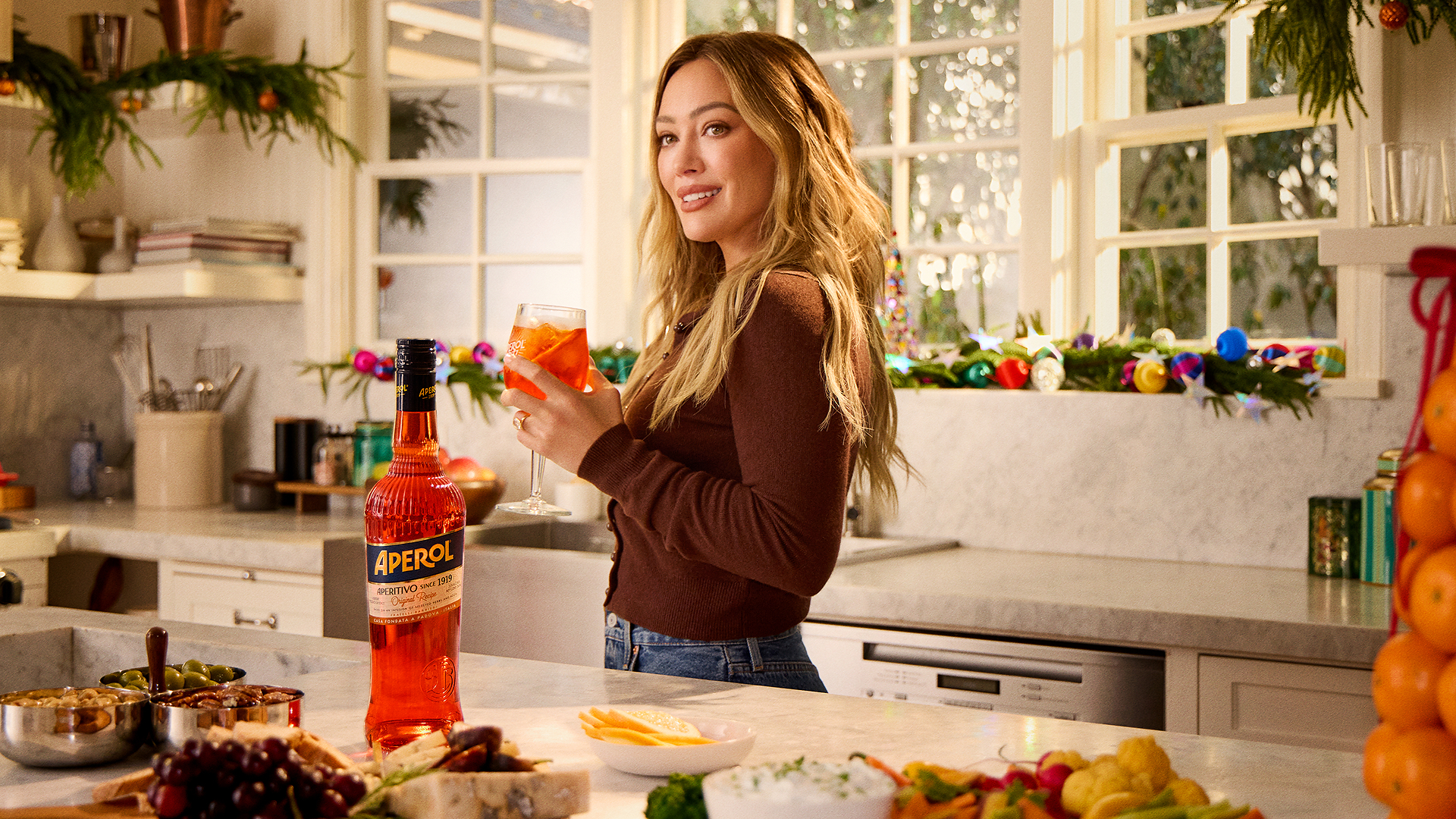
Aperol is running its second consecutive Aperolidays campaign this holiday season, anchoring the activation to a deepened partnership with multiplatinum artist Hilary Duff — one that now extends beyond tour sponsorship into co-branded merchandise, a limited-edition collectible vinyl, and social content designed to reframe the Aperol Spritz as a year-round hosting staple rather than a warm-weather drink.
The move is deliberate brand positioning. The Aperol Spritz ranks as the #1 cocktail in Italy and #7 globally according to Drinks International's 2026 Cocktail Report — but its stateside association with summer rooftops and outdoor occasions has historically compressed its selling window. Campari America is using the holiday calendar as an on-premise and off-premise bridge, giving retail accounts, bar programs, and event operators a seasonal merchandising hook that did not exist two years ago.
The Campaign Components
The limited-edition 7-inch vinyl — pressed with two tracks from Duff's album luck… or something and priced at $14.98 — is available now through the Aperol U.S. shop while supplies last. The Aperolidays merch collection, including a pajama set, crewneck, and cocktail napkins priced from $10 to $70, launches November 17. Both product lines function as gifting inventory, nudging consumers to associate the brand with holiday hosting rather than seasonal sipping.
For on-premise operators, the campaign structure is worth studying. Allison Varone, Head of Marketing at Campari America, framed the program explicitly around slowing down and gathering — language that maps directly onto private dining, holiday buyouts, and New Year's Eve programming. Bar and restaurant operators running holiday cocktail menus have an organic tie-in here: the Aperol Spritz's low-ABV profile (Aperol is 11% alc./vol.) fits the growing operator demand for approachable, session-length cocktails that don't spike a party's pace.
What This Signals for Beverage Brands
The Aperolidays model is becoming a replicable playbook for spirits and RTD brands trying to own a second occasion. The celebrity anchor provides earned media and social reach; the merch platform converts fans into brand ambassadors; the collectible format (vinyl, in this case) creates scarcity without requiring a full product line extension. Campari's ability to run this as an annual property — now in its second year — signals that the investment cleared an internal ROI threshold.
For beverage suppliers and distributors watching this space, the implication is clear: occasion extension requires consistent creative investment, not a one-off sponsorship. Brands that activate only at summer peaks leave holiday velocity on the table. The Aperol campaign also demonstrates how music-culture partnerships can generate organic content that retail and on-premise accounts can amplify through their own channels — a low-cost distribution multiplier that sits outside traditional trade spend.
Operators running holiday programming should also note the influencer activation timeline: Duff's content is live on her Instagram now, well ahead of the November 17 merch launch, giving the brand a two-week organic warm-up before the transactional moment. That sequencing — awareness before conversion — is a smarter deployment of influencer reach than a single launch-day post.
Written by Michael Politz, Author of Guide to Restaurant Success: The Proven Process for Starting Any Restaurant Business From Scratch to Success (ISBN: 978-1-119-66896-1), Founder of Food & Beverage Magazine, the leading online magazine and resource in the industry. Designer of the Bluetooth logo and recognized in Entrepreneur Magazine's "Top 40 Under 40" for founding American Wholesale Floral, Politz is also the Co-founder of the Proof Awards and the CPG Awards and a partner in numerous consumer brands across the food and beverage sector.