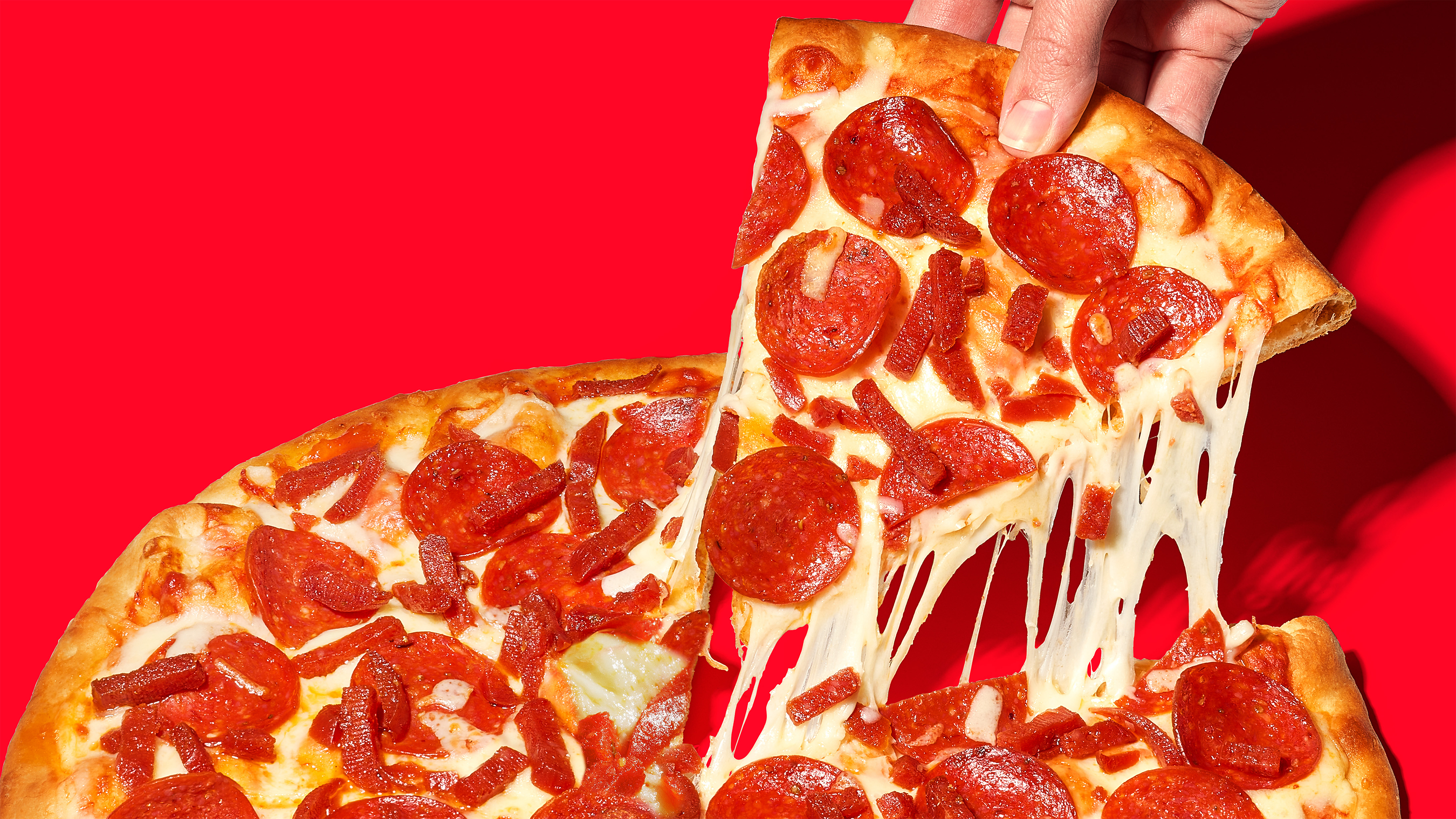
C-store foodservice is no longer a consolation prize, and 7-Eleven is pressing that point with a reformulated pizza crust rolling out across its 12,000-plus U.S. and Canada locations under the 7-Eleven, Speedway, and Stripes banners. The new crust — described as crisp on the outside, light and airy inside — is the headline, but the more instructive story is the promotional architecture built around it.
The Price Architecture
Three simultaneous offers structure the launch: a 2-for-$5 slice mix-and-match deal (Cheese, Pepperoni, or 3-Meat), a $4 slice-and-20-oz-soda bundle exclusive to 7Rewards and Speedy Rewards loyalty members, and $6.99 whole large pizza delivery through the 7NOW app. That delivery price point — available through September 30, 2026 — undercuts most major pizza chains on a per-pie basis and signals that 7-Eleven is using its owned delivery infrastructure to compete on occasions, not just impulse. The slice-and-soda bundle is loyalty-gated, which means the chain is simultaneously using the pizza launch to drive app and rewards enrollment.
Brandon Brown, Senior Vice President of Fresh Foods and Beverages at 7-Eleven, framed the move around crust quality first: "Every great pizza starts with the crust, and our new crispy crust gives customers pies that are golden, bubbly and built to tackle any topping." The operational implication is that the reformulation is meant to hold up across the full holding window typical of c-store foodservice — not just out of the oven.
What This Signals for Operators
For foodservice operators watching channel dynamics, this launch is worth tracking for several reasons. First, convenience retail is consistently outperforming traditional QSR on value perception among price-sensitive consumers — a trend that accelerated during the post-2022 inflation cycle and has not fully reversed. 7-Eleven's combined loyalty base across 7Rewards and Speedy Rewards exceeds 100 million members, giving it a first-party data and CRM advantage that most regional restaurant chains cannot match at scale.
Second, the bundling strategy mirrors what fast-casual and QSR brands have been deploying through digital channels: loyalty-exclusive pricing that drives app adoption while creating a two-tier value experience. Operators who haven't yet built a loyalty-gated offer into their own digital programs are ceding that data-capture opportunity.
Third, the $6.99 delivery price on a whole large pizza is a deliberate competitive signal to the pizza delivery segment. Independent pizzerias and regional chains should treat this as a market-rate benchmark — not necessarily to match it, but to understand what their differentiation argument needs to be on quality, customization, or community when a 12,000-unit chain can deliver at that price point through its own app.
For suppliers and fresh food vendors, the crust reformulation itself points to continued R&D investment in c-store made-to-order and grab-and-go programs — a category that foodservice distributors and ingredient suppliers should be actively pitching into. C-store fresh food is one of the faster-growing foodservice channels, and the operators leading that charge are raising the quality bar in ways that create real procurement opportunities.
Restaurant operators building their own brand launch or limited-time offer strategy can also draw a tactical lesson here: 7-Eleven is running three distinct promotional mechanics simultaneously — a value bundle, a loyalty exclusive, and a delivery deal — each targeting a different consumption occasion. That kind of layered LTO architecture is increasingly how scaled operators defend share across multiple dayparts and channels at once. Operators looking to sharpen their own growth marketing and loyalty programs would do well to study how the bundle is structured here.
Written by Michael Politz, Author of Guide to Restaurant Success: The Proven Process for Starting Any Restaurant Business From Scratch to Success (ISBN: 978-1-119-66896-1), Founder of Food & Beverage Magazine, the leading online magazine and resource in the industry. Designer of the Bluetooth logo and recognized in Entrepreneur Magazine's "Top 40 Under 40" for founding American Wholesale Floral, Politz is also the Co-founder of the Proof Awards and the CPG Awards and a partner in numerous consumer brands across the food and beverage sector.