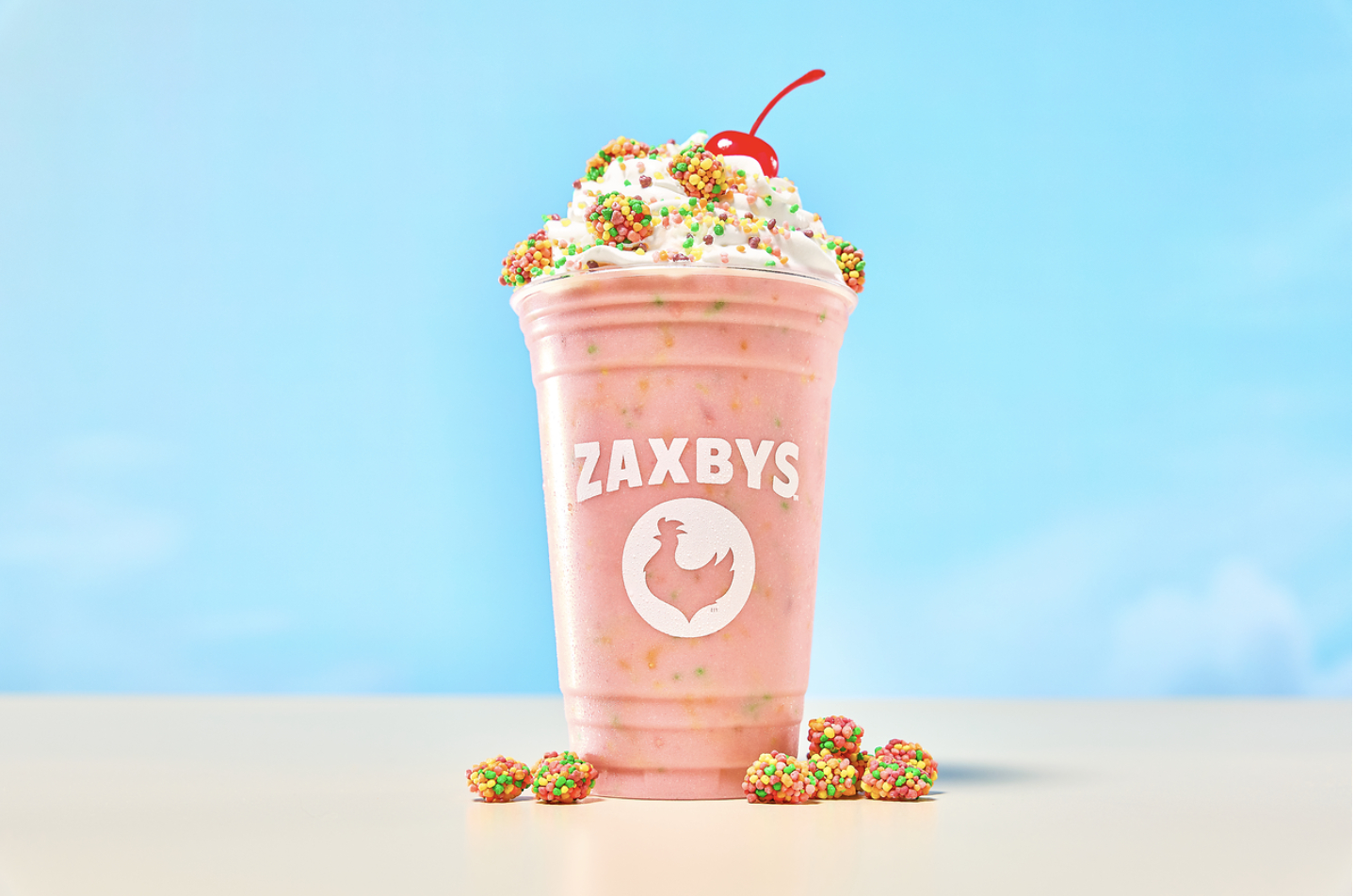
After a regional test run in 2025, Zaxby's is bringing its NERDS Strawberry Milkshake to all 1,000-plus locations across 24 states beginning August 31. The limited-time offering layers Original NERDS candies into a hand-spun strawberry milkshake base, topped with NERDS Gummy Clusters, Rainbow NERDS candy, whipped cream, and a Maraschino cherry. The nationwide push was driven by demand signals from the test-market cohort — a meaningful data point for operators evaluating how to stage LTO rollouts without overcommitting on supply or marketing spend.
The Collab Playbook
The mechanics here are worth noting for any operator or brand licensing team. Zaxby's didn't launch nationwide cold — it introduced the item in select markets, measured velocity, and used guest response to justify a full-chain commitment. Patrick Schwing, Chief Marketing and Strategy Officer at Zaxby's, described the logic plainly: the NERDS brand's sweet-and-tangy profile was a calculated fit for the chain's hand-spun milkshake platform, and test-market enthusiasm gave the team confidence to scale. That staged approach mirrors what larger QSR players have institutionalized, and it's increasingly accessible to regional and mid-size chains that now have better digital sales attribution tools to read LTO performance in near real time.
Candy and CPG brand collaborations have become a dependable mechanism for QSR chains to buy cultural relevance without building it from scratch. NERDS, owned by Ferrara Candy Company, carries strong nostalgia equity with millennial and Gen Z consumers — the same demographics driving premium beverage attach rates at fast-casual and QSR chains. For Zaxby's, pairing the collab with its milkshake platform (already a higher-margin add-on category) makes strategic sense: the item upgrades an existing SKU rather than requiring new kitchen equipment or a significant prep workflow change.
What Operators Should Watch
The beverage occasion is where QSR chains are fighting hard for incremental check size right now. Milkshakes, spiked or otherwise, and candy-infused drinks have shown strong social shareability — an organic media multiplier that extends paid campaign reach. Operators evaluating their own LTO calendars should note that candy-brand licenses tend to move faster than food-brand licenses, partly because the CPG partner's marketing team often co-invests in launch amplification. That co-marketing dynamic can materially reduce a chain's own media burden for a given window.
From a menu trends and beverage strategy standpoint, the NERDS collab also reinforces the broader pattern of QSR brands treating their beverage program as a distinct brand-building surface — not just a combo upsell. Chains that have historically underinvested in beverage LTO velocity may find competitor moves like this one applying pressure on their own calendar planning. For suppliers and packaging vendors tracking how limited-time beverage items get specced and sourced, the Zaxby's model — test regionally, read data, scale — offers a repeatable framework worth pitching back to operator clients.
For more on how candy and CPG brand licensing is shaping QSR menu strategy, see our coverage of brand launch mechanics and retail readiness.
Written by Michael Politz, Author of Guide to Restaurant Success: The Proven Process for Starting Any Restaurant Business From Scratch to Success (ISBN: 978-1-119-66896-1), Founder of Food & Beverage Magazine, the leading online magazine and resource in the industry. Designer of the Bluetooth logo and recognized in Entrepreneur Magazine's "Top 40 Under 40" for founding American Wholesale Floral, Politz is also the Co-founder of the Proof Awards and the CPG Awards and a partner in numerous consumer brands across the food and beverage sector.