In professional foodservice operations, kitchen productivity directly impacts bottom-line profitability. Every minute saved during prep translates to labor cost reduction. Every cleaner cut preserves product quality and reduces waste. The tools chefs use matter—not as luxury items, but as essential business infrastructure that affects both operational consistency and final product quality.
This is where premium cutlery enters the equation. Shun Cutlery, the knife line of Kai Corporation, has built its reputation over more than two decades by introducing Japanese blade-making principles to North American kitchens. The company's latest innovation, the Shiranami collection, demonstrates how thoughtful engineering directly impacts kitchen performance metrics that operators track daily: consistency, efficiency, and product preservation.
Engineering for Operational Consistency
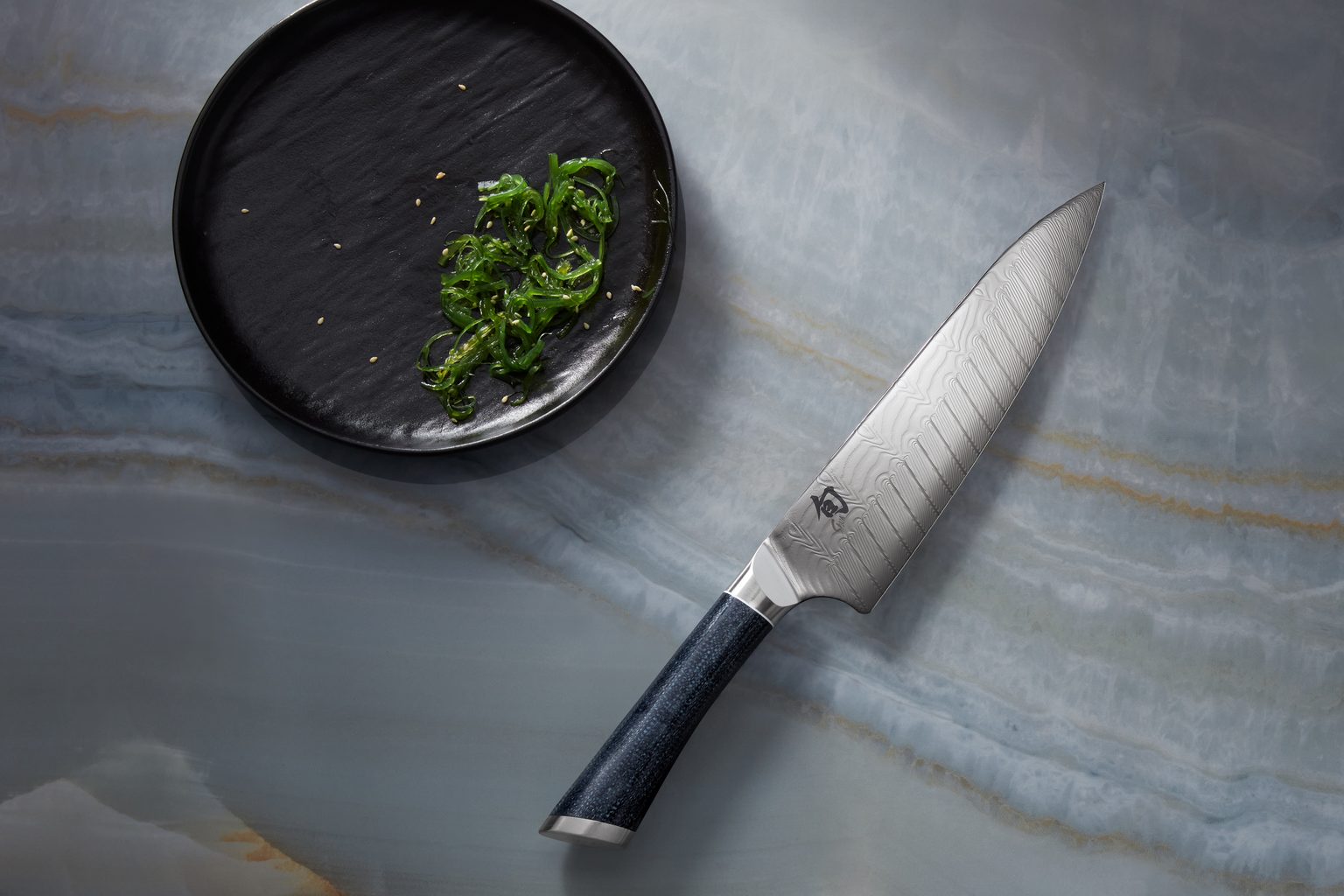
The Shiranami Chef's Knife is an eight-inch blade built on dual-core construction using alternating VG10 and VG2 high-carbon stainless steels. Seventy-one micro-layers are forge-welded and roll forged together, then hand-sharpened to a precise 16-degree edge on each side. The manufacturing process involves more than 100 individual steps—all completed by hand in Seki City, Japan, a blade-making center with over a century of industry heritage.
Within professional kitchens, consistency is measured in fractions rather than inches. A cleaner cut preserves delicate herbs. Less cell damage means vegetables oxidize more slowly. Fish maintains its texture. Proteins portion more evenly. These seemingly small details compound across a service: less oxidation extends shelf life, cleaner cuts reduce waste, and even portioning improves menu costing accuracy and plate consistency.
The blade's wave-inspired Damascus pattern is engineered for function as much as appearance. The etched surface reduces drag during slicing, encouraging food to release more easily from the blade. This design feature directly reduces cutting effort, which translates to less chef fatigue during extended prep sessions and faster throughput during service.
Ergonomic Design Reduces Labor Fatigue
Japanese blade philosophy emphasizes precision, balance, and efficiency over weight and brute force. Rather than forcing effort, the knife becomes an extension of the chef's hand, reducing unnecessary movement while increasing control. The Shiranami achieves this through specific design choices: a forward-tilting bolster naturally supports the pinch grip favored by professional chefs, and a resin-stabilized jute micarta handle provides a tactile, water-resistant surface that remains comfortable through extended prep sessions.
For operators managing labor costs, reduced fatigue has direct business implications. Less strain on staff during peak prep periods means faster service, fewer movement-related injuries, and improved employee retention in an industry where kitchen staff turnover is a persistent challenge.
Market Validation and Industry Recognition
The Shiranami Chef's Knife earned Best New Chef's Knife honors in the 2026 Esquire Home Awards. The Shiranami 6-Piece Block Set received recognition in the 2026 Robb Report Home Awards, while the collection previously won Best New Kitchen Knife at the 2025 BLADE Show—one of the industry's most respected showcases for knife innovation.
These accolades reflect broader trends in hospitality. Open kitchens and chef-guest interactions have elevated the visibility of kitchen tools. Professional equipment now communicates craftsmanship to diners, much like custom wood-fired ovens or handcrafted cookware. For establishments positioning themselves as quality-focused, the tools visible to guests reinforce messaging about standards and care.
Long-Term Value vs. Replacement Cycles
Premium cutlery represents equipment investment strategy. Rather than cycling through multiple mid-tier knives that dull and require frequent replacement, operators benefit from investing in tools that maintain edge retention and performance over years. That commitment reflects Japanese blade-making principles: respect for materials, obsessive attention to detail, and selection of tools designed to perform exceptionally well across extended service cycles.
In an industry where operational efficiency drives margins, Shun's Shiranami collection demonstrates that premium tooling addresses measurable business concerns—consistency, labor efficiency, product quality, and equipment lifecycle cost—not merely aesthetic preference. For foodservice professionals evaluating capital expenditure on kitchen infrastructure, that distinction matters significantly.