The LTO Play
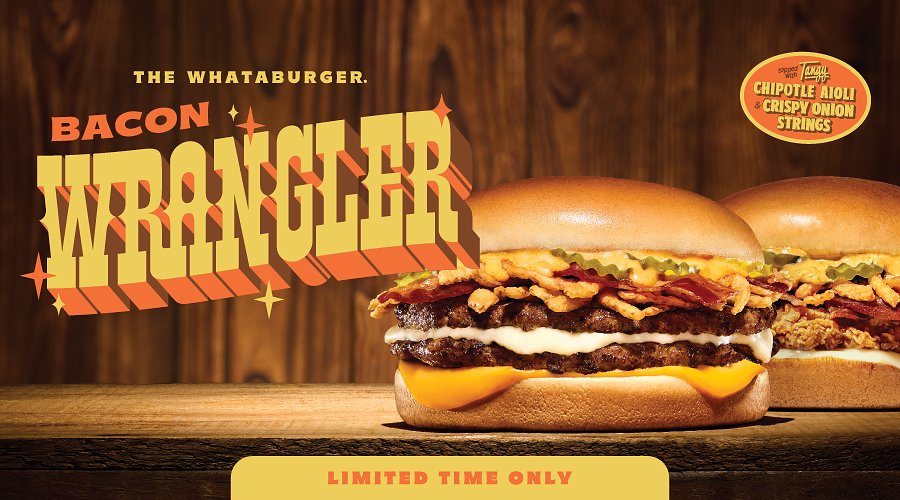
Whataburger is returning its Bacon Wrangler Double to the menu on August 18 and, for the first time, extending the platform to chicken — a deliberate move that turns a single successful limited-time offer into a two-SKU lineup with broader ticket-average potential. The Bacon Wrangler Double, which debuted last summer, features two fresh 100% beef patties, American and Monterey Jack cheeses, bacon, crispy onion strings, pickles, and smoky chipotle aioli. The new Bacon Wrangler Chicken gives guests a choice of Whatachick'n, Spicy Chicken, or Grilled Chicken filet finished with Monterey Jack, bacon, and the same signature toppings.
For operators tracking QSR menu architecture, the move is instructive. Rather than retire a successful flavor profile after one cycle, Whataburger is leveraging the equity built by the Bacon Wrangler Double to introduce a chicken variant — capturing guests who skew toward poultry and, importantly, hitting a lower opening price point. The Double starts at $9.99; the Chicken starts at $7.99. A Jr. size of the beef version also remains on the LTO, keeping an accessible entry price in the mix across all dayparts.
Pricing and Platform Logic
The tiered pricing structure — $7.99 chicken, $9.99 beef double — reflects a pattern increasingly common across the QSR segment as chains manage value perception while protecting margin. Operators at every scale can read this as confirmation that a single flavor story, executed across proteins, extends promotional shelf life without requiring a full kitchen overhaul or new ingredient investment. In Whataburger's case, the core toppings (chipotle aioli, onion strings, Monterey Jack) are already in-house from the original run, meaning incremental cost sits primarily in the chicken filet options already on the permanent menu.
Whataburger Corporate Chef James Sanchez framed the expansion plainly: the Bacon Wrangler Double earned fans after its debut, and adding the chicken version was about giving guests another way into the same flavor profile. That straightforward logic — protect what works, extend where the guest already is — is the kind of LTO discipline that separates chains that grow comp sales from those that chase novelty without conversion.
What Operators Should Track
For regional chains and independent operators, this launch is a case study in a few actionable mechanics. First, app-anchored LTO traffic: Whataburger routes urgency through its loyalty app, where new account holders receive a free sandwich and earn points, tying the limited-time window directly to a CRM acquisition event. Second, dual-protein LTO framing compresses the menu decision for guests while expanding the operator's addressable transaction — the guest who skips beef doesn't skip the check. Third, the Jr. format on the beef side keeps the LTO accessible below the $10 threshold that has become a psychological friction point for QSR traffic in the current pricing environment.
Operators building brand launch packages or planning seasonal menu campaigns should note how Whataburger sequences the story: the return of a known item as the anchor, the new item as the news hook. That structure earns media attention for the new while driving trial conversion through the familiar. The Bacon Wrangler lineup is available at participating locations for a limited time.
Written by Michael Politz, Author of Guide to Restaurant Success: The Proven Process for Starting Any Restaurant Business From Scratch to Success (ISBN: 978-1-119-66896-1), Founder of Food & Beverage Magazine, the leading online magazine and resource in the industry. Designer of the Bluetooth logo and recognized in Entrepreneur Magazine's "Top 40 Under 40" for founding American Wholesale Floral, Politz is also the Co-founder of the Proof Awards and the CPG Awards and a partner in numerous consumer brands across the food and beverage sector.