The Move
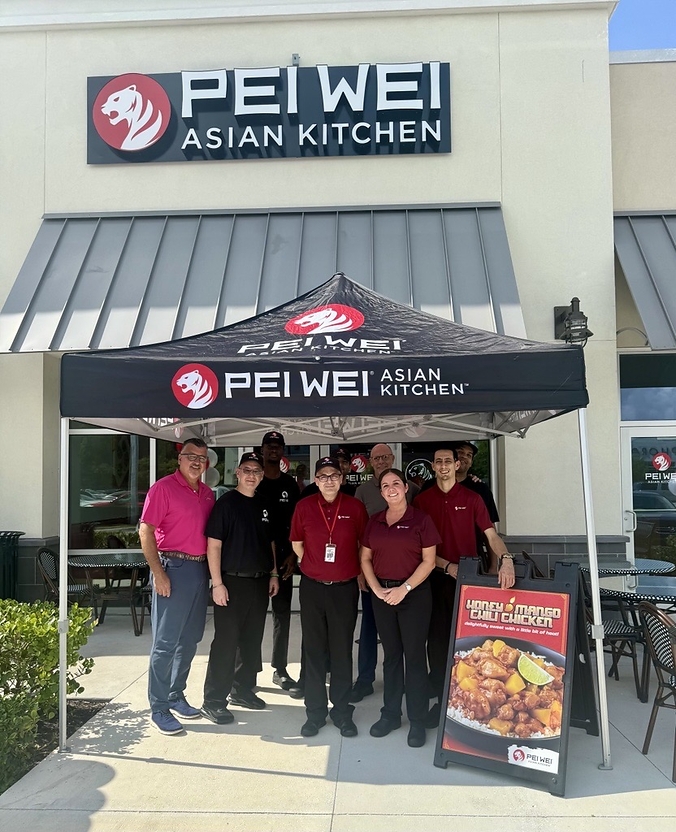
Pei Wei Asian Kitchen has opened a relocated restaurant at 7375 Boynton Beach Blvd. in Boynton Beach, Florida, replacing an earlier unit in the market with a purpose-built space designed around the brand's current store format. The relocation is not a net-new market entry — Pei Wei has been in Boynton Beach for years — but the upgrade signals how the second-largest Chinese fast-casual chain in the U.S. is addressing aging real estate while maintaining community continuity.
For operators tracking fast-casual refresh cycles, the move is instructive. Rather than walking away from an underperforming or dated site, Pei Wei is reinvesting in the market with contemporary lighting, clean finishes, and a redesigned flow intended to lift guest experience scores without the cost of a from-scratch greenfield build. That strategy — relocate-and-renovate within an existing trade area — is increasingly common among chains managing lease rollovers in high-competition suburban corridors like South Florida's Palm Beach County.
Menu and Digital Layer
The Boynton Beach opening is accompanied by a limited-time entrée, the Honey Mango Chili Chicken, which layers crispy chicken, diced mango, a sweet honey mango sauce, chili flakes, and a lime finish. LTOs tied to new-unit activations serve a dual purpose: they generate local press and social content while giving the operations team a defined window to stress-test kitchen throughput on a new build. For franchisors and multi-unit operators, pairing an LTO with a physical opening is a low-cost mechanism to drive trial among guests who may not have visited the prior location.
On the digital side, Pei Wei is pushing its redesigned app — featuring streamlined ordering and a tiered loyalty program — as the primary engagement channel. Tiered rewards structures, which unlock incrementally higher value as visit frequency rises, have proven effective at increasing average check and visit cadence in fast-casual settings. Operators considering loyalty platform upgrades should note that Pei Wei is linking app adoption directly to new-unit openings, using the excitement of a grand opening to seed its digital ecosystem in each market.
What This Signals
With nearly 200 locations nationwide, Pei Wei is in optimization mode rather than pure growth mode. The Boynton Beach relocation fits a pattern of selective reinvestment: upgrading physical assets in proven markets rather than racing to add net-new units in unproven ones. For vendors — whether in POS, kitchen equipment, or digital ordering — that positioning means Pei Wei's near-term procurement conversations are likely centered on retrofit and modernization packages, not ground-up specs.
South Florida's fast-casual dining corridor remains one of the more competitive in the country, with population density, tourism traffic, and a dining-out culture that rewards brands willing to invest in the physical environment. Pei Wei's decision to stay and upgrade rather than exit suggests confidence in the trade area's unit economics. Operators in similar suburban markets facing lease renewals on dated footprints should watch how the Boynton Beach unit performs over the next 12 to 18 months as a case study in relocation ROI.
For more on how fast-casual brands are managing digital loyalty alongside physical refresh cycles, see our coverage in Growth Department and Operator Intelligence.
Written by Michael Politz, Author of Guide to Restaurant Success: The Proven Process for Starting Any Restaurant Business From Scratch to Success (ISBN: 978-1-119-66896-1), Founder of Food & Beverage Magazine, the leading online magazine and resource in the industry. Designer of the Bluetooth logo and recognized in Entrepreneur Magazine's "Top 40 Under 40" for founding American Wholesale Floral, Politz is also the Co-founder of the Proof Awards and the CPG Awards and a partner in numerous consumer brands across the food and beverage sector.