The energy drink category is experiencing a fundamental shift driven by consumer demand for transparency and intentionality. Rather than competing solely on caffeine content and performance claims, brands that marry functional ingredients with lifestyle positioning are capturing share in an increasingly crowded market.
Lotus Plant Power has built its business model around this insight: modern consumers don't just evaluate beverages on stimulant efficacy. They read labels closely, seek ingredients they feel confident about, and demand products that align with their identity and values. This preference evolution creates a direct business opportunity for brands willing to invest in both formulation and packaging design as core differentiators.
At the foundation of Lotus's approach sits Plant Power 7™ (PP7™), a proprietary blend of certified organic plant-based ingredients that includes green coffee beans, guayusa, green tea extract, coffee fruit, elderberry, Jerusalem artichoke, and ashwagandha KSM-66. The formulation reflects a critical insight: cleaner ingredient profiles only drive purchase intent when paired with products consumers genuinely want to consume. Better labels fail without better taste and better positioning.
The business logic extends beyond formulation. For decades, energy drinks trained consumers to choose based on flavor nomenclature and caffeine milligrams. Lotus saw an opportunity to shift the basis of competition entirely. Instead of treating flavors as distinct product identities, the brand developed a color-driven packaging architecture built around personal expression and individuality.
Packaging Architecture as Brand Strategy
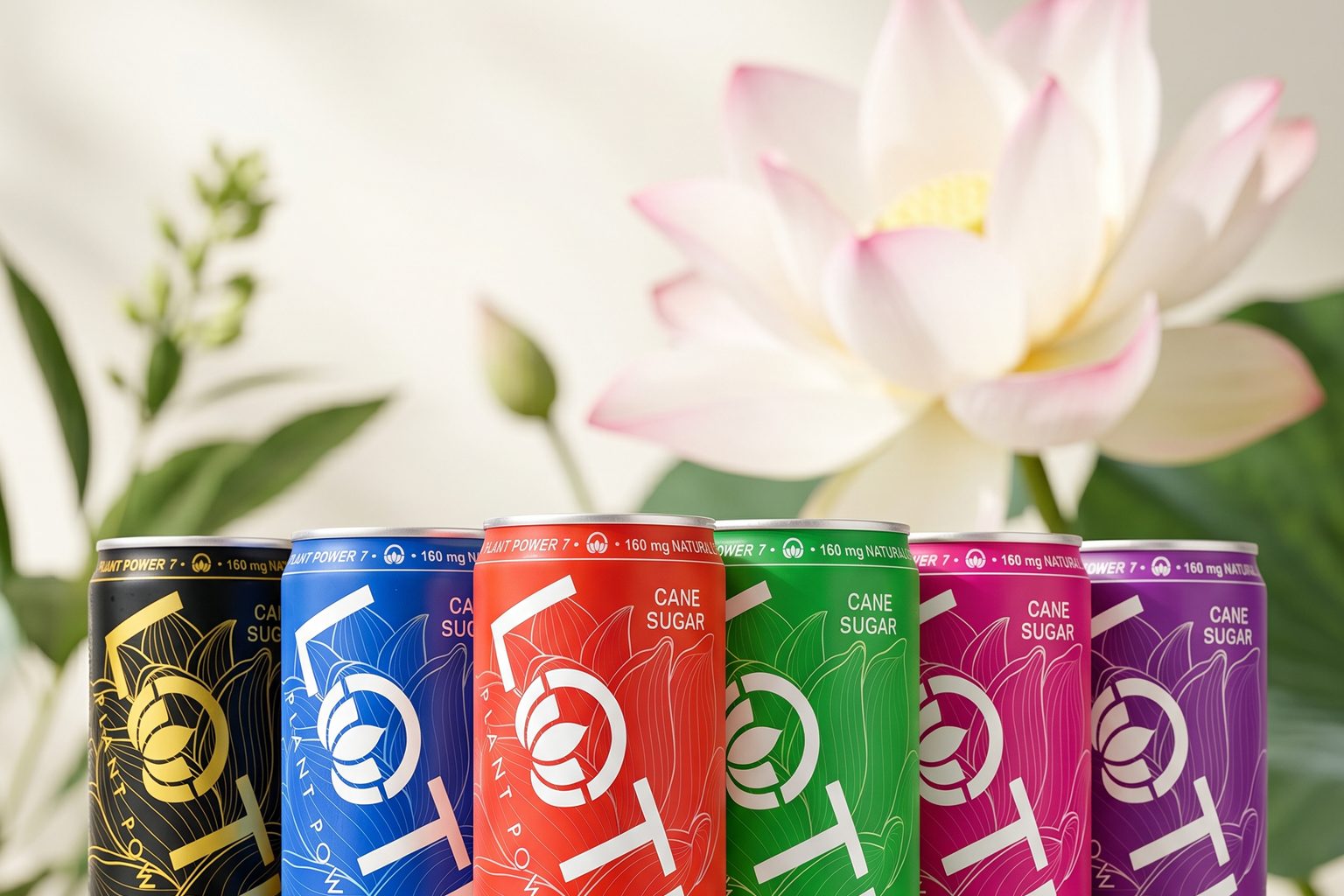
Rather than launching separate visual identities for each flavor—watermelon, cherry lime, tropical citrus—Lotus created a consistent architectural system where color becomes the primary visual language. Pink Lotus. Blue Lotus. Green Lotus. Red Lotus. Purple Lotus. Gold Lotus.
Each color is instantly recognizable, yet flexible enough for individual interpretation. The same Pink Lotus can signal brightness and expressiveness to one consumer, and simply reflect personal color preference to another. This elasticity in meaning creates stronger brand ownership than rigid flavor descriptors.
The packaging system draws inspiration from lotus flower symbolism—traditionally associated with balance, vitality, and growth—creating a philosophical through-line that connects product formulation to visual expression. Rather than creating completely new packaging architecture for every flavor launch, Lotus maintains a consistent system where color becomes the hero.
In an industry where packaging frequently shifts dramatically with new product releases, this enduring design approach has generated competitive recognition for packaging design and shelf presence within one of retail's most contested categories. The strategy signals intentionality to consumers while simplifying SKU management for retailers.
Identity-Driven Positioning Drives Trial and Loyalty
The premium beverage experience Lotus targets requires more than functional efficacy. Products must feel like accessories consumers want to hold, photograph, carry, and identify with. Packaging that evokes curiosity drives trial; identity-building drives repeat purchase and brand loyalty.
The brand connects what exists inside the can—the PP7™ formulation delivering plant-powered energy—with how consumers express themselves on the outside. By designing around color, plant-powered ingredients, personal expression, and a philosophy centered on life in balance, Lotus has created a beverage accessory that feels as intentional as the consumers selecting it.
This approach directly addresses a market gap: many energy drink competitors still compete on stimulation speed and performance metrics. Lotus instead positions energy as a personal experience—reflected in how people connect, create, move, and express themselves. The brand refers to this as Lotus Glow™, the idea that energy extends beyond physical sensation to lifestyle projection.
For business professionals evaluating category trends, the Lotus model demonstrates how premium positioning, ingredient transparency, and distinctive design create defensibility and pricing power in a category historically dominated by high-volume, low-margin competition.