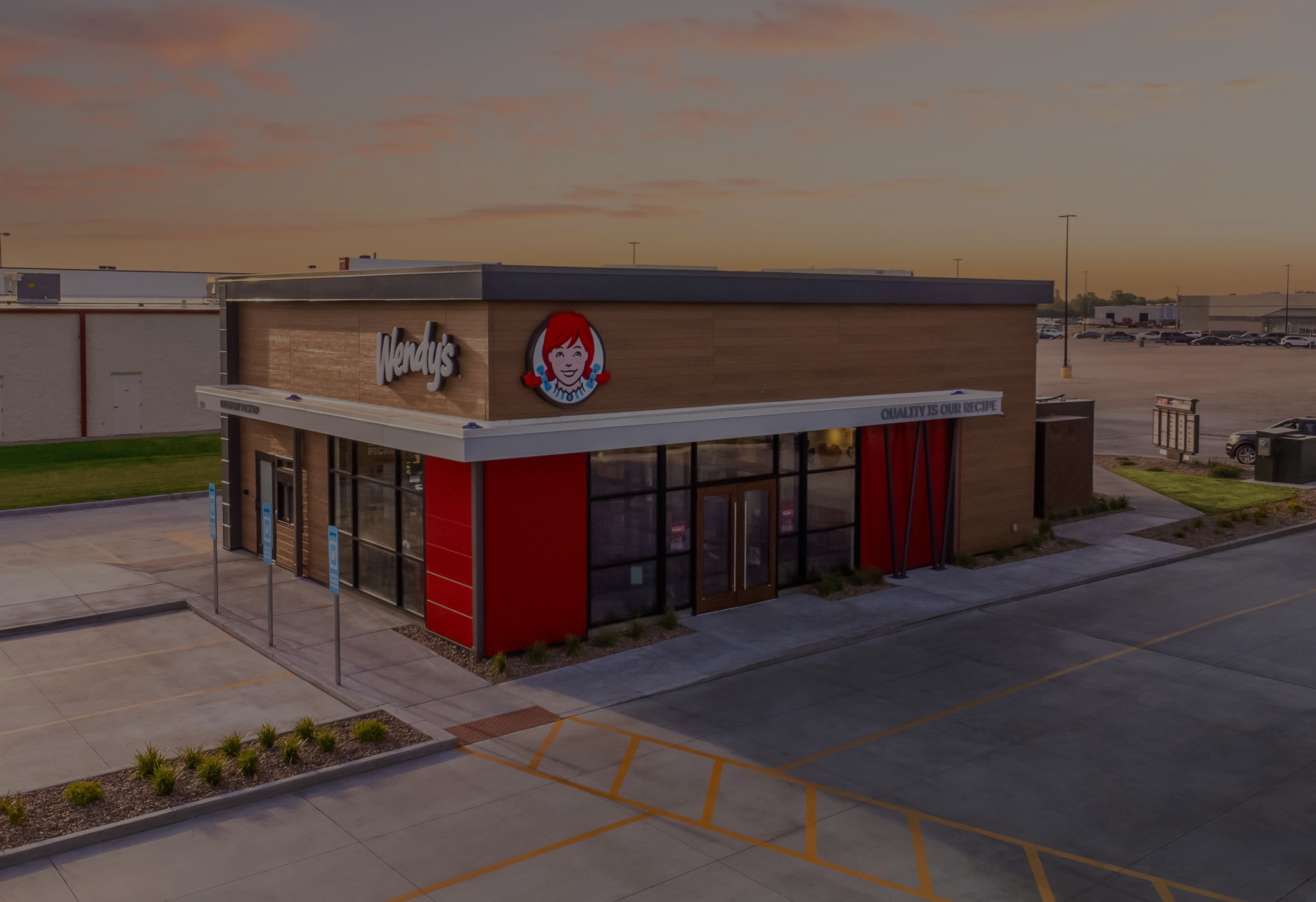
U.S. same-restaurant sales at Wendy's fell 7.0% in the second quarter ended June 28, 2026 — the steepest domestic comparable decline the chain has reported in recent memory — prompting new President and CEO Bob Wright to withdraw the company's full-year financial outlook and cut the annualized dividend from its prior level to $0.28 per share. The capital reallocation is explicit: free up cash to fund a structured turnaround rather than return it to shareholders while the core business underperforms.
For operators and franchisees tracking QSR health as a proxy for consumer sentiment, the numbers are worth unpacking. Global systemwide sales dropped 6.5% to approximately $3.4 billion for the quarter, driven almost entirely by the U.S. where traffic declines, commodity inflation, and labor rate pressure compressed company-operated restaurant margin by 240 basis points year-over-year to 13.8%. International systemwide sales actually grew 3.4%, suggesting the brand's challenges are concentrated domestically rather than structural across the full system. The U.S. unit count declined by a net 245 locations in the first half of the year — a contraction that directly reduces royalty revenue and narrows the system's advertising leverage.
The Turnaround Framework
Wright, who previously served in a leadership role at Wendy's before returning, has identified five operational priorities: rebuilding a quality menu at compelling value, demand-driving marketing, operational excellence, a digital experience that builds visit frequency, and restaurant development as a growth engine. The framing is familiar to anyone who has watched QSR turnarounds play out at Burger King or Jack in the Box — but the sequence matters. Value proposition and traffic recovery come before unit growth, which is the right order given that net domestic closures are already running at a pace that erodes the royalty base franchisors depend on.
Total revenues were $571 million, up 1.7% from the prior year quarter largely because the company acquired franchise-operated restaurants in Q3 2025 and because local advertising funds were reallocated to the national fund — both accounting-driven lifts that obscure underlying softness in adjusted revenues, which declined 1.4% to $443 million. Adjusted EBITDA fell 15.4% to $124.1 million. Free cash flow for the first half improved to $120.3 million, aided by lower capital expenditures and reduced franchise development fund spending — a sign that the company is conserving capital rather than deploying it aggressively.
What This Means for Vendors and Franchisees
For suppliers, technology vendors, and marketing agencies doing business with Wendy's or its franchisees, a formal turnaround under new leadership typically reshapes procurement priorities quickly. Spend tends to concentrate on menu R&D, value-tier promotions, and digital loyalty infrastructure — while discretionary categories face scrutiny. The reduction in franchise development fund expenditures (from $16.5 million to $11.0 million year-to-date) signals that the pipeline for incentivizing new builds has tightened, which will affect equipment, construction, and FF&E vendors planning against development commitments. Franchisees watching their own economics — restaurant margin at 13.8% is thin for a QSR — should expect corporate pressure to accelerate value promotions that rebuild traffic before margin recovery becomes the headline.
For a broader read on how QSR brands are using digital and loyalty programs to drive frequency during value-cycle downturns, the strategic logic Wright is deploying maps closely to playbooks already in motion at peer brands. And operators evaluating how commodity inflation and labor pressures are reshaping menu pricing decisions across foodservice will find Wendy's quarter a useful data point: even a brand with $3.4 billion in global systemwide sales is not immune to the margin compression that has been building across the industry since 2024.
Written by Michael Politz, Author of Guide to Restaurant Success: The Proven Process for Starting Any Restaurant Business From Scratch to Success (ISBN: 978-1-119-66896-1), Founder of Food & Beverage Magazine, the leading online magazine and resource in the industry. Designer of the Bluetooth logo and recognized in Entrepreneur Magazine's "Top 40 Under 40" for founding American Wholesale Floral, Politz is also the Co-founder of the Proof Awards and the CPG Awards and a partner in numerous consumer brands across the food and beverage sector.