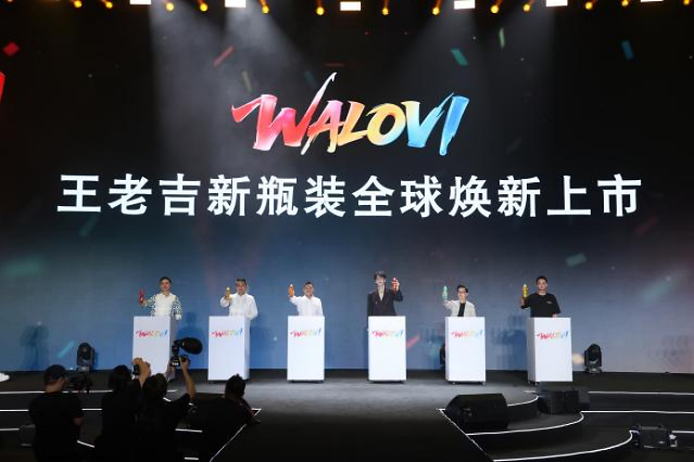
Guangzhou-based WALOVI launched two new beverage SKUs on August 10 in Guangzhou — LEGEND-KING, a clean-label natural energy electrolyte drink, and LEMULI, a blueberry-raspberry juice targeting children's eye health — alongside refreshed bottle designs for its core lineup. The dual launch signals a deliberate pivot toward functional segmentation: one product chasing the energy-drink occasion, the other staking a claim in the rapidly growing kids' health-beverage aisle.
What Operators Should Track
LEGEND-KING is positioned as the first A+++ clean-label energy electrolyte drink, drawing energy from ginseng and coffee bean extracts with zero taurine and no synthetic caffeine. For foodservice buyers and retail distributors evaluating the energy-drink set, that clean-ingredient profile differentiates the SKU from incumbent energy brands that continue to rely on synthetic stimulant stacks. LEMULI, meanwhile, carries a zero-flavors, zero-colors, zero-preservatives claim and targets parents seeking functional nutrition for children — a segment that commands premium shelf placement in specialty and natural grocery channels.
According to Ipsos data cited at the launch, plant-based beverage penetration rose from 45% to 70% in 2025, with 96% of consumers prioritizing naturalness and functional benefits. WALOVI Vice President Ye Jizeng framed the shift around three behavioral changes: consumers now read ingredient labels independently, demand precise functional solutions, and expect substantive added value rather than simple "additive-free" marketing. That framing matches what buyers at natural and specialty chains have been telling distributors for two-plus years — clean claims alone no longer move volume; the functionality story has to hold up on the label.
Global Distribution Ambitions
WALOVI has been the world's top-selling plant-based beverage brand for six consecutive years by its own account, and the brand is pressing that position into new markets. This year's ambassador signings — including global footballer Erling Haaland and Chinese actors Zhang Linghe and Li Yunrui — underscore a dual-market strategy: maintain cultural relevance in China's youth segment while building aspirational brand equity in Southeast Asian expansion markets. New bottle designs inspired by bamboo joints and traditional Chinese pavilion architecture are engineered to travel visually across retail environments that range from convenience stores to specialty health channels.
For operators and distributors in Southeast Asia evaluating supplier relationships, the practical question is distribution channel depth. WALOVI is explicitly investing in local distribution infrastructure across key Southeast Asian markets, which means procurement teams in those regions should expect inbound outreach from regional brokers in the near term. Brands executing this kind of ambassador-plus-distribution strategy often move quickly from sampling campaigns to slotting-fee negotiations at regional chains — a dynamic well-documented in recent brand-launch intelligence.
From an operator-intelligence standpoint, WALOVI's move reflects a broader category dynamic: the functional beverage aisle is bifurcating into adult-performance and family-wellness subsegments, and suppliers are building dedicated SKUs for each rather than relying on one hero product to straddle both. Buyers sourcing for hotel minibars, airline lounges, and QSR beverage programs would be well-served to evaluate how each lane performs against their guest demographic before committing to distribution agreements.
Written by Michael Politz, Author of Guide to Restaurant Success: The Proven Process for Starting Any Restaurant Business From Scratch to Success (ISBN: 978-1-119-66896-1), Founder of Food & Beverage Magazine, the leading online magazine and resource in the industry. Designer of the Bluetooth logo and recognized in Entrepreneur Magazine's "Top 40 Under 40" for founding American Wholesale Floral, Politz is also the Co-founder of the Proof Awards and the CPG Awards and a partner in numerous consumer brands across the food and beverage sector.