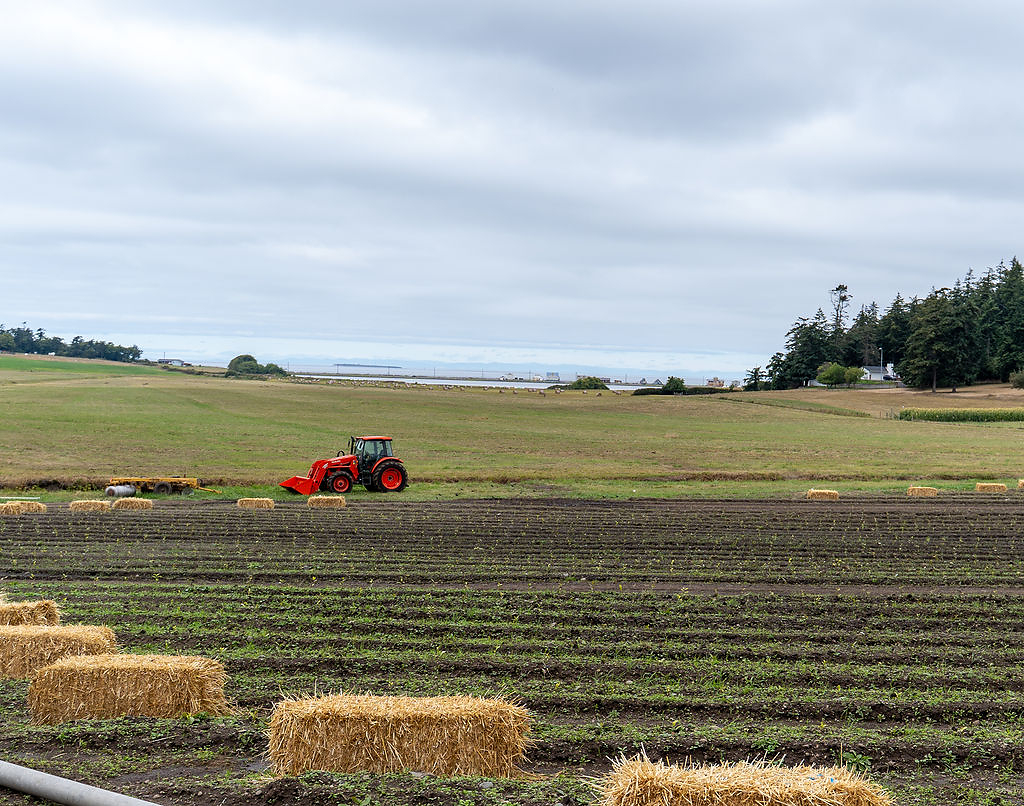
Seattle-based Vale Matcha has planted its first 12,000 tea plants on a 365-acre property on Whidbey Island, Washington, launching what the company describes as the first integrated, commercial-scale matcha-growing and production operation in the United States. The long-term plan calls for roughly 200 acres under cultivation — approximately one million plants — plus a 30,000-square-foot tea-processing facility in nearby Oak Harbor.
For foodservice operators and specialty beverage buyers, the announcement is worth reading beyond the farm-story packaging. A global matcha shortage in 2025 — the same year Vale opened its first Seattle café — exposed how thin the supply chain is for high-quality matcha reaching U.S. menus. Vale's response is vertical integration: control cultivation, tencha processing, and precision milling under one operating structure rather than competing on the spot market for Japanese supply.
The Supply Chain Logic
Vale currently sources all matcha from producer partners in Japan and says it will maintain those relationships regardless of what Vale Farms produces. That's a prudent hedge — tea plants take years to establish and decades to fully optimize. But the infrastructure investment tells a clearer story. The Oak Harbor facility will steam, dry, and process harvested leaves into tencha, which then travels to Vale's existing SODO milling operation in Seattle. Once that loop closes, Vale owns every link between soil and finished powder — a cost and quality lever few U.S. matcha brands can claim.
The company is working with Terada Seisakusho, a Japanese manufacturer of tea-processing equipment, on the Oak Harbor facility's systems. Stem stock for the first planting came from Tea Hawaii & Company, where co-founders Eva Lee and Chiu Leong have cultivated Japanese cultivars including Yabukita and Yamatomidori for 25 years. Washington State University's Department of Horticulture has field-trial data supporting tea viability in the Pacific Northwest — academic cover that will matter when Vale eventually approaches wholesale buyers and retail partners with provenance claims.
What Operators Should Watch
For café operators and beverage directors, the near-term implication is not supply relief — Vale Farms will not be producing commercial volumes for years. The strategic signal is that premium domestic matcha, with full traceability and a defined regional terroir story, is moving from concept to capitalized infrastructure. That's the same trajectory specialty coffee followed in regions like Hawaii and California before it reshaped café menu positioning and wholesale pricing expectations.
Buyers who locked in long-term Japanese supply relationships during the 2025 shortage are well-positioned for now. But as Vale and potential follow-on growers in the Pacific Northwest begin producing, expect domestic matcha to enter the conversation around menu trend positioning and beverage program differentiation — much the way domestic olive oil and single-origin cacao shifted sourcing conversations in fine dining.
For brands considering a matcha SKU launch or expanding an existing matcha line, the Vale Farms announcement is also a brand launch intelligence signal: a "Pacific Northwest grown" origin story, once validated at commercial scale, will carry meaningful retail shelf and foodservice menu differentiation. Distributors and specialty grocery buyers will be looking for that narrative well before harvests are large enough to fill purchase orders.
The Long Game
Luke Larson, Founder and CEO of Vale, framed the ambition explicitly against Napa Valley's generational arc — a region whose identity was built by early growers willing to absorb decades of learning before the category paid off. Fife Symington, President of Vale Farms, brings more than 30 years of large-scale greenhouse and agricultural operations experience to the execution side of that vision. The combination of agricultural credibility, processing infrastructure, and an established café and wholesale channel gives Vale a more complete operator profile than most farm-to-cup beverage startups manage at this stage.
Written by Michael Politz, Author of Guide to Restaurant Success: The Proven Process for Starting Any Restaurant Business From Scratch to Success (ISBN: 978-1-119-66896-1), Founder of Food & Beverage Magazine, the leading online magazine and resource in the industry. Designer of the Bluetooth logo and recognized in Entrepreneur Magazine's "Top 40 Under 40" for founding American Wholesale Floral, Politz is also the Co-founder of the Proof Awards and the CPG Awards and a partner in numerous consumer brands across the food and beverage sector.