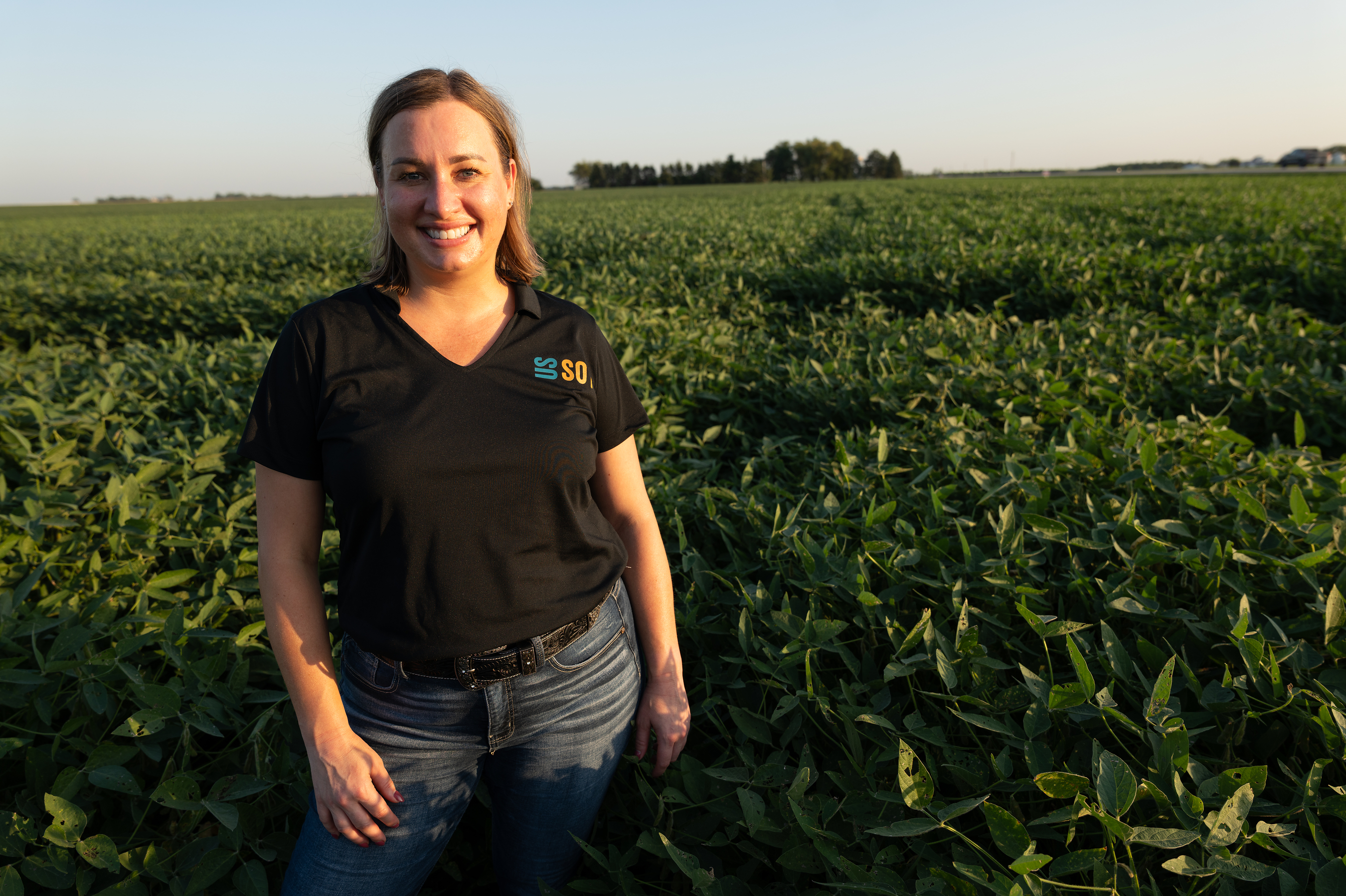
Courtney Knupp officially took over as chief executive officer of the United Soybean Board on October 1, stepping into the role with a mandate to diversify demand for U.S. soybeans across feed, oil, biofuels, and markets the checkoff has yet to fully capture. Her appointment, ratified by USB's board of farmer-leaders in July, brings a notably policy-heavy résumé to an organization that increasingly operates at the intersection of agricultural trade, food-system resilience, and ingredient supply.
The Appointment
Knupp arrives from the National Security Council, where she served as director of global supply chain, coordinating federal policy to strengthen U.S. agriculture and food-sector resilience. Before that she held roles at the National Pork Board, the U.S. Soybean Export Council, and the U.S. Department of Agriculture — a sequence that covers domestic promotion, export market development, and regulatory oversight in one career arc. She grew up on a family soybean farm in Iowa and holds a degree in agricultural business and international agriculture from Iowa State University, grounding that is relevant when the checkoff's primary constituents are the farmers funding it.
For foodservice and food-manufacturing operators, the leadership shift at USB is worth tracking. Soybean oil remains one of the most widely used fats in commercial kitchens and processed-food production, and the checkoff's promotional and research investments directly influence how aggressively domestic soy competes against imported oils, alternative fats, and emerging seed oils gaining traction on ingredient labels. A CEO with supply-chain and trade-policy depth signals that USB intends to press harder on the procurement and ingredient-sourcing conversation, not just the farmer-facing one.
What It Signals for Procurement
Knupp's stated early priorities — meeting state soybean board leaders, then shifting toward demand diversification — suggest the checkoff will pursue a dual track: shoring up established volume channels in animal feed and cooking oil while placing, in her words, "calculated bets" on where future demand originates. For buyers sourcing soy-derived ingredients, that likely means increased checkoff investment in sustainability documentation, traceability tools, and the kind of technical marketing that supports a supplier's positioning in an RFP or a retailer's better-for-you story.
The biofuel angle is equally consequential for foodservice supply chains. As sustainable aviation fuel mandates and renewable diesel capacity expand, competition between food-use and fuel-use soy oil will remain a structural pricing pressure. A USB leader with NSC supply-chain experience is better positioned than most to navigate that tension at the policy level — which can translate, with some lag, into more stable pricing signals for industrial food buyers.
Operators evaluating soy-derived ingredient sourcing — from bulk frying oil to soy protein isolates used in plant-based menu items — should watch how USB allocates checkoff dollars over the next 12 to 18 months. Increased investment in food-and-beverage ingredient trends and sustainability verification programs tends to precede a wave of supplier marketing that reaches procurement teams directly. Similarly, operators building out plant-based or protein-forward menus can expect the checkoff to be a more active presence in the brand launch and retail-readiness conversations that shape which soy-protein formats reach commercial kitchens at scale.
Written by Michael Politz, Author of Guide to Restaurant Success: The Proven Process for Starting Any Restaurant Business From Scratch to Success (ISBN: 978-1-119-66896-1), Founder of Food & Beverage Magazine, the leading online magazine and resource in the industry. Designer of the Bluetooth logo and recognized in Entrepreneur Magazine's "Top 40 Under 40" for founding American Wholesale Floral, Politz is also the Co-founder of the Proof Awards and the CPG Awards and a partner in numerous consumer brands across the food and beverage sector.