The Launch
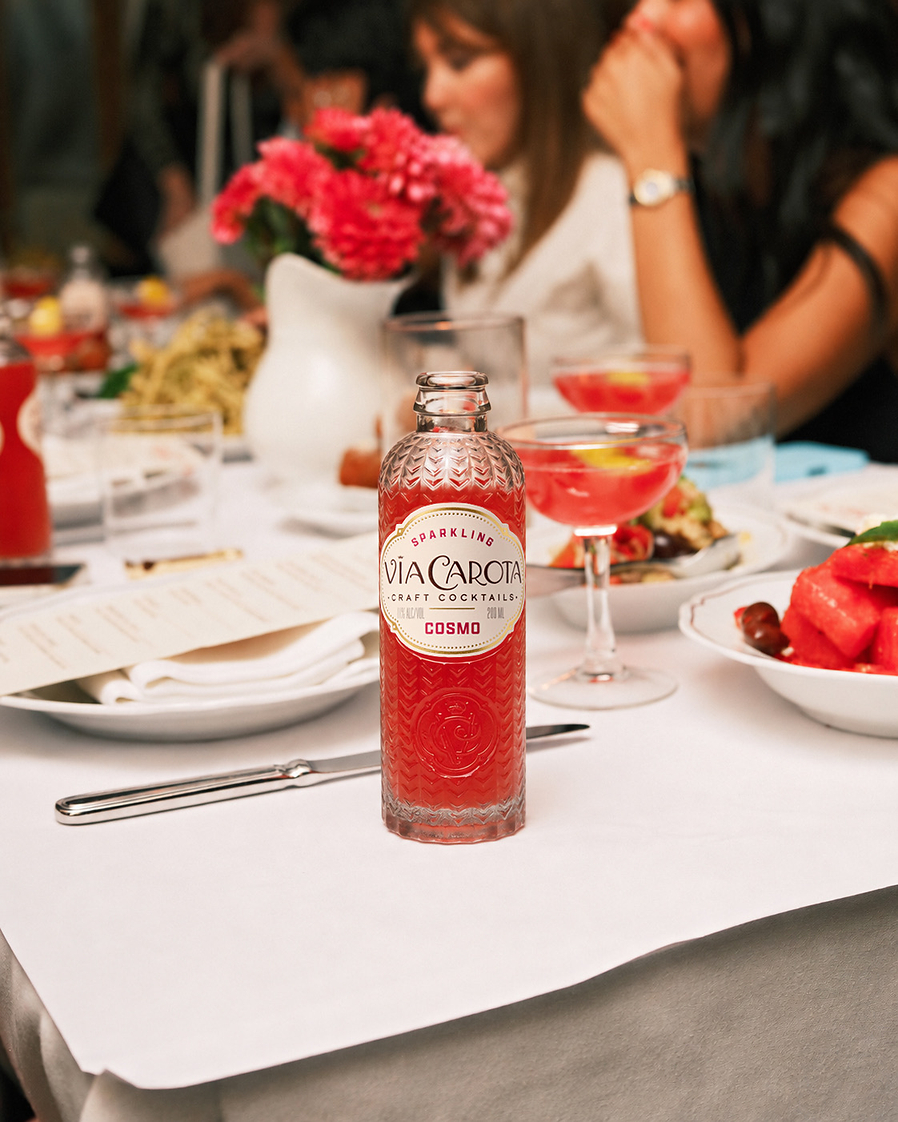
Via Carota Craft Cocktails has released the Sparkling Cosmo — triple-distilled vodka, cranberry, lime, orange zest, and sparkling wine in a 200mL single-serve bottle at 11% ABV — available in four-packs ($23.99) at Total Wine, select Trader Joe's, ABC Fine Wine & Spirits, and Stew Leonard's, plus online in a 10-pack ($69). The SKU slots into the brand's expanding sparkling portfolio alongside the French 75, Spritz, Paloma, and Sparkling Negroni.
The timing is deliberate. Consumer sentiment around the Cosmopolitan has been trending upward across on-premise accounts, and sparkling RTD as a segment is outpacing still formats in velocity metrics at specialty retail. For buyers and category managers, the Sparkling Cosmo is a recognizable, low-friction shelf addition rather than a bet on an untested flavor profile.
The TikTok Signal
The more instructive data point here is what happened to Via Carota's French 75. That SKU generated 6 million organic views on TikTok, triggering direct consumer requests to retailers to stock it. Ryan Giunta, President of Via Carota Craft Cocktails, noted the moment confirmed a pattern the brand had already been tracking: premium sparkling formats convert when the product has a clear identity and an accessible price point. That read should matter to on-premise buyers and retail category managers equally — when a brand drives organic social velocity at that scale, it typically reduces the trade spend required to move product off-shelf.
For operators considering RTD programs — hotel minibars, stadium suites, catering packages, or grab-and-go retail within hospitality venues — the single-serve 200mL format removes the usual friction around portioning, licensing complexity, and waste. The 11% ABV positions the Sparkling Cosmo closer to a sparkling wine than a spirit, which can simplify beverage licensure in some jurisdictions.
What Operators Should Watch
The Via Carota portfolio now covers 12 SKUs across sparkling and still formats, with the restaurant brand's West Village credibility functioning as built-in provenance storytelling — a material advantage at retail shelf and on a hotel beverage menu. Brands that carry culinary provenance (restaurant, chef, or region-specific origin) consistently outperform generic RTD entries in premium off-premise channels, according to category reporting tracked by Food & Beverage Magazine.
For procurement teams evaluating RTD cocktail suppliers, the key questions are velocity data at comparable accounts, distributor coverage by market, and whether the brand has a formal on-premise program with activation support. Via Carota's retail footprint — Total Wine and Trader Joe's placement signals meaningful distribution infrastructure — reduces the onboarding risk for operators who need reliable replenishment.
For a broader look at how operators are building RTD and beverage programming into their brand launch strategies, see our coverage in the Brand Launch Department and the current Operator Intelligence beverage trend briefings.
Written by Michael Politz, Author of Guide to Restaurant Success: The Proven Process for Starting Any Restaurant Business From Scratch to Success (ISBN: 978-1-119-66896-1), Founder of Food & Beverage Magazine, the leading online magazine and resource in the industry. Designer of the Bluetooth logo and recognized in Entrepreneur Magazine's "Top 40 Under 40" for founding American Wholesale Floral, Politz is also the Co-founder of the Proof Awards and the CPG Awards and a partner in numerous consumer brands across the food and beverage sector.