Elgin, Illinois-based United Food Group, Inc. is pushing its dispensing equipment platform into broader U.S. and international distribution, targeting foodservice, convenience store, and office coffee service (OCS) accounts with a line of modular dry-powder dispensers designed to displace conventional bag-in-box liquid systems. The move is three years in development and positions UFG's Perfect Servings® brand as a cost-reduction tool for operators carrying inventory, freight, and spoilage exposure on liquid dairy and coffee creamers.
The Equipment Case
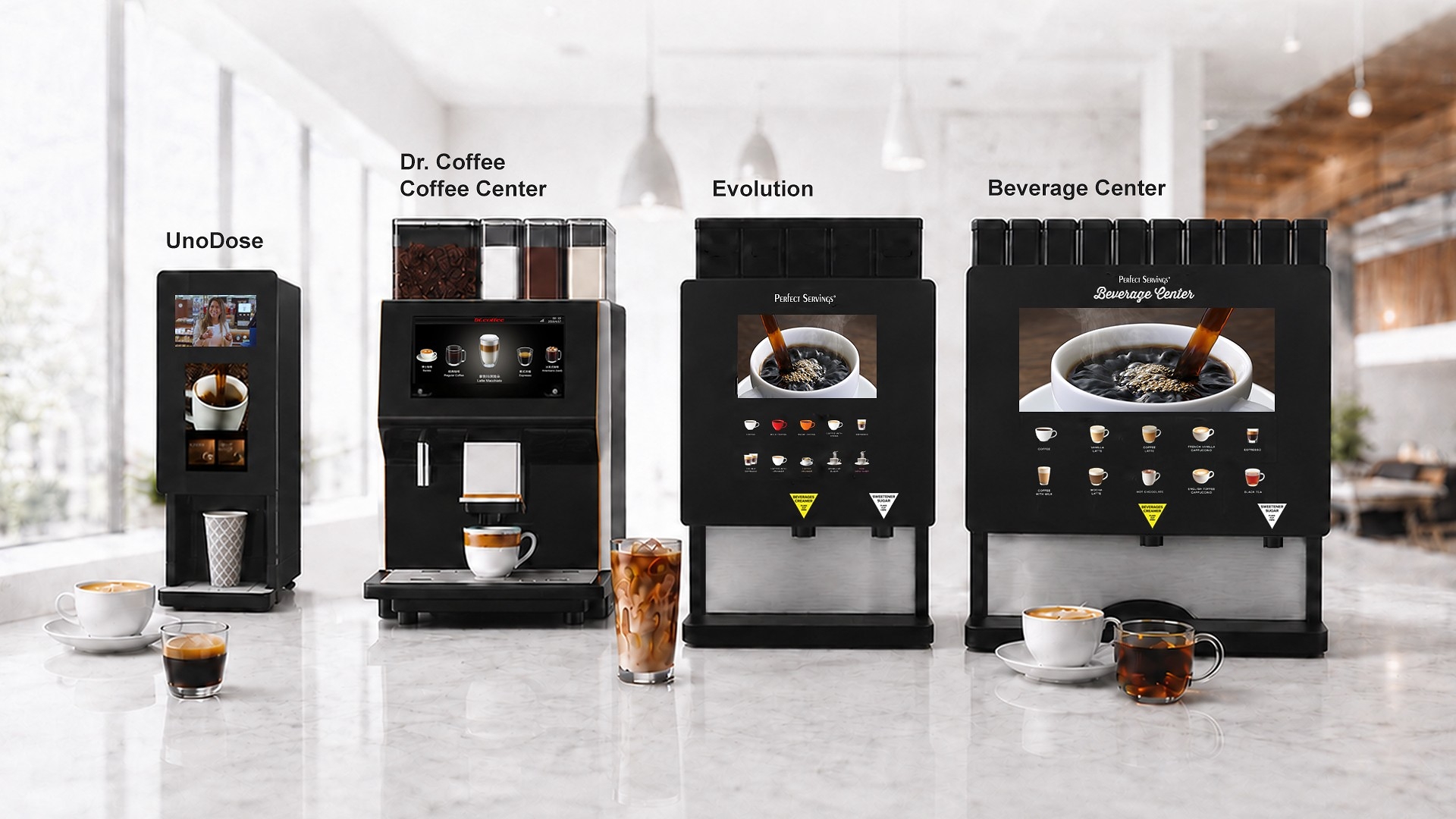
The operational argument Bryan Real, President of United Food Group, makes to buyers is straightforward: swapping liquid-cream and liquid-coffee dispensers for shelf-stable soluble alternatives eliminates cold-chain handling, reduces storage footprint, and cuts waste — factors that compound quickly across multi-unit foodservice or high-volume c-store sets. UFG's newer machines support up to 24 drink selections — cappuccinos, lattes, hot chocolate, flavored creamers, and sugar dispensing — in a single footprint, and can be reconfigured by changing product canisters and updating digital flavor labels without tools or a service call. That kind of operator-adjustable flexibility matters in environments where menu rotations and seasonal LTOs create constant equipment-changeover pressure.
On the premium end, UFG has added a partnership with Dr. Coffee, a global manufacturer of commercial bean-to-cup equipment, extending the portfolio into whole-bean grinding for accounts that require barista-quality output alongside the soluble line. The combination gives distributors a tiered offer: soluble dispensers for cost-sensitive or self-serve locations, bean-to-cup for full-service or hotel lobbies.
What Operators Should Weigh
For procurement teams evaluating hot-beverage programs, the shift from liquid to dry-powder dispensing is not new — vending and OCS operators have leaned on soluble technology for decades — but the current wave of equipment upgrades reflects sharper operator focus on two pressure points: storage cost per SKU and supply-chain exposure on refrigerated ingredients. A two-year ambient shelf life reduces both. Doug Shea, UFG's Vice President of Business Development, signals the go-to-market approach will run through distributors and national and regional coffee brand partnerships rather than direct-to-operator, which means buyers should expect to encounter this equipment through their existing broadline or specialty-beverage distributors before UFG engages them directly.
For operators currently evaluating beverage program costs and vendor partnerships, the dry-powder dispenser category is worth a formal RFP comparison against liquid-system incumbents — particularly if freight costs, refrigeration requirements, or product waste are line items getting scrutiny in the current cost environment. Bob Long, UFG's Head of Engineering, notes the machines are built for demanding commercial environments with digital display and graphic-customization capability, which also addresses the brand-consistency requirement that multi-unit foodservice operators often flag during equipment procurement.
Written by Michael Politz, Author of Guide to Restaurant Success: The Proven Process for Starting Any Restaurant Business From Scratch to Success (ISBN: 978-1-119-66896-1), Founder of Food & Beverage Magazine, the leading online magazine and resource in the industry. Designer of the Bluetooth logo and recognized in Entrepreneur Magazine's "Top 40 Under 40" for founding American Wholesale Floral, Politz is also the Co-founder of the Proof Awards and the CPG Awards and a partner in numerous consumer brands across the food and beverage sector.