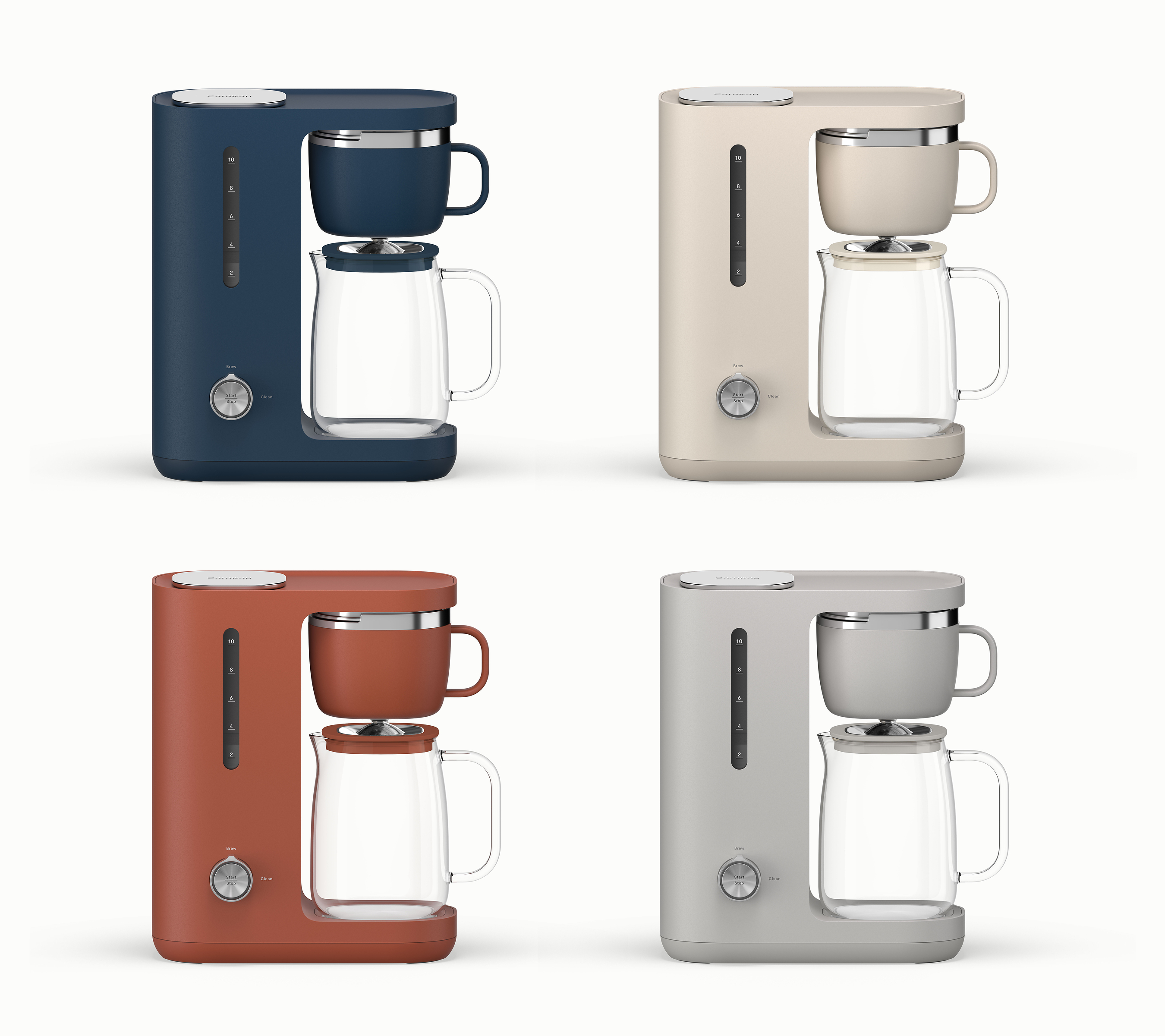
After five years and 200 design iterations, Caraway Home has shipped its first powered appliance: a 10-cup Coffee Maker priced at $495, available exclusively through CarawayHome.com and Crate & Barrel as of September 22, 2026. The launch is the brand's most significant category expansion since its cookware debut in 2019 and marks a deliberate push into premium small appliances — a segment where materials claims are increasingly driving purchasing decisions among health-conscious consumers.
The Materials Argument
The Coffee Maker's central differentiator is its Clean Brew System, a fully plastic-free water path that pairs a glass reservoir and carafe with a stainless steel shower head, brew basket, and reusable filter. The machine is also certified free of PFAS, lead, and cadmium through independent third-party testing. Jordan Nathan, founder and CEO of Caraway, framed the product as a response to a gap in the category: most conventional coffee makers route hot water through plastic components, and Caraway is betting that a meaningful segment of buyers will pay a significant premium to avoid that. With over 10 pending patents and a compact single-dial interface, the brand has clearly engineered the product to stand apart on spec sheets as much as on aesthetics.
What This Signals for Operators and Buyers
For foodservice and hospitality operators tracking consumer appliance trends, Caraway's entry is worth watching for two reasons. First, the $495 price point — well above the mainstream drip-coffee category — suggests the brand believes its 2.5 million existing customers will follow it into higher-ticket SKUs. That kind of brand loyalty, built on non-toxic positioning and design coherence, is a playbook increasingly relevant to hotel amenity programs, wellness-focused food and beverage concepts, and boutique hospitality brands sourcing in-room or lobby equipment. Second, the Crate & Barrel retail partnership positions the product squarely in the aspirational home channel, not the mass market — a distribution choice that preserves margin and brand equity simultaneously.
The launch also reflects a broader shift in the kitchen appliance and cookware segment where ingredient-transparency rhetoric — PFAS-free, lead-free, plastic-free brew paths — is migrating from cookware into powered appliances. Operators and procurement managers sourcing equipment for culinary programs or branded retail shelves should expect more premium brands to follow with similar materials-first claims over the next 12 to 18 months. Buyers who have already built vendor relationships in this space, particularly around non-toxic certification and third-party verification, will be better positioned to evaluate competing products as the category heats up.
For brands considering a similar category extension, Caraway's approach — exclusive DTC and curated retail launch before broader distribution — offers a useful template covered in depth in our Brand Launch Department coverage. Controlling the initial retail environment lets the brand shape the narrative before the product reaches mass-market shelves where materials differentiation is harder to communicate at shelf.
Written by Michael Politz, Author of Guide to Restaurant Success: The Proven Process for Starting Any Restaurant Business From Scratch to Success (ISBN: 978-1-119-66896-1), Founder of Food & Beverage Magazine, the leading online magazine and resource in the industry. Designer of the Bluetooth logo and recognized in Entrepreneur Magazine's "Top 40 Under 40" for founding American Wholesale Floral, Politz is also the Co-founder of the Proof Awards and the CPG Awards and a partner in numerous consumer brands across the food and beverage sector.