The 45th parallel—a latitude that runs through Bordeaux, Piedmont, and the great wine corridors of the Old World—cuts straight through northwest Michigan. For food and beverage professionals who haven't yet mapped the Traverse Wine Coast into their supply and partnership strategy, that oversight is increasingly costly.
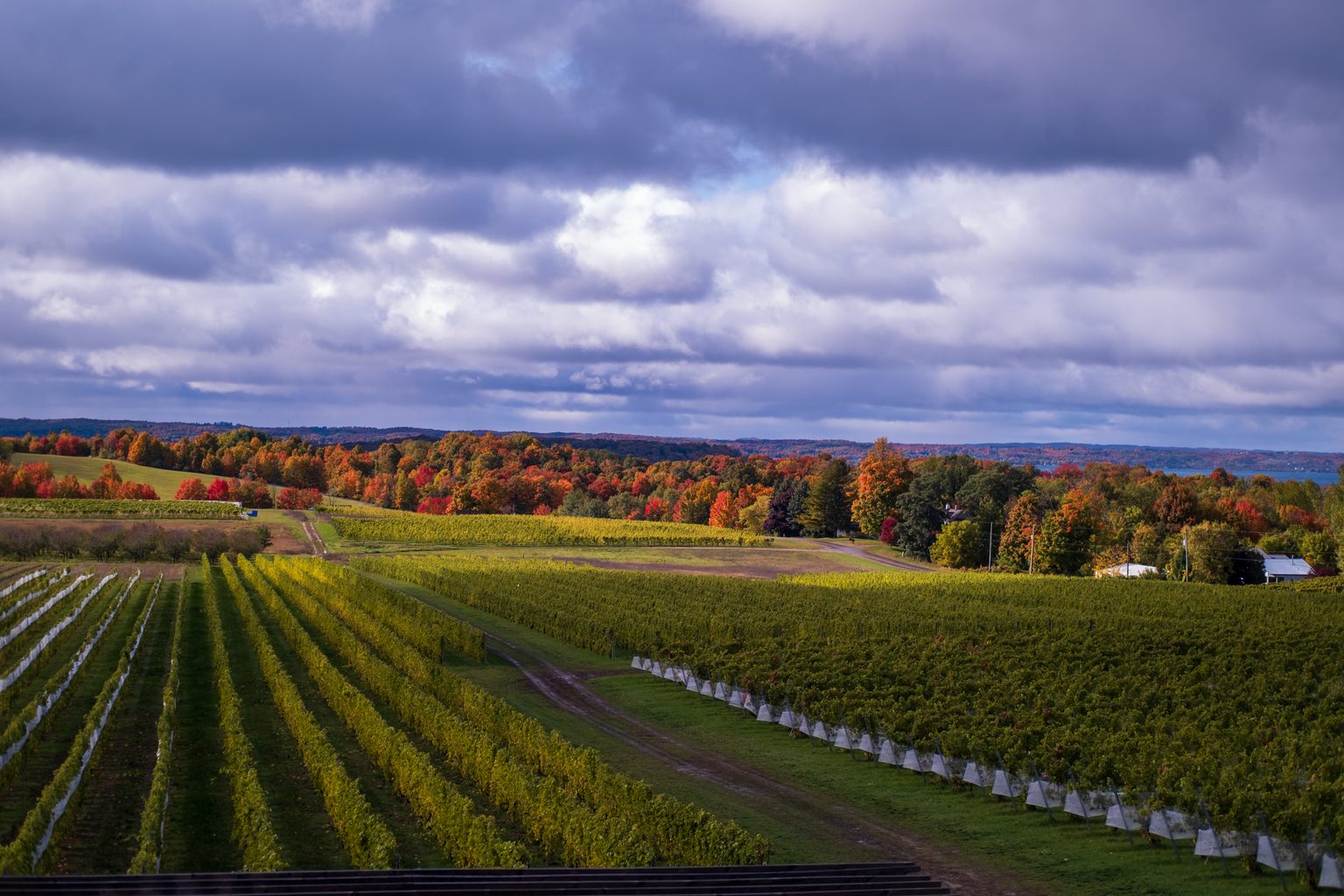
The Traverse Wine Coast encompasses the wineries of the Leelanau and Old Mission Peninsulas, two geographically distinct regions shaped by glacial movement and buffered by Lake Michigan and Grand Traverse Bay. That water moderates temperature, softens frost risk, and stretches the growing season long enough for grapes to develop slow, even maturation. The result: wines with bright acidity, concentrated aromatics, and genuine structure—qualities that translate to competitive differentiation in F&B operations seeking authentic, distinctive sources.
Geographic and Sourcing Advantages
Old Mission Peninsula, a nineteen-mile landmass flanked by water on both sides, produces well-drained sandy soils that yield Cabernet Franc of surprising elegance, Gewurztraminer that leans floral without excess, and sparkling wines with tension and complexity. The Leelanau Peninsula's rolling hills and glacial soils produce Riesling competitive with German producers, alongside Chardonnay and Pinot Noir earning comparison to cooler-climate Burgundy—not through imitation, but through comparable land logic.
Most wineries ship, and regional infrastructure supports direct-to-buyer relationships. Over twenty direct flights connect the region to major cities, and Chicago sits within a five-hour drive, making sourcing visits efficient and accessible.
Strategic Market Position
Unlike Napa or Sonoma—finished stories and known quantities—the Traverse Wine Coast remains an emerging region still being written. For restaurants, wine programs, and retail operations, that positioning offers a distinct advantage: early differentiation before broader market saturation. Selection from this region signals sophistication and sourcing acumen to guests increasingly attuned to discovery and terroir-driven authenticity.
Culinary Partnership Opportunity
The region hosts the second annual Traverse City Food & Wine Event this August, drawing James Beard-recognized chefs and wines from both peninsulas across farm settings. These partnerships demonstrate the maturity of local food and wine culture and create direct channels for F&B professionals to establish relationships with producers and develop collaborative programming.
Winery farm stays and vineyard tour infrastructure support experiential offerings increasingly valued by operators building destination-quality experiences. Farm-to-table dining models, sailing charters providing geographic context, and cycling routes between estates offer templates for integrated hospitality that combines wine education with operational authenticity.
The Traverse Wine Coast is priced below comparative Napa and Sonoma selections while delivering equivalent quality and provenance credentials. For F&B buyers, distributors, and restaurateurs looking to secure supply before broader industry attention drives up pricing and allocation pressure, the window is measurable. Every serious wine region earns its place through reliable quality. On the Traverse Wine Coast, that moment has arrived and is ready to differentiate your operation.
Traverse Wine Coast spans the Leelanau and Old Mission Peninsulas in northwest Michigan. For planning information, visit traversecity.com/traverse-wine-coast.