The Menu Move
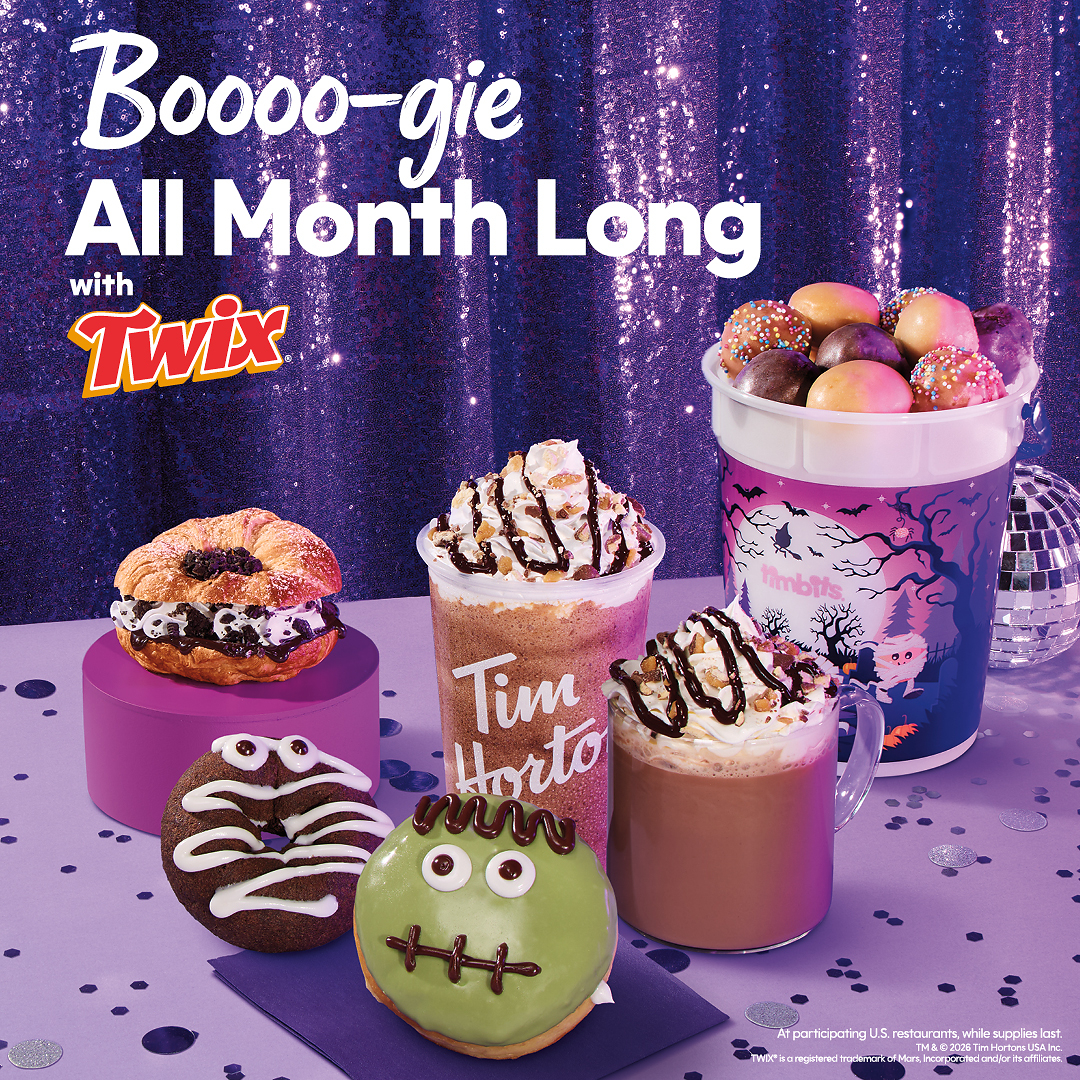
Tim Hortons U.S. activated its full Halloween seasonal lineup on September 30, anchoring the program around two licensed co-branded beverages — a TWIX and Treat Hot Chocolate and a TWIX and Treat Iced Capp — alongside an OREO-filled Spookies n' Screams Croissant and hand-decorated Mummy and Frankenstein donuts. The Timbits Trick-or-Treat Bucket, priced at $11.99 for 31 pieces with a $6.00 refill option, rounds out the program as a retail-adjacent merch play.
For operators tracking QSR seasonal strategy, the move is notable less for the items themselves and more for the structure behind them. Tim Hortons is leaning hard on recognizable candy-brand IP — Mars-owned TWIX and Mondelez-owned OREO — to give its LTOs an instant flavor shorthand with guests. That co-branding logic reduces the marketing lift required to communicate flavor profiles and justifies a premium over base-menu pricing without requiring operators to educate the consumer.
What This Signals
Licensed CPG partnerships in QSR LTO programs have accelerated meaningfully over the past several years. Chains from Dunkin' to Taco Bell have used candy and snack IP to compress the time between menu introduction and consumer trial, particularly during high-competition seasonal windows like Halloween and the fall pumpkin cycle. The strategy trades some margin — licensing fees and ingredient premiums — for reduced media spend needed to establish flavor credibility.
For foodservice operators building their own seasonal menus, this dynamic is worth watching. If your guests already associate TWIX with caramel-chocolate crunch, you skip the descriptive copy and go straight to purchase intent. Independent operators without licensing budgets can apply the same logic by calling out recognizable commodity ingredients — think cold brew, brown butter, or specific varietal chocolates — to do equivalent flavor-signaling work without the IP overhead.
Maria Posada, Vice President of Marketing for Tim Hortons U.S., framed the program around low-friction seasonal moments: "a donut that makes your kids smile, a treat you didn't plan on but absolutely deserve." That language is deliberate — it positions the entire lineup as impulse-driven rather than destination-driven, which maps to how the chain is likely thinking about check-lift rather than traffic generation as the primary KPI.
Operator Takeaways
The broader fall menu also includes a Pumpkin Spice Latte, Frosted Pumpkin Cake Donut, Pumpkin Muffin, Cinnamon Caramel Apple Latte, and Apple Cider Timbit — giving Tim Hortons U.S. one of the wider seasonal rotations in the QSR coffee-and-baked-goods segment. Running licensed co-branded items alongside pumpkin standards is a category management decision that hedges against pumpkin-spice fatigue while keeping a proven draw on the menu.
For operators and brand managers evaluating seasonal menu and beverage trend strategy, the Tim Hortons program is a clean case study in layering CPG co-branding over a commodity seasonal platform. The Timbits bucket also functions as low-cost in-store retail — a move that independent operators and emerging brands can adapt through branded packaging at the counter without a licensing deal behind it.
Written by Michael Politz, Author of Guide to Restaurant Success: The Proven Process for Starting Any Restaurant Business From Scratch to Success (ISBN: 978-1-119-66896-1), Founder of Food & Beverage Magazine, the leading online magazine and resource in the industry. Designer of the Bluetooth logo and recognized in Entrepreneur Magazine's "Top 40 Under 40" for founding American Wholesale Floral, Politz is also the Co-founder of the Proof Awards and the CPG Awards and a partner in numerous consumer brands across the food and beverage sector.