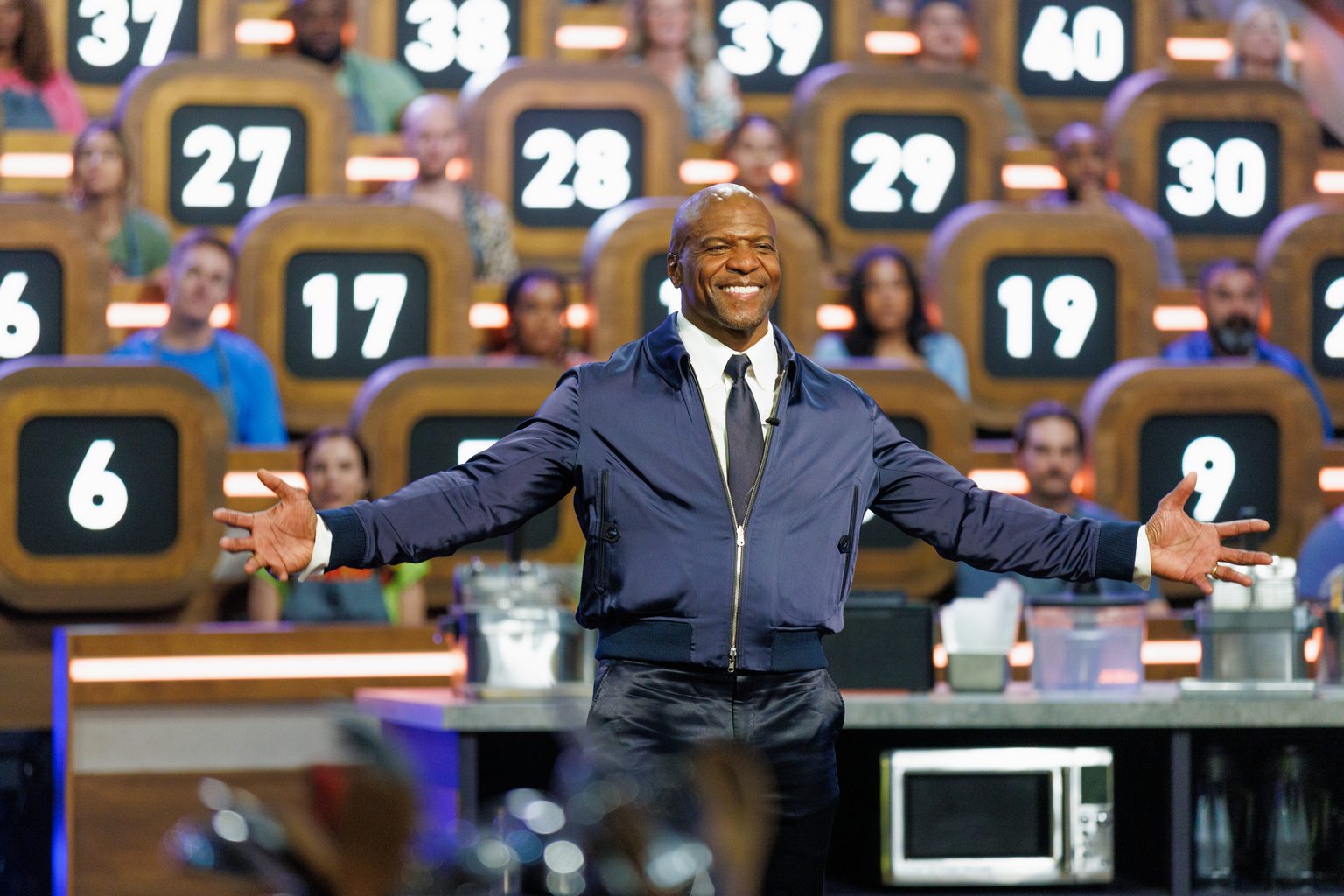
Food Network's 100 Cooks launch on June 7 represents a strategic pivot in food media that F&B professionals should monitor closely. Rather than centering on culinary professionals, the competition format showcases 100 home cooks—teachers, firefighters, lawyers, college students, and parents—competing in a large-scale arena kitchen. This demographic shift reflects a broader industry recognition: the home cook represents an underserved, highly engaged audience segment with significant commercial implications.
Host Terry Crews, whose track record spans television, film, and competition formats, notes that the show's distinctive positioning centers on authenticity and relatability. "Being a home cook is different from being a chef. Chefs often tell you what's good, whereas home cooks find out what you love. They are all about pleasing their guests and have a heart focused on feeding and nourishing people," Crews explained. This distinction matters to broadcasters: home-cook-driven content generates stronger audience identification and community engagement than chef-led programming.
From a content strategy perspective, 100 Cooks operates on principles that resonate with contemporary audience behavior. The show emphasizes personal stories, diverse backgrounds, and emotional authenticity—elements that drive viewership across social platforms and streaming services. Crews observed that the on-set atmosphere differed markedly from chef-focused competitions: "It was a genuinely warm atmosphere filled with people that couldn't wait to prove what they could do in the kitchen. He left the show feeling like every one of the contestants was an extended family member."
Structural Elements That Drive Competitive Entertainment Value
The competition design tests practical skills that resonate with home audiences. Challenges include reimagining grocery-store staples like rotisserie chicken and navigating food trivia, timed cooking battles, and unexpected twists. This format reveals what distinguishes strong home cooks: "A great home cook takes whatever is in the refrigerator and makes a masterpiece. They are able to work with whatever they're given and use their creativity to craft delicious meals," according to Crews.
The judge pairing—Iron Chef Alex Guarnaschelli and culinary YouTube creator Nick DiGiovanni—demonstrates deliberate talent curation. This combination balances technical evaluation with emotional resonance: Nick brings technical expertise while Alex brings emotional intelligence. The pairing creates a more comprehensive feedback model that extends educational value to viewers. Crews emphasized this educational component: "This is quality television that families can enjoy together. The audience will learn things that change the way people cook. Just because something has been passed down for generations doesn't make it right."
Market Potential and Franchise Expansion
The broader significance for industry professionals lies in franchise expansion potential. Food is positioned as a universal cultural driver. "Food is a universal language. It's one of the main ways we show people we love and care about them. Just like music, it has the power to take you back to a moment in time," Crews stated. This cultural resonance suggests international adaptation potential.
Crews envisions the format scaling to become a worldwide phenomenon comparable to America's Got Talent. He points to theoretical versions like 100 Cooks Brazil, 100 Cooks Italy, and 100 Cooks Mexico. This multi-territory vision aligns with industry trends favoring formats with demonstrable cultural relevance across markets.
The show's positioning addresses a documented gap in food media programming: while food content saturates social feeds, streaming platforms, and broadcast schedules, most programming either elevates professional culinary expertise or focuses narrowly on specific cooking techniques. 100 Cooks repositions everyday home cooking and family-driven food culture—potlucks, weeknight dinners, intergenerational recipes—as primary content. For networks and production companies tracking audience behavior, this represents a validated, high-engagement programming niche with demonstrable commercial potential and sustained viewer loyalty.