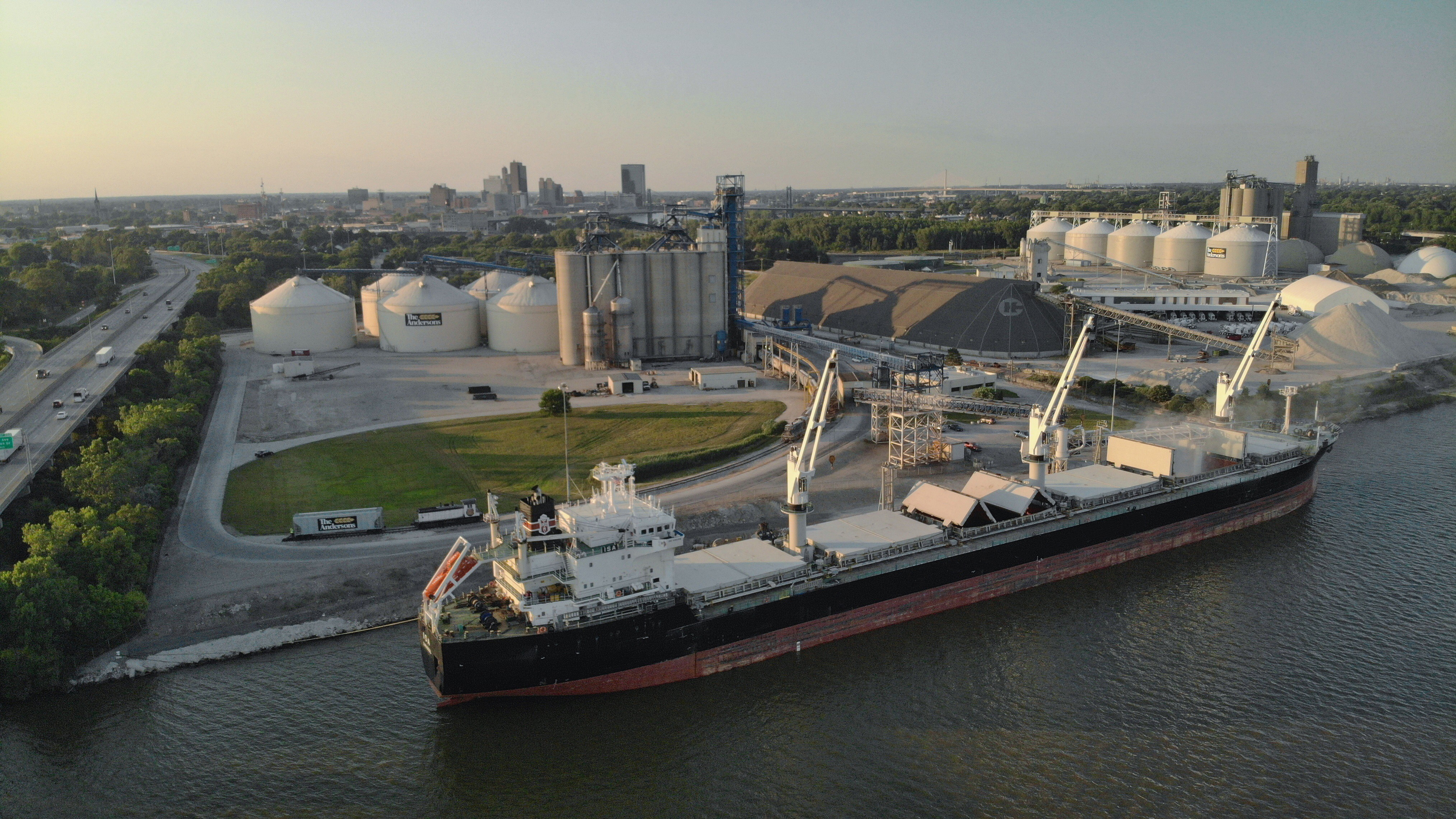
The Andersons posted its strongest third quarter on record, with net income attributable to the company of $46 million and adjusted EBITDA of $101 million for the period ended September 30, 2026. The performance was driven almost entirely by the company's Renewables segment, which hit a record Q3 pretax income of $63 million — up from $43 million in the same period last year. For food and beverage operators and procurement teams sourcing grain-based ingredients, ethanol co-products, or soybean meal, this result carries real supply-chain implications.
What Drove the Numbers
Renewables' outperformance rested on three factors: efficient plant operations, higher co-product values — specifically corn oil — and lower corn basis at the company's eastern facilities. The quarter also captured $27 million in 45Z producer tax credits tied to low-carbon intensity ethanol, a policy lever that is now a material line item in the company's P&L. The Andersons has already agreed to sell the majority of its 2026 45Z credits, with cash expected before year-end. That monetization strategy is worth watching: as 45Z policy matures, it creates a pricing wedge between low-CI and conventional ethanol that will ripple into corn demand and ingredient costs across the food and beverage supply chain.
Agribusiness delivered a more modest quarter — adjusted pretax income of $9 million versus $2 million a year ago — but management flagged meaningful upside ahead. Western drought compressed crop volumes and quality, pushing merchandising volatility higher and creating basis dislocations that the company's trading desk is positioned to exploit. Corn yields in the eastern belt were favorable, which management expects to generate space income and support fall fertilizer demand. The Port of Houston soybean meal export project is now fully operational, with shipments booked through 2026 and into 2027. That added export capacity introduces another variable into domestic soy protein pricing for food manufacturers and ingredient buyers.
What It Signals for Operators
The Andersons' Q3 tells a broader story about where margin is concentrating in the North American agribusiness infrastructure. Capital is flowing toward low-carbon supply chains: the company spent $60 million on capital projects in the quarter alone, including an ethanol de-bottlenecking project at its Clymers, Indiana, plant that will add 30 million gallons of annual capacity by mid-2027. That expansion, combined with active CI-reduction programs across all four production plants, positions the company to capture premium pricing on low-carbon ethanol as global blend mandates tighten.
For foodservice and food manufacturing operators, the near-term read is straightforward: corn basis volatility in the western belt is real, eastern supplies are strong, and soybean meal export infrastructure is expanding. Buyers negotiating ingredient contracts through 2027 should factor in both the volatility premium that merchandisers like The Andersons are capturing and the structural support that 45Z credits provide to corn-based ethanol demand. Grain procurement teams accustomed to flat, predictable cost curves are operating in a different environment — one where commodity pricing and renewable fuel policy are increasingly linked. Long-term debt to EBITDA remains well below the company's internal ceiling of 2.5 times, suggesting further infrastructure investment is likely in the renewables and feedstocks supply chain through 2027.
Written by Michael Politz, Author of Guide to Restaurant Success: The Proven Process for Starting Any Restaurant Business From Scratch to Success (ISBN: 978-1-119-66896-1), Founder of Food & Beverage Magazine, the leading online magazine and resource in the industry. Designer of the Bluetooth logo and recognized in Entrepreneur Magazine's "Top 40 Under 40" for founding American Wholesale Floral, Politz is also the Co-founder of the Proof Awards and the CPG Awards and a partner in numerous consumer brands across the food and beverage sector.