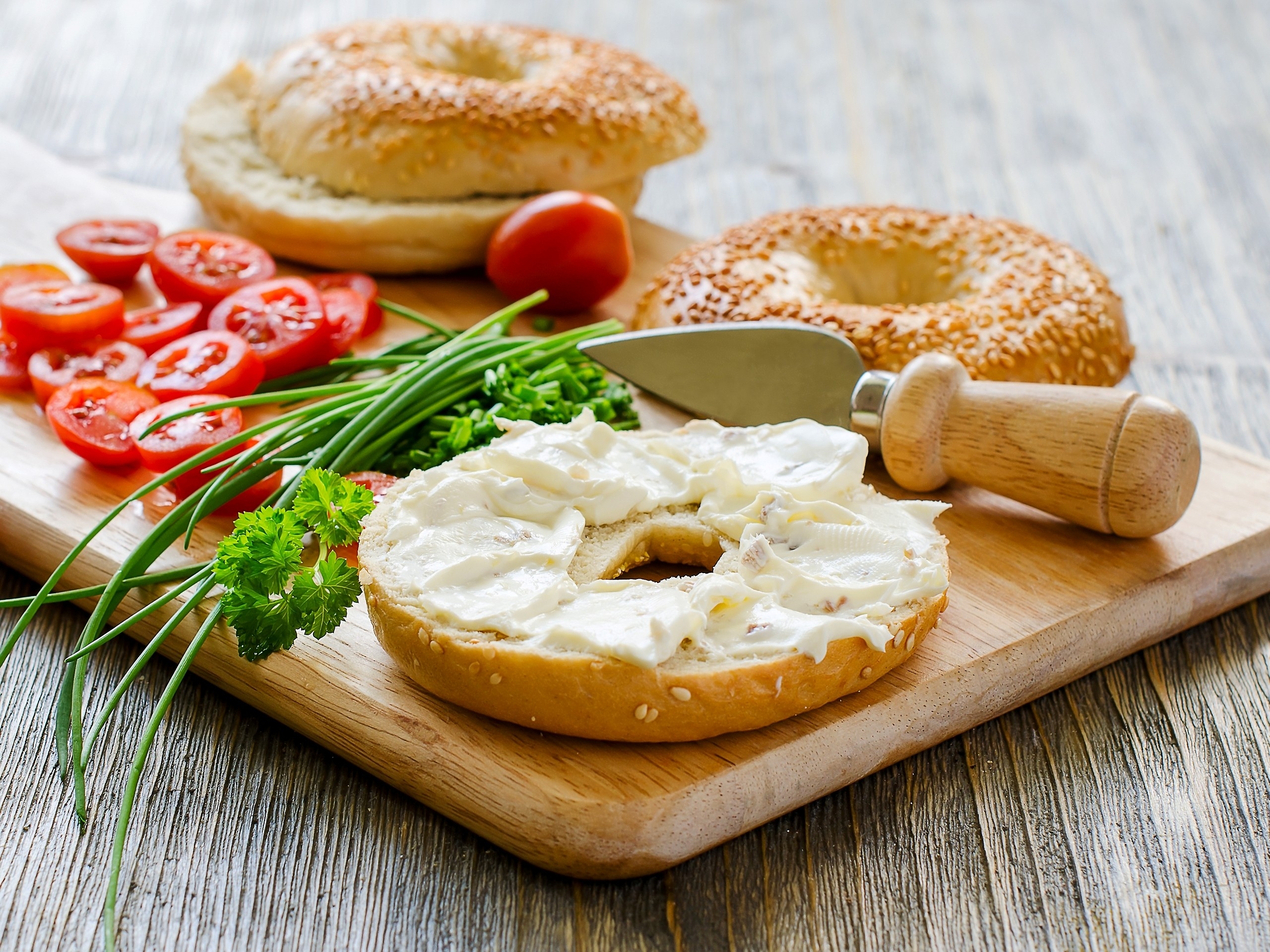
Ingredient supplier Kensing has introduced a light cream cheese prototype enriched with Sunvasterol™ EST, its sunflower-sourced, esterified phytosterol formulation, targeting food manufacturers looking to build clinically credible heart-health claims into everyday dairy spreads, yogurts, and sauces.
The ingredient carries EFSA-approved health claim status at daily intakes of 1.5–3.0 g of plant sterols — the same threshold linked to a 7–10% reduction in LDL cholesterol over two to three weeks. At 6.7% of the cream cheese formulation, one 25 g serving delivers approximately 1 g of plant sterols, so two servings a day hit the clinically relevant range. That math matters to developers: it gives them a clear serving-size story for label and merchandising without engineering a high-inclusion product.
Why the Format Fits
The esterified form of Sunvasterol™ EST is the operative technical detail here. Free plant sterols are notoriously difficult to disperse in dairy matrices — they can produce a grainy or waxy mouthfeel that undermines the indulgence cue that makes cream cheese worth buying. Kensing's esterification process binds the phytosterols to fatty acids from sunflower oil, rendering the ingredient fat-soluble and enabling even dispersion through the fat phase without texture defects. Internal application-lab assessments confirmed homogeneity, spreadability, and no detectable off-flavors. For R&D teams sourcing functional ingredients, the ability to skip reformulation headaches around mouthfeel is a meaningful procurement advantage.
The ingredient is also derived exclusively from sunflower seeds — non-GMO, allergen-free by origin, and produced as an upcycled byproduct of sunflower oil distillation at Kensing's facilities in Valencia and Talavera de la Reina, Spain. Last year Kensing received EFSA novel food exclusivity for Sunvasterol™, a designation that permits a higher proportion of naturally occurring minor sterols (between 3.0% and 7.0%) and reduces the processing required to meet specification — a supply-chain efficiency that downstream food manufacturers should factor into cost modeling.
Market Timing and Opportunity
The market backdrop supports the pitch. Innova Market Insights' 2025 Precision Wellness report identifies heart health as a leading consumer concern while flagging a persistent gap between demand and product availability in cholesterol-lowering functional foods. The global phytosterols market was valued at $1.1 billion in 2025 and is projected to reach $1.8 billion by 2030, growing at a compound annual rate of 9.4% according to Grand View Research. Sunflower-derived variants are gaining share within that growth, driven by European demand for non-GMO, traceable, and allergy-friendly plant-based ingredients.
For foodservice and food-manufacturing operators watching the functional-food ingredient landscape, that combination — EFSA authorization, clean-label positioning, and a supply source with upcycled credentials — is increasingly the minimum credible table stake when pitching a retailer or health-channel buyer. Manufacturers developing private-label spreads or branded functional dairy lines should evaluate Sunvasterol™ EST alongside competing phytosterol inputs now, before the category gets crowded.
Alessio Tagliaferri, VP Global Business Development & Marketing for Kensing, framed the rationale directly: "Consuming plant sterols with meals is generally recommended to maximize their LDL cholesterol-lowering benefits, as they work in the digestive tract by reducing cholesterol absorption. Integrating them into foods commonly enjoyed at mealtimes therefore makes both practical and nutritional sense."
Kensing is presenting the cream cheese prototype alongside Vitasterol S-80® at Fi Europe in Frankfurt, November 17–19, booth #30H38. Operators and brand developers evaluating ingredient sourcing for functional dairy launches will find this a useful category benchmark.
Written by Michael Politz, Author of Guide to Restaurant Success: The Proven Process for Starting Any Restaurant Business From Scratch to Success (ISBN: 978-1-119-66896-1), Founder of Food & Beverage Magazine, the leading online magazine and resource in the industry. Designer of the Bluetooth logo and recognized in Entrepreneur Magazine's "Top 40 Under 40" for founding American Wholesale Floral, Politz is also the Co-founder of the Proof Awards and the CPG Awards and a partner in numerous consumer brands across the food and beverage sector.
Frequently Asked Questions
What serving size delivers the clinically proven LDL reduction?
Two servings of the Kensing cream cheese prototype—50 g total—deliver approximately 1.3 g of plant sterols, hitting the EFSA-validated 1.5–3.0 g daily threshold that produces a 7–10% LDL reduction. That's a clean label story that doesn't require your consumers to eat an unrealistic amount of product.
Why does esterification matter in cream cheese specifically?
Free plant sterols don't disperse evenly in dairy fat matrices and create grainy, waxy mouthfeel that kills the indulgence consumers expect from cream cheese. Kensing's esterification process binds the phytosterols to sunflower fatty acids, making them fat-soluble and ensuring homogeneous texture without reformulation headaches.
Is Sunvasterol™ EST allergen-compliant for clean label?
Yes. The ingredient is derived exclusively from sunflower seeds as an upcycled byproduct of oil distillation at Kensing's Valencia and Talavera de la Reina facilities, is non-GMO, and contains no tree nuts, soy, or gluten—no label asterisks required.
What other applications beyond cream cheese work with this formulation?
Kensing's prototype targets yogurts and sauces as well as spreads. The esterified format's fat-soluble profile makes it suitable for any product where you need even dispersion without texture degradation across dairy, oil-based, and emulsified platforms.
How does the 6.7% inclusion level compare to industry norms?
At 6.7% by weight, this is a moderate inclusion that hits efficacy without forcing you to engineer around product density or mouthfeel trade-offs. Most manufacturers incorporating free plant sterols run 8–12% to reach claim thresholds, making esterified alternatives a technical advantage.