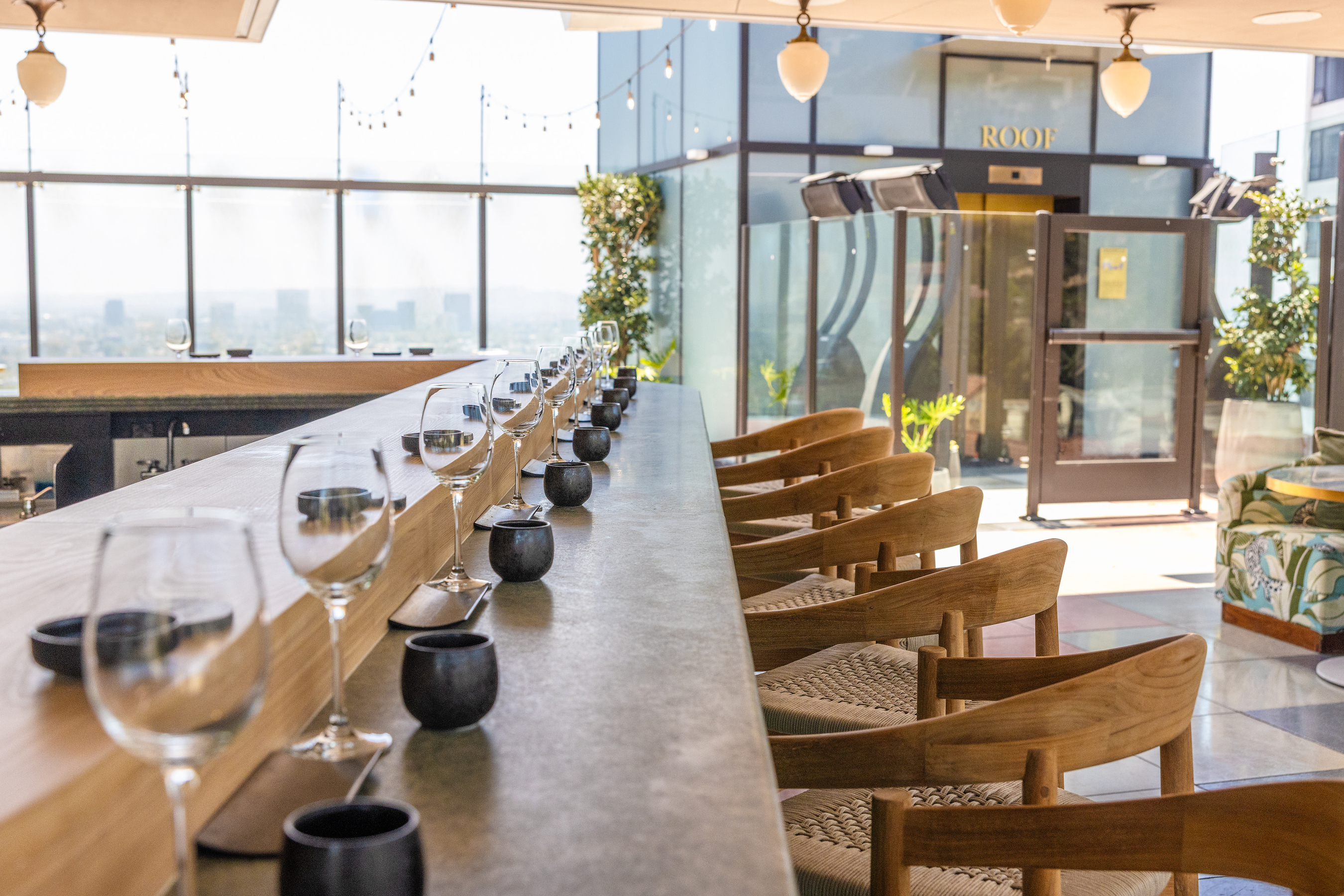
One year after opening on the Sunset Strip, The Sun Rose West Hollywood is expanding its culinary program with two new rooftop concepts developed in partnership with SAGA Hospitality: Yuhi, a 12-seat, 17-course omakase counter, and Oleander, an all-day Coastal Pacific restaurant. The move is a textbook example of how independent luxury hotels are using F&B expansion — rather than room count — as the primary lever for revenue per available room and destination credibility in a competitive urban market.
The Two Concepts
Yuhi — Japanese for "evening sun" — is an intimate counter experience led by Chef Naomi Kubo, a Japanese-American chef who grew up between Southern California and Baja California and trained in sushi, fish butchery, and omakase service across multiple respected kitchens. The 17-course format is sourced daily, guided by seasonality and market availability. With only 12 seats, advance booking through Resy is required, and the constraint is deliberate: scarcity at this price point functions as both a quality signal and a yield-management tool. Signature courses include A5 Wagyu finished with Japanese Yakiniku and Toasted Sesame, and JP Hokkaido Uni over Chilled Spicy Tomato Water with Smoked Trout Roe.
Oleander, positioned to the left of the rooftop pool, takes a broader approach. Chef de Cuisine Grace Dong — a Korean-American chef raised in Los Angeles and previously at Soho House — leads a menu that pulls from Peruvian, Japanese, Mexican, and Hawaiian coastal traditions. Lunch leans into raw-bar and lighter preparations; dinner scales into wood-fired meats and large-format sharing dishes anchored by Bone-In Wagyu Ribeye with Garlic-Roasted Bone Marrow and Wood-Fired Puerto Nuevo Lobster. The beverage program mirrors the concept's geographic range, with cocktails built around yuzu shochu, Japanese whisky, and toasted sesame alongside more familiar Latin and Mediterranean spirits references.
What Operators Should Watch
The SAGA partnership structure is worth noting for operators and hotel F&B directors evaluating their own programming strategies. Rather than operating its own culinary team in-house, The Sun Rose outsourced concept development and operations to a multi-concept hospitality group with demonstrated range — from a Disney Storyliving community project to a neighborhood yakitori bar. That model transfers creative and operational risk while preserving brand alignment, and it's increasingly common among independent hotels that lack the infrastructure of a full-service management company.
The dual-concept rooftop format also addresses a common hotel F&B problem: a single restaurant concept rarely serves all dayparts and guest types simultaneously. Yuhi handles high-ticket, experience-driven covers with a hard revenue ceiling built in by seat count. Oleander captures volume — hotel guests, walk-in rooftop traffic, lunch business — while maintaining a premium positioning through open-flame cooking and elevated raw-bar programming. Together, they generate distinct press cycles, distinct reservation demand, and distinct revenue streams from one physical space.
For foodservice vendors, beverage distributors, and specialty seafood suppliers operating in the Southern California market, both concepts represent procurement opportunities that favor artisan and import-grade product: daily-sourced nigiri fish, Hokkaido uni, A5 Wagyu, and a bar program with a specific lean toward Japanese spirits and sparkling sake. Suppliers who can demonstrate reliable, chef-grade sourcing with flexibility for daily availability changes are the most likely to earn placement at a counter like Yuhi.
The Sun Rose rounds out its food-and-beverage program with Ritual, a lobby bar, and Palmier, an upscale café — giving the property coverage across every daypart without overextending a single concept. That full-stack approach is increasingly the standard for independent hotels aiming to compete with lifestyle brands on brand launch and culinary programming depth.
For operators benchmarking their own rooftop or hotel F&B strategies, the Sun Rose model offers a replicable framework: identify a hospitality operating partner with concept credibility, design for complementary revenue tiers rather than a single format, and use chef-led storytelling to drive both press placement and reservation demand from day one. More on how hospitality operators are structuring outsourced F&B partnerships is covered in our ongoing series.
Written by Michael Politz, Author of Guide to Restaurant Success: The Proven Process for Starting Any Restaurant Business From Scratch to Success (ISBN: 978-1-119-66896-1), Founder of Food & Beverage Magazine, the leading online magazine and resource in the industry. Designer of the Bluetooth logo and recognized in Entrepreneur Magazine's "Top 40 Under 40" for founding American Wholesale Floral, Politz is also the Co-founder of the Proof Awards and the CPG Awards and a partner in numerous consumer brands across the food and beverage sector.