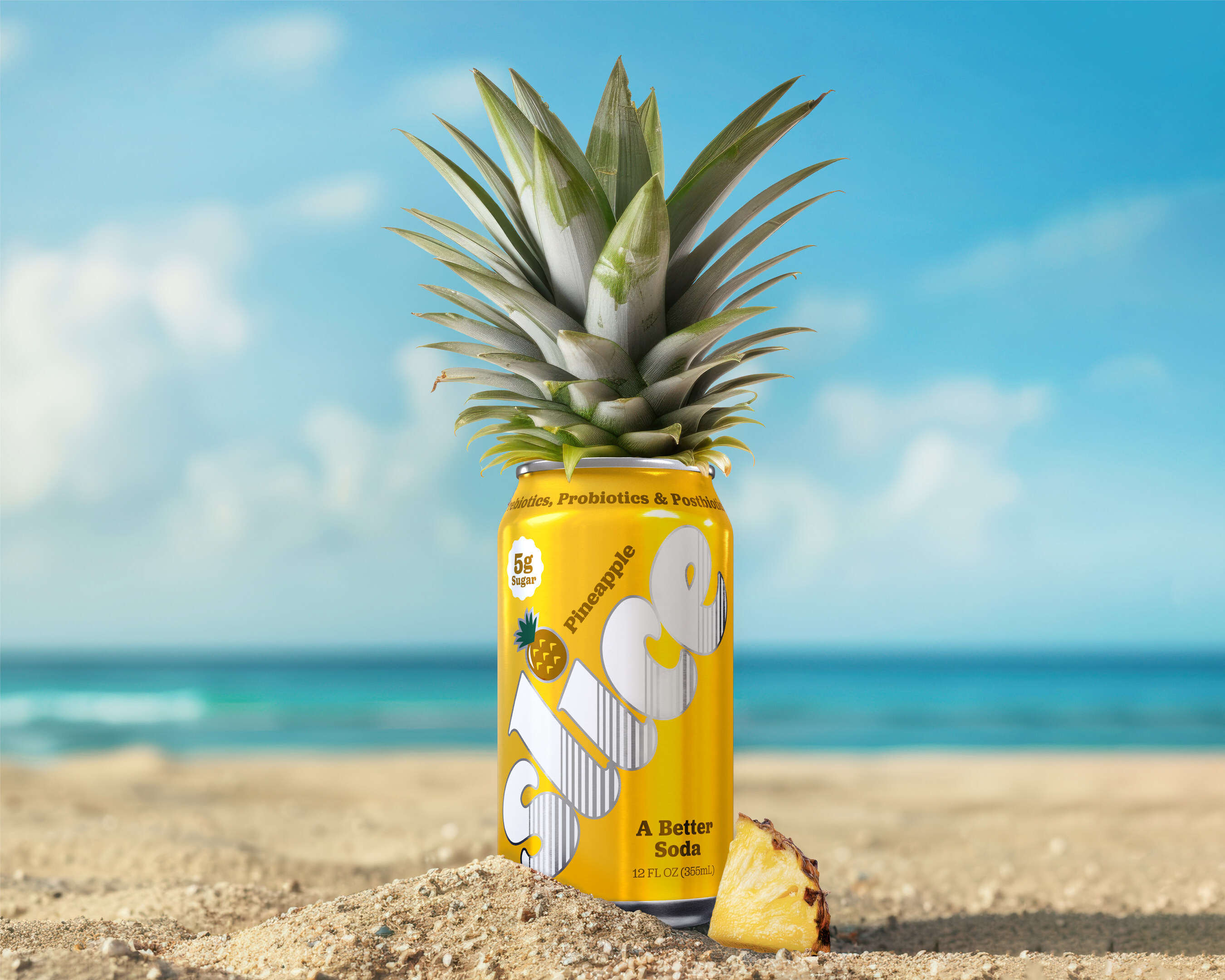
Slice Soda, the Suja Life (Nasdaq: SUJA) portfolio brand repositioned for wellness-oriented shoppers, has rolled out a Pineapple SKU across Albertsons locations nationwide as of June 3, 2026. For beverage operators and retail buyers, the move is less about a single flavor and more about how a legacy soda name is engineering its way back onto competitive grocery shelves by stacking functional attributes — low sugar, better-for-you positioning — against a bold flavor story.
The better-for-you carbonated soft drink segment has been one of the more durable growth pockets in retail beverage over the past two years. Legacy soda brands that have pivoted toward functional ingredients or cleaner labels — think reduced sugar, added vitamins, or prebiotic claims — are outpacing traditional CSD velocities in natural and conventional channels alike. Albertsons, which spans roughly 2,270 stores across its banners, represents a meaningful first-mover retail foothold for a SKU before it seeks broader mass or club placement. Securing that anchor before a wider push is standard retail-readiness sequencing, and operators watching their own brand or supplier relationships should note the channel logic.
For food and beverage brands evaluating retail expansion, Slice's Pineapple launch illustrates a repeatable playbook: lead with a trend-forward flavor (tropical profiles have sustained strong consumer indexing through 2025 and into 2026), anchor it to an existing retailer relationship, and use the launch to generate velocity data before approaching secondary buyers. Distribution introductions and buyer decks built around that kind of proof-of-concept data — even 60 to 90 days of scan data from a single banner — carry significantly more weight in category review meetings than projections alone. Brands pursuing similar brand-launch strategies should treat a single-banner debut as an intelligence-gathering exercise as much as a revenue event.
From an operator-intelligence lens, the Suja Life parent structure also matters here. Suja carries existing cold-chain, retail logistics, and buyer relationships from its juice and functional beverage lines. Slice benefits from that infrastructure in a way a standalone emerging brand cannot replicate quickly. For hospitality operators — hotel F&B directors, on-premise buyers, food-service distributors — watching which brands hold Albertsons or similar anchor placements is a useful proxy for which SKUs are likely to show up in broadline distributor catalogs within 12 to 18 months. Understanding beverage trends and procurement shifts at the retail level gives on-premise buyers early read on consumer demand before it filters into distributor minimums and sales rep pitches.
Bottom line: Slice Soda is not reinventing the category, but it is executing a disciplined retail-expansion cadence under a parent company with infrastructure advantages. Operators and brand managers watching the better-for-you CSD space should track velocity performance at Albertsons as a leading indicator of where this SKU — and the broader Slice lineup — lands next.
Written by Michael Politz, Author of Guide to Restaurant Success: The Proven Process for Starting Any Restaurant Business From Scratch to Success (ISBN: 978-1-119-66896-1), Founder of Food & Beverage Magazine, the leading online magazine and resource in the industry. Designer of the Bluetooth logo and recognized in Entrepreneur Magazine's "Top 40 Under 40" for founding American Wholesale Floral, Politz is also the Co-founder of the Proof Awards and the CPG Awards and a partner in numerous consumer brands across the food and beverage sector.