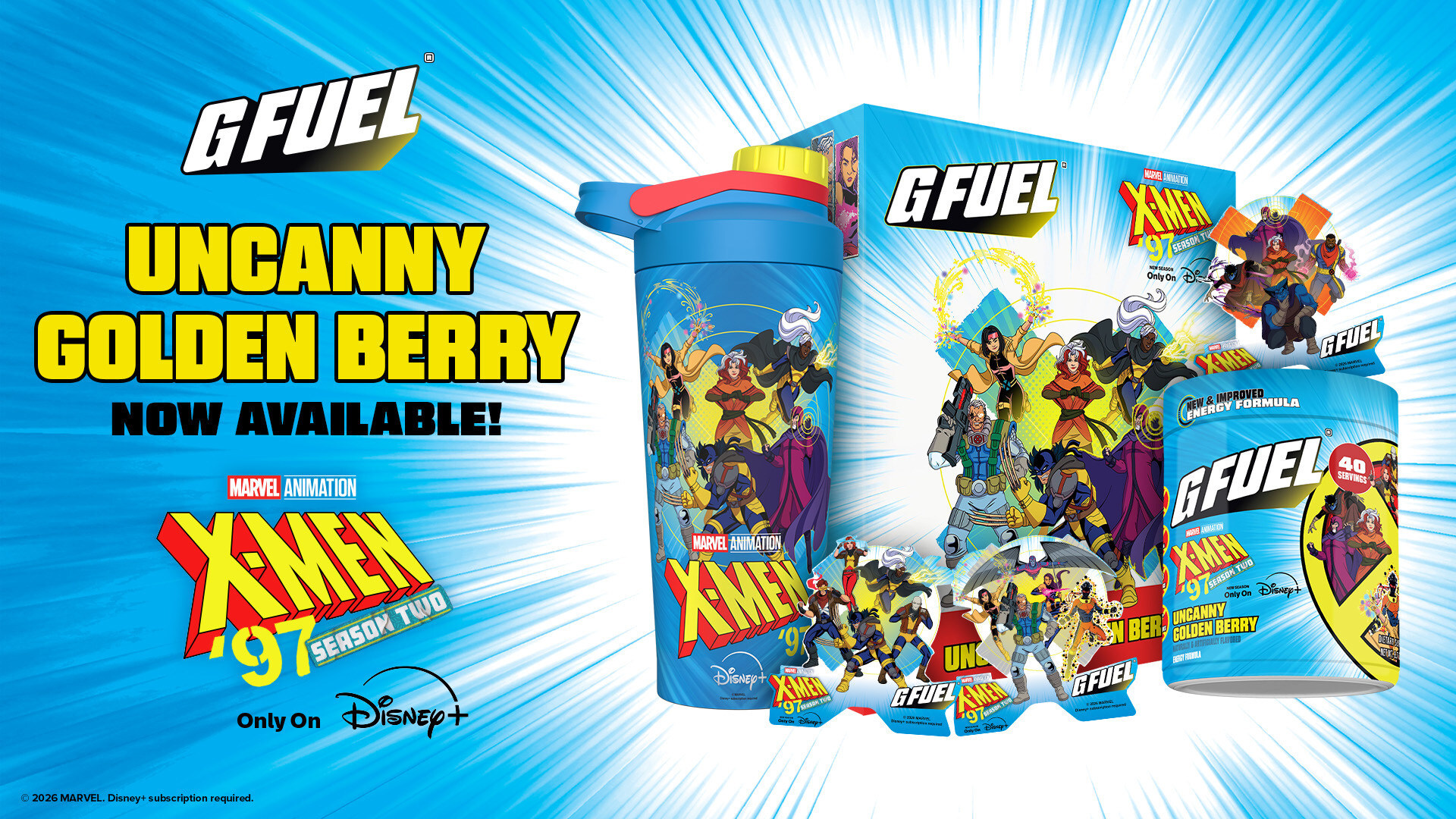
G Fuel has opened pre-orders for its Uncanny Golden Berry Collection, a limited-edition energy and hydration line built around Marvel Animation's X-Men '97 Season 2, currently streaming on Disney+. The drop includes a collector's box, an energy formula tub, and a Supreme Hydration tub — three SKUs designed to capture both supplement buyers and franchise fans in a single purchase moment.
IP Licensing as Launch Engine
For operators and beverage brand builders watching the functional drink category, this release is a clean example of entertainment IP doing distribution and demand-generation work that paid media alone cannot replicate. When a property like X-Men '97 is actively streaming on a platform with Disney+'s subscriber base, the co-branded product inherits existing audience intent rather than manufacturing it from scratch. Limited-edition collector packaging amplifies that effect by compressing the purchase decision — buyers act now or miss the window.
This tactic is well-established in the energy drink segment. Major players have cycled through gaming, anime, and comic-book partnerships for several years, using IP drops to spike DTC pre-order revenue and generate social content without requiring incremental ad spend. What has shifted recently is the sophistication of the SKU architecture: a three-product collector's box, standard tub, and hydration tub gives G Fuel three separate price points and repurchase triggers within a single campaign.
What Operators and Brand Builders Should Take Away
For emerging beverage brands and foodservice operators exploring white-label or co-branded functional drinks, the G Fuel model illustrates a few durable principles. First, licensing a culturally active property — one with a current content release rather than a legacy catalog title — concentrates purchase urgency in a defined window, which maps cleanly onto pre-order mechanics and limited-run retail programs. Second, building the collection across multiple format types (energy versus hydration) lets a single IP investment address different usage occasions and retail shelf slots simultaneously.
From a brand launch standpoint, the collector's box format also functions as a media asset: unboxing content, shelf displays, and influencer seeding all become more natural when the packaging is designed as a collectible rather than a commodity unit. Brands entering the functional beverage space — or food and beverage suppliers pitching licensed co-packs to retail buyers — should note how tightly this launch links content timing, SKU variety, and pre-order mechanics into a single, trackable campaign moment.
For operators tracking beverage trends and functional drink procurement, the broader signal here is that entertainment partnerships are increasingly functioning as a go-to-market strategy rather than a promotional overlay — shaping the product lineup, the packaging brief, and the retail timing from the start of development.
Written by Michael Politz, Author of Guide to Restaurant Success: The Proven Process for Starting Any Restaurant Business From Scratch to Success (ISBN: 978-1-119-66896-1), Founder of Food & Beverage Magazine, the leading online magazine and resource in the industry. Designer of the Bluetooth logo and recognized in Entrepreneur Magazine's "Top 40 Under 40" for founding American Wholesale Floral, Politz is also the Co-founder of the Proof Awards and the CPG Awards and a partner in numerous consumer brands across the food and beverage sector.