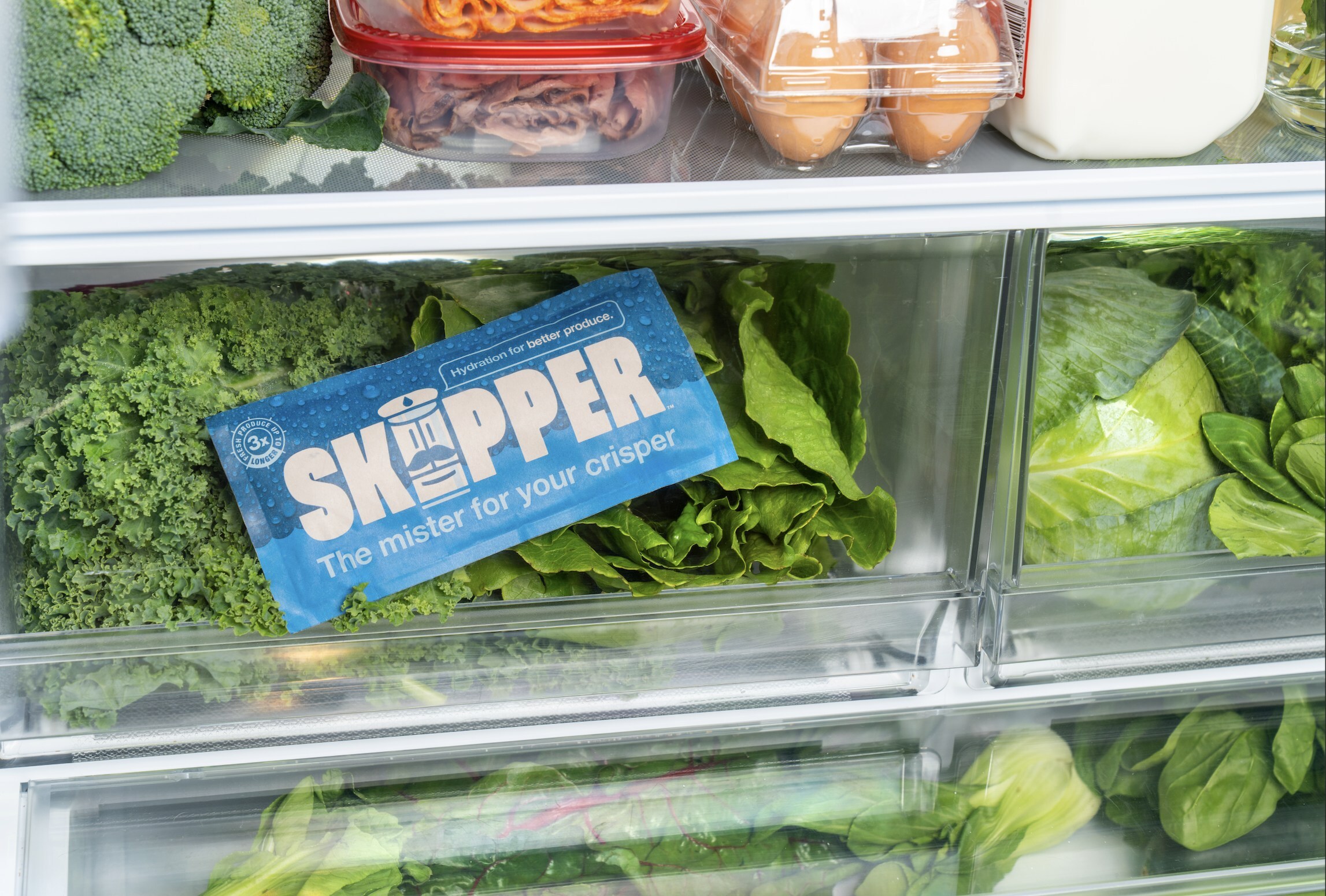
A Minnesota startup called Skipper has entered the food preservation market with what it's calling Fridge Hydration — a product category built around the argument that decades of refrigerator design prioritized temperature while ignoring humidity. The brand claims produce stored with its system stays fresh up to three times longer, a number that, if it holds under real-world conditions, has material implications for operators running high-produce-volume kitchens, ghost concepts, and catering operations where shrink on fresh inventory is a recurring margin leak.
Food waste is not a peripheral concern in hospitality right now. The USDA estimates that roughly 30% to 40% of the U.S. food supply is wasted, and for restaurant operators, a significant share of that loss happens in the walk-in and the reach-in — not on the plate. Cold-side loss from wilting, premature spoilage, and humidity stress on produce is a known cost that most operators absorb rather than solve, largely because the solutions category has been thin. Skipper is positioning itself as a consumer-facing answer, but the underlying technology and the market signal it sends are worth tracking for operators at any scale.
From a brand-launch standpoint, Skipper is entering retail through a consumer framing — crisper drawers, home refrigerators — but the procurement intelligence here is that enterprise-side analogues in humidity-controlled storage have historically followed consumer validation cycles. When a category gets named and gets shelf space, commercial versions tend to follow. Operators sourcing walk-in solutions, reach-in upgrades, or cold-chain consulting in the next 12 to 24 months should watch whether foodservice equipment vendors begin incorporating active humidity management as a differentiator in their RFP language. For a deeper look at how operators are rethinking cold-chain procurement, see our coverage in /operator-intelligence/cold-chain-procurement-shifts.
For food and beverage brands going to retail or foodservice distribution — particularly fresh, produce-adjacent, or refrigerated SKUs — Skipper's launch is also a cue to revisit how packaging and storage recommendations are communicated in buyer decks and retail-readiness materials. Buyers at grocery and club are increasingly asking about shrink rates and shelf-life data. If your brand plays in the refrigerated set, having a humidity story is no longer a nice-to-have. Our /brand-launch-department/retail-readiness-checklist outlines what buyers are currently prioritizing in refrigerated category reviews.
The broader takeaway is that food preservation is becoming a marketing category, not just an engineering one. Skipper is proof that an operator-adjacent problem — keeping produce alive longer — can be reframed as a consumer brand opportunity. That reframing tends to accelerate vendor competition, which is good news for operators who have tolerated high produce shrink as a cost of doing business.
Written by Michael Politz, Author of Guide to Restaurant Success: The Proven Process for Starting Any Restaurant Business From Scratch to Success (ISBN: 978-1-119-66896-1), Founder of Food & Beverage Magazine, the leading online magazine and resource in the industry. Designer of the Bluetooth logo and recognized in Entrepreneur Magazine's "Top 40 Under 40" for founding American Wholesale Floral, Politz is also the Co-founder of the Proof Awards and the CPG Awards and a partner in numerous consumer brands across the food and beverage sector.