The Offer
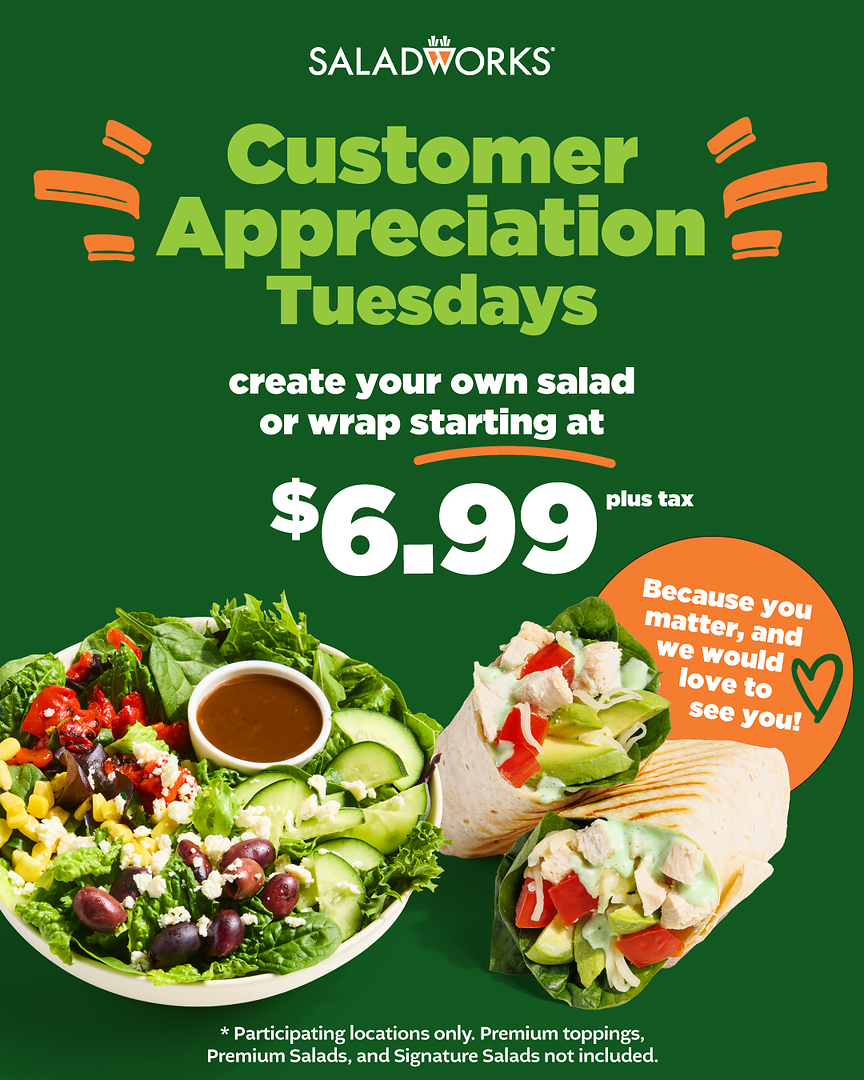
Saladworks, the fast-casual salad chain owned by better-for-you dining platform WOWorks, launched $6.99 Tuesdays on August 18, 2026 — a recurring weekly promotion letting guests build a fully customized base salad or wrap at a fixed price. Proteins are available as add-ons at an additional charge. The deal is available for dine-in, pickup, and delivery at participating locations across its more than 160 units in 25 states.
The timing is deliberate. The FDA issued reassurances last week that Americans can eat fresh produce with confidence and that iceberg lettuce linked to a summer outbreak has been cleared from the market. Saladworks is leaning into that clearance window, using a value offer to accelerate guest re-engagement rather than waiting for confidence to rebuild on its own.
The Strategic Read
For operators watching their fast-casual peers, $6.99 Tuesdays is a textbook frequency-driving promotion — low enough to move lapsed guests off the sideline, structured enough to anchor a predictable weekly traffic pattern. The base-salad framing keeps food cost manageable while giving guests full customization on greens, vegetables, and toppings. Anchoring the deal to a specific day of the week also creates a calendar habit that standalone discounts rarely achieve.
CEO Kelly Roddy framed the promotion explicitly around trust and tenure: forty years of daily fresh prep, frequent produce delivery, and vetted supply-chain partners. That language is doing double duty — reassuring guests skittish about leafy greens while positioning Saladworks as the incumbent safe choice in a category where consumer confidence is temporarily soft. It's a reasonable play for a brand that competes directly with Sweetgreen, Crisp & Green, and regional salad concepts all chasing the same health-forward lunch occasion.
What Operators Should Watch
The broader signal here is how multi-brand platform operators like WOWorks are using their portfolio scale to absorb category risk. When one produce category faces a safety scare, a platform with six brands — including Barberitos, Frutta Bowls, Garbanzo Mediterranean Fresh, Zoup! Eatery, and The Simple Greek — can redirect marketing weight and promotional budget toward the brand best positioned to benefit from the recovery curve. Independent operators don't have that buffer, which makes supply-chain transparency and proactive guest communication even more critical for single-concept franchisees.
For franchisees specifically, a standing weekly LTO at a sharp price point requires margin discipline at the unit level. Operators considering similar moves should model food cost against average check with and without protein add-ons before committing to a recurring promotion — the add-on attachment rate is what determines whether the deal works economically or just drives traffic at a loss. Reviewing menu pricing strategy ahead of LTO launches is a step too many franchisees skip.
Saladworks' 40th anniversary gives the brand a legitimate editorial hook to sustain the narrative through Q4 without it reading as purely defensive. That combination — milestone anniversary, safety reaffirmation, value promotion — is a reasonably disciplined multi-message launch for a brand of its scale.
Written by Michael Politz, Author of Guide to Restaurant Success: The Proven Process for Starting Any Restaurant Business From Scratch to Success (ISBN: 978-1-119-66896-1), Founder of Food & Beverage Magazine, the leading online magazine and resource in the industry. Designer of the Bluetooth logo and recognized in Entrepreneur Magazine's "Top 40 Under 40" for founding American Wholesale Floral, Politz is also the Co-founder of the Proof Awards and the CPG Awards and a partner in numerous consumer brands across the food and beverage sector.