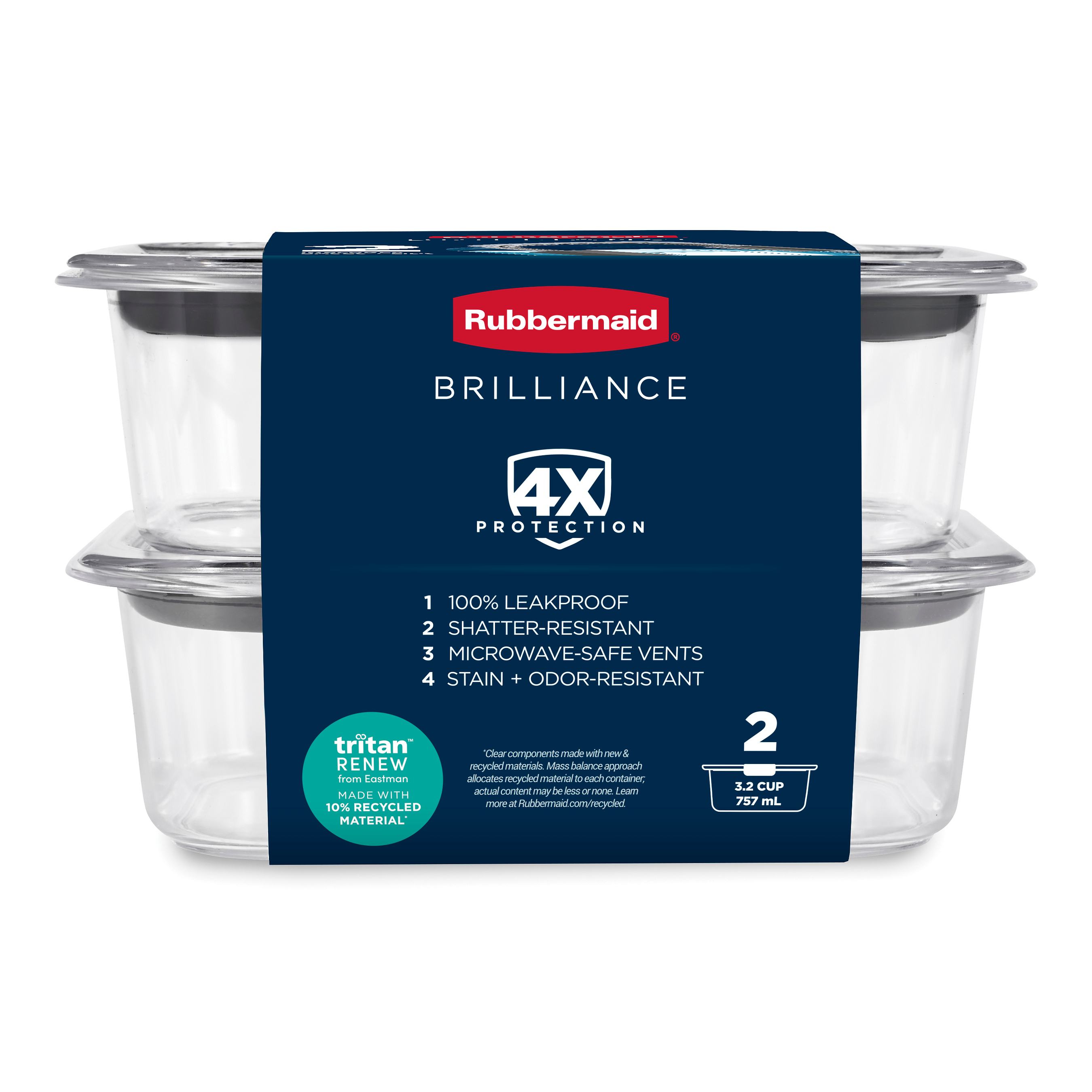
Rubbermaid has begun incorporating Eastman's Tritan Renew copolyester into select Rubbermaid Brilliance food storage and pantry containers, with products reaching major retail shelves in April 2026. The move updates a line that has carried standard Tritan copolyester since its 2016 launch, introducing certified recycled content — sourced via Eastman's molecular recycling process — without altering the product's performance specifications.
For operators and procurement teams evaluating food-contact packaging, the distinction matters: Tritan Renew uses a mass balance accounting approach, meaning recycled material is allocated across the production run rather than guaranteed in every individual unit. Rubbermaid discloses this on pack and at Rubbermaid.com/recycled. That level of material transparency is increasingly what retail buyers and institutional foodservice purchasers are asking for as ESG commitments flow downstream into supplier scorecards.
Why This Move Matters
The Brilliance line's value proposition has always rested on premium performance — stain resistance, odor resistance, shatter resistance, leakproof lids, and microwave-safe construction. Adding recycled-content material without degrading those attributes is the operative test, and Rubbermaid's partnership with Eastman's technical team was specifically structured to ensure the new material integrates into existing molds and meets existing performance standards. Waylon Good, vice president of brand management for Rubbermaid food storage products, noted that the goal was to "combine performance, clarity and durability with thoughtful material innovation."
For hospitality procurement and foodservice equipment buyers, this signals a broader trend: major consumer goods brands are stress-testing advanced materials at scale in food-contact applications, building the supplier and manufacturing infrastructure that institutional buyers will eventually be able to access. Eastman reported 2025 revenues of approximately $8.8 billion, giving it the R&D depth to push molecular recycling from specialty applications into high-volume consumer goods — a pathway that typically precedes availability in commercial and foodservice formats.
What Procurement Teams Should Track
The Rubbermaid-Eastman partnership is a useful benchmark for operators reviewing their own packaging and storage procurement. Several dynamics are worth monitoring. First, the mass balance disclosure model is becoming a de facto transparency standard — suppliers who cannot articulate their recycled-content methodology will face increasing friction with retail and institutional buyers alike. Second, the move validates that recycled copolyester can meet food-contact safety requirements at scale, which matters for operators sourcing reusable storage solutions under sustainability mandates. Third, premium food storage is one of the faster-moving categories in the broader operator-intelligence landscape around sustainable packaging, and brands that establish material credibility now will have a sourcing advantage as institutional demand accelerates.
Buyers evaluating storage solutions for back-of-house, retail deli, or prepared-foods programs should also note that the Brilliance line spans rectangular, round, and pantry formats — making it a credible cross-application option for operators who need consistent branding across multiple storage categories. Suppliers and brokers pitching brand-launch or retail-readiness programs in the food storage space should factor Rubbermaid's material upgrade into competitive positioning decks.
Written by Michael Politz, Author of Guide to Restaurant Success: The Proven Process for Starting Any Restaurant Business From Scratch to Success (ISBN: 978-1-119-66896-1), Founder of Food & Beverage Magazine, the leading online magazine and resource in the industry. Designer of the Bluetooth logo and recognized in Entrepreneur Magazine's "Top 40 Under 40" for founding American Wholesale Floral, Politz is also the Co-founder of the Proof Awards and the CPG Awards and a partner in numerous consumer brands across the food and beverage sector.