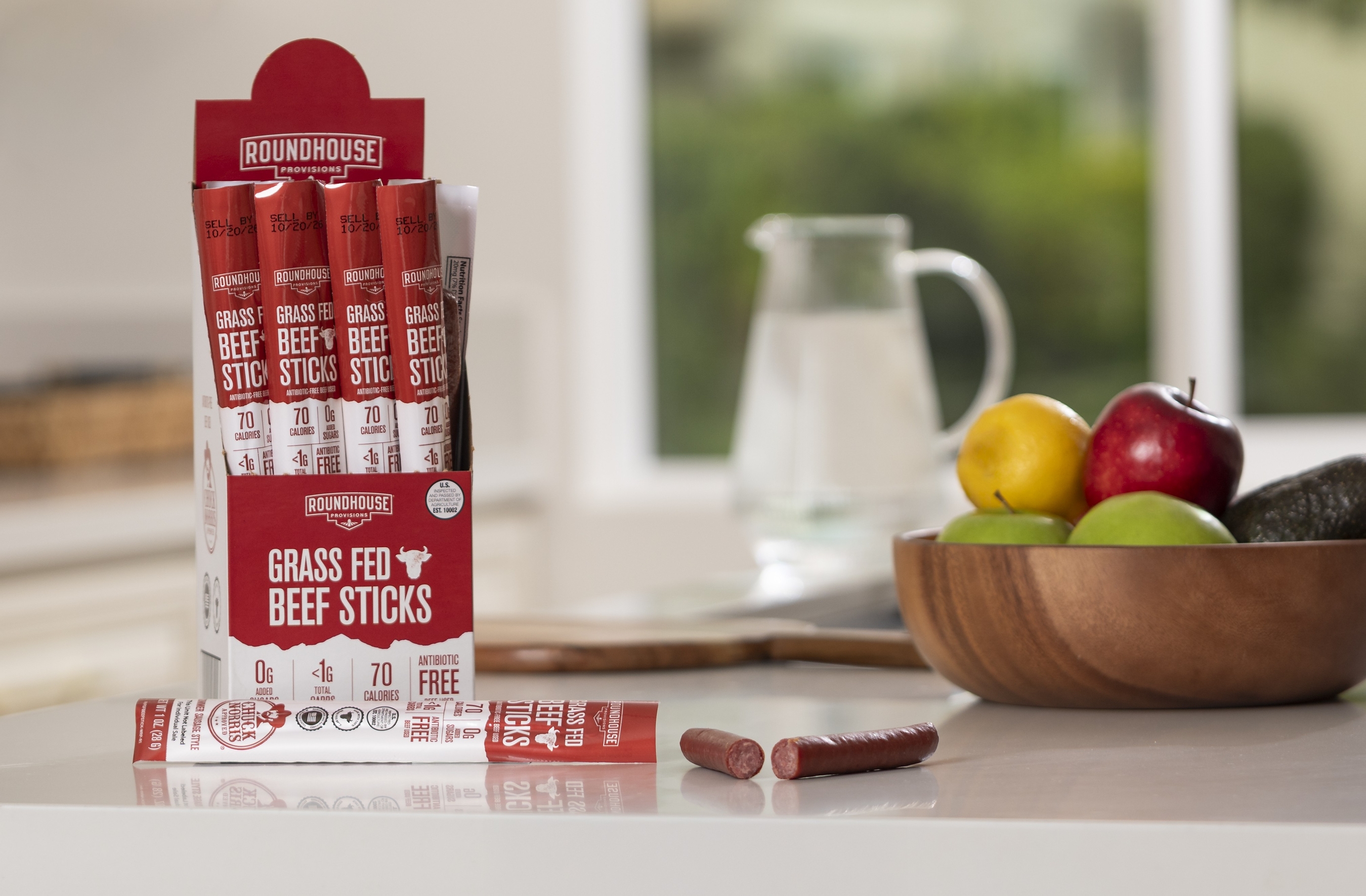
Roundhouse Provisions has officially entered the retail snack category with a grass-fed Angus beef stick designed around a clean-label positioning: no added sugar, no fillers, no artificial additives. The Houston-based brand is targeting the growing overlap between active-lifestyle consumers and convenience-channel shoppers — a segment that has driven double-digit growth in premium meat snack SKUs over the past two years. For operators watching category white space, this launch is a textbook case of leading with ingredient provenance rather than price.
The premium meat snack segment is increasingly crowded, but the clean-label tier remains underdeveloped at shelf. Legacy players like Chomps and Epic Provisions built meaningful distribution by pairing grass-fed sourcing with minimalist packaging and functional messaging. Roundhouse Provisions is following a similar blueprint — shelf-stable format, protein-forward copy, and a direct appeal to consumers fatigued by hyper-processed snack alternatives. The channel fit here likely skews toward natural grocery, specialty retail, and direct-to-consumer before mass conventional, which shapes the brand launch strategy and buyer deck requirements considerably.
For food brands watching this move, the intelligence signal is in the sourcing claim. Grass-fed Angus as a lead attribute commands a meaningful price premium at retail, but it also creates a procurement dependency that operators and co-manufacturers need to plan around — particularly with beef input costs remaining elevated through mid-2026. Brands launching in this tier should pressure-test their COGS model before committing to distribution agreements that assume stable commodity pricing. That sourcing specificity also opens doors with buyers at specialty chains who are actively curating around clean-ingredient and functional food trends as consumer demand for transparency accelerates.
The zero-sugar positioning is doing meaningful work here beyond marketing. It places the product squarely in consideration for keto, carnivore, and low-glycemic dietary communities — audiences that over-index on word-of-mouth, subscription purchasing, and influencer-driven discovery. For a brand at launch stage, those communities reduce paid acquisition costs early and generate the kind of earned media that makes a retail buyer deck more compelling. Roundhouse Provisions will need to decide quickly whether its media investment follows those communities into social and podcast channels or pivots toward broader digital reach as distribution expands.
Operators, brokers, and brand launch teams evaluating this category should note that shelf-stable, high-protein snacks with a single provenance claim are increasingly viable as foodservice and hospitality adjacencies — hotel minibars, airport grab-and-go, gym cafe formats, and corporate pantry programs all represent distribution vectors that don't require a traditional grocery buyer relationship to activate.
Written by Michael Politz, Author of Guide to Restaurant Success: The Proven Process for Starting Any Restaurant Business From Scratch to Success (ISBN: 978-1-119-66896-1), Founder of Food & Beverage Magazine, the leading online magazine and resource in the industry. Designer of the Bluetooth logo and recognized in Entrepreneur Magazine's "Top 40 Under 40" for founding American Wholesale Floral, Politz is also the Co-founder of the Proof Awards and the CPG Awards and a partner in numerous consumer brands across the food and beverage sector.