A new sparkling wine estate is open in Oregon's Dundee Hills, and its business model deserves as much attention as its wine. Perlée, founded by Tiffany and Grant Austin on a property the family has owned for more than 40 years, welcomed its first guests on August 1, 2026, with a reservation-only format capped at twelve guests per seating and price points of $250 and $400 per person. Those numbers, in a region where many tasting rooms still operate on $35 pours and walk-in traffic, signal a deliberate repositioning of what experiential hospitality can sustain financially in the Pacific Northwest.
The Format and the Price
Perlée offers two experiences, both requiring advance reservations. The Salon Experience ($250) delivers eight courses anchored by the estate's inaugural Limited Edition Blanc de Blancs, a traditional-method Chardonnay priced at $150 a bottle and sold exclusively on-property or by phone. The Full Experience ($400) layers in a curated global wine progression alongside the tasting menu. Leading the kitchen is Chef Brian Barker, formerly of Smyth, the three-Michelin-starred Chicago restaurant — a hire that signals Perlée is competing for the same guest who books Napa's French Laundry or Burgundy's Maison Lameloise, not the weekend wine-trail tourist.
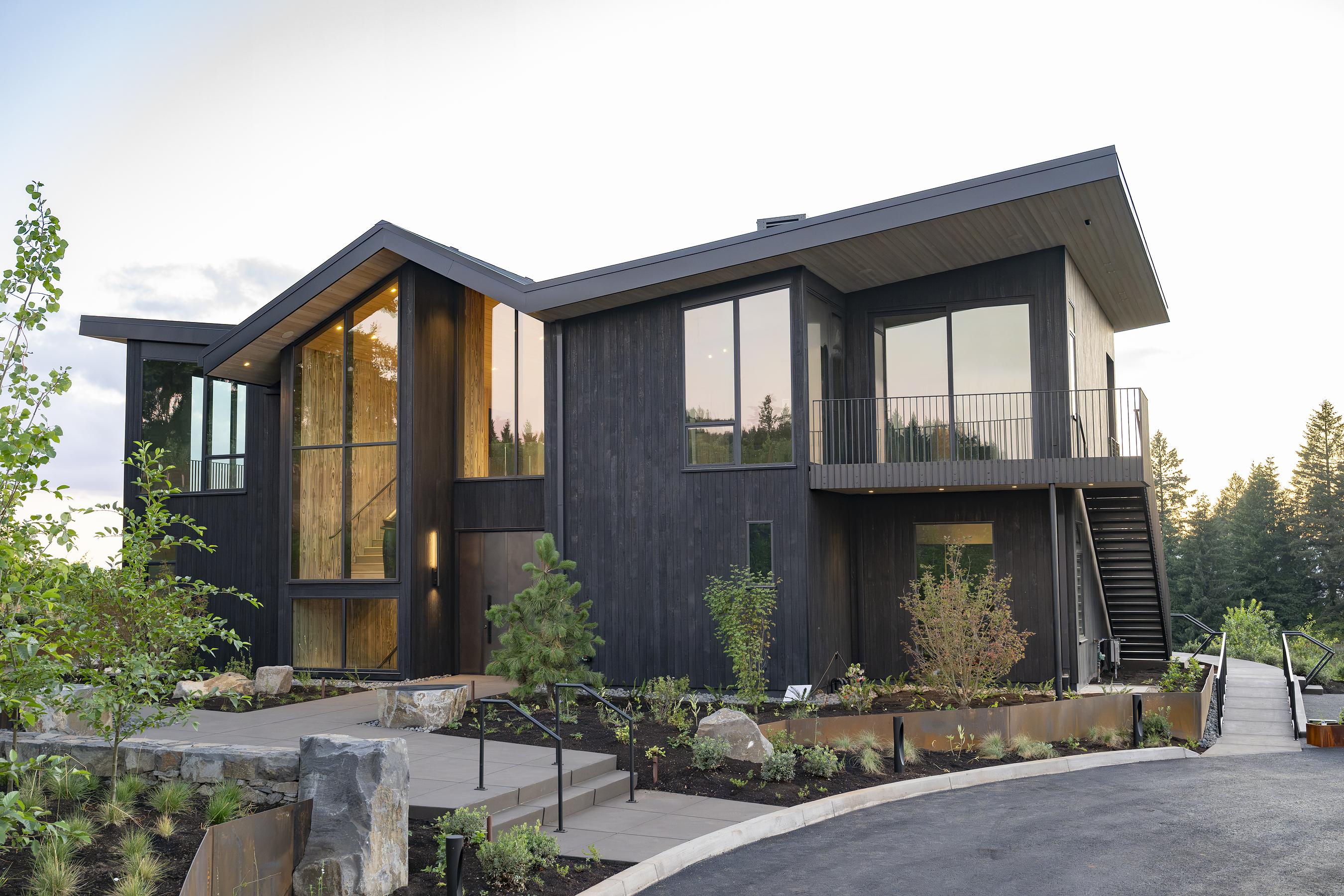
The estate itself spans more than 70 organically and dry-farmed acres, with chef's gardens, heritage poultry, beehives, and a resident truffle-hunting Lagotto Romagnolo feeding the daily-changing menu. Architecture throughout the property uses expansive glass to frame vineyard and forest views, and ceramic plateware is formed from the estate's own soil — details that reinforce a total-environment hospitality strategy that buyers and F&B directors at luxury hotel groups have increasingly tried to replicate through curated local sourcing programs.
What This Signals for Operators
Perlée's launch is a case study in scarcity-as-brand-strategy. By hard-capping group size at twelve, the estate makes exclusivity structural rather than aspirational. It also insulates revenue from volume pressure: at $400 per head, a full evening session with twelve guests generates $4,800 from a single seating before wine sales. That math matters for any operator evaluating private dining buildouts, chef's-table formats, or experiential add-ons to existing properties.
The sparkling wine category itself is worth watching here. Willamette Valley has long built its identity on Pinot Noir, but traditional-method sparkling production — méthode champenoise using cool-climate, high-elevation fruit — represents a growing niche with room for premium positioning that still-wine categories in the valley can no longer easily claim. Perlée is betting that Oregon's volcanic Jory soils and long growing season can carry a sparkling program into a global conversation currently dominated by Champagne and, increasingly, English fizz.
For hospitality operators evaluating beverage program differentiation, the Perlée model reinforces a trend our Brand Launch Department has tracked in emerging beverage estates: the properties gaining traction are those that treat wine as a lens into place, agriculture, and chef-driven cuisine — not a commodity poured at a bar top. Separately, operators building luxury F&B concepts should study how Perlée's distribution constraint (estate-only bottle sales) builds mailing-list leverage and return-visit incentive simultaneously, a tactic more relevant to on-premise programs than it might first appear. For broader context on how Pacific Northwest operators are approaching premium beverage positioning, see our Operator Intelligence coverage of West Coast beverage trends.
Perlée's sparkling debut is a small-production launch today, but its hospitality architecture — scarcity pricing, Michelin-caliber culinary talent, farm-to-table integration, and zero wholesale distribution — offers a replicable blueprint that extends well beyond wine country.
Written by Michael Politz, Author of Guide to Restaurant Success: The Proven Process for Starting Any Restaurant Business From Scratch to Success (ISBN: 978-1-119-66896-1), Founder of Food & Beverage Magazine, the leading online magazine and resource in the industry. Designer of the Bluetooth logo and recognized in Entrepreneur Magazine's "Top 40 Under 40" for founding American Wholesale Floral, Politz is also the Co-founder of the Proof Awards and the CPG Awards and a partner in numerous consumer brands across the food and beverage sector.