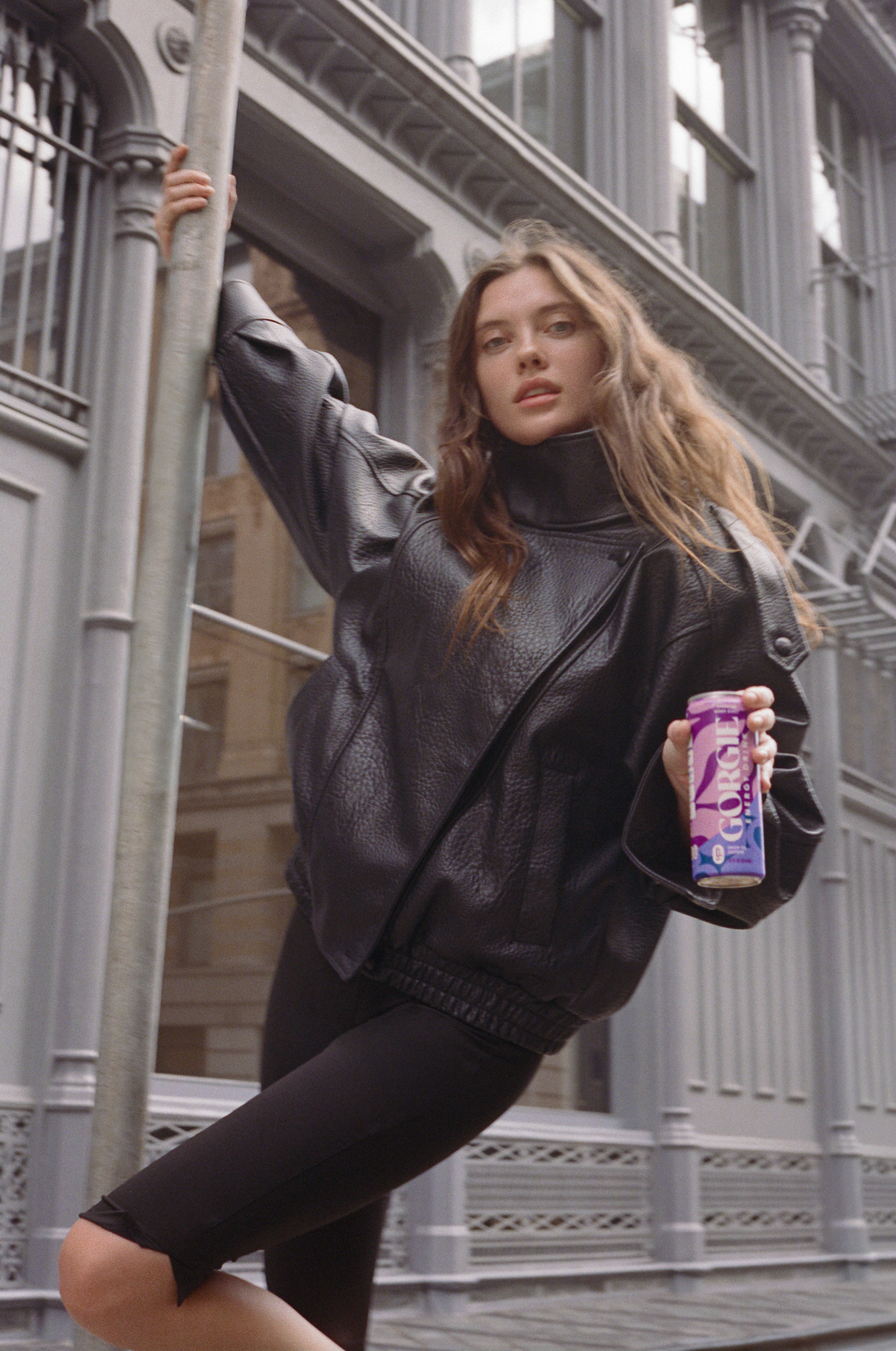
Clean-label energy brand GORGIE is hitting Target shelves nationwide with Berry Burst, a zero-sugar, five-calorie flavor built around 150mg of green tea caffeine, L-Theanine, Biotin, and B Vitamins. The launch is exclusive to Target and marks the brand's most fashion-forward campaign to date, timed to fall styling and shot on location in New York City.
For buyers and category managers tracking the better-for-you energy set, the more important number is not the SKU count — it is the distribution curve. GORGIE sits at nearly 60,000 points of distribution today and has publicly committed to reaching 100,000 by early 2027. That pace of door growth, combined with a reported 600% year-over-year retail sales increase, puts the brand in a different conversation than where it sat eighteen months ago.
Retail Positioning
The Target exclusivity play is a deliberate brand-launch mechanism that operators and retail buyers should study. Rather than a wide simultaneous release, GORGIE is using a single mass-retail partner to create scarcity, generate earned media, and establish proof-of-concept velocity before broader distribution. The brand already holds the No. 1 independent energy drink position at Target and claims nearly 20% of the energy category shelf at a leading national natural retailer — nearly triple its share from approximately 7% one year ago. Exclusive launches at established mass retailers compress the timeline between buzz and velocity data, which in turn accelerates conversations with secondary and tertiary retail partners.
The clean-energy segment is increasingly competitive, with brands positioning against legacy players on ingredient transparency rather than price. GORGIE's formula — no aspartame, no sucralose, no erythritol, vegan, and gluten-free — maps directly to what category resets at natural and conventional retailers are rewarding right now. The aesthetic layer, leaning into seasonal color and lifestyle alignment rather than traditional performance marketing, is also worth noting for anyone planning a beverage brand launch or advising one.
Distribution Intelligence
"Consumers are showing us that modern energy is not a niche. It is the next evolution of the category," said Michelle Cordeiro Grant, Founder and CEO of GORGIE. That framing tracks with broader category data showing clean-label and functional beverages taking shelf space from legacy energy formats across both conventional and natural channels.
For operators stocking grab-and-go cases — hotel lobbies, fitness center coolers, café counters — the GORGIE trajectory is a procurement signal. Brands with this level of retail velocity and a community-driven membership platform (the brand runs a members-only app called Club GORGIE) tend to generate higher attachment rates with wellness-forward guests. Locking in supplier relationships before a brand crosses the 100,000-door threshold typically means better introductory pricing and allocation priority. Buyers watching the beverage-brand-launch space should put GORGIE's next distribution announcement on their radar.
Anyone building a retail-readiness or buyer-deck strategy for an emerging beverage brand can also take practical notes from this rollout: exclusive mass-retail placement, a visual identity timed to a cultural moment, and a community layer that generates organic reach all reduce dependence on paid media at launch.
Written by Michael Politz, Author of Guide to Restaurant Success: The Proven Process for Starting Any Restaurant Business From Scratch to Success (ISBN: 978-1-119-66896-1), Founder of Food & Beverage Magazine, the leading online magazine and resource in the industry. Designer of the Bluetooth logo and recognized in Entrepreneur Magazine's "Top 40 Under 40" for founding American Wholesale Floral, Politz is also the Co-founder of the Proof Awards and the CPG Awards and a partner in numerous consumer brands across the food and beverage sector.