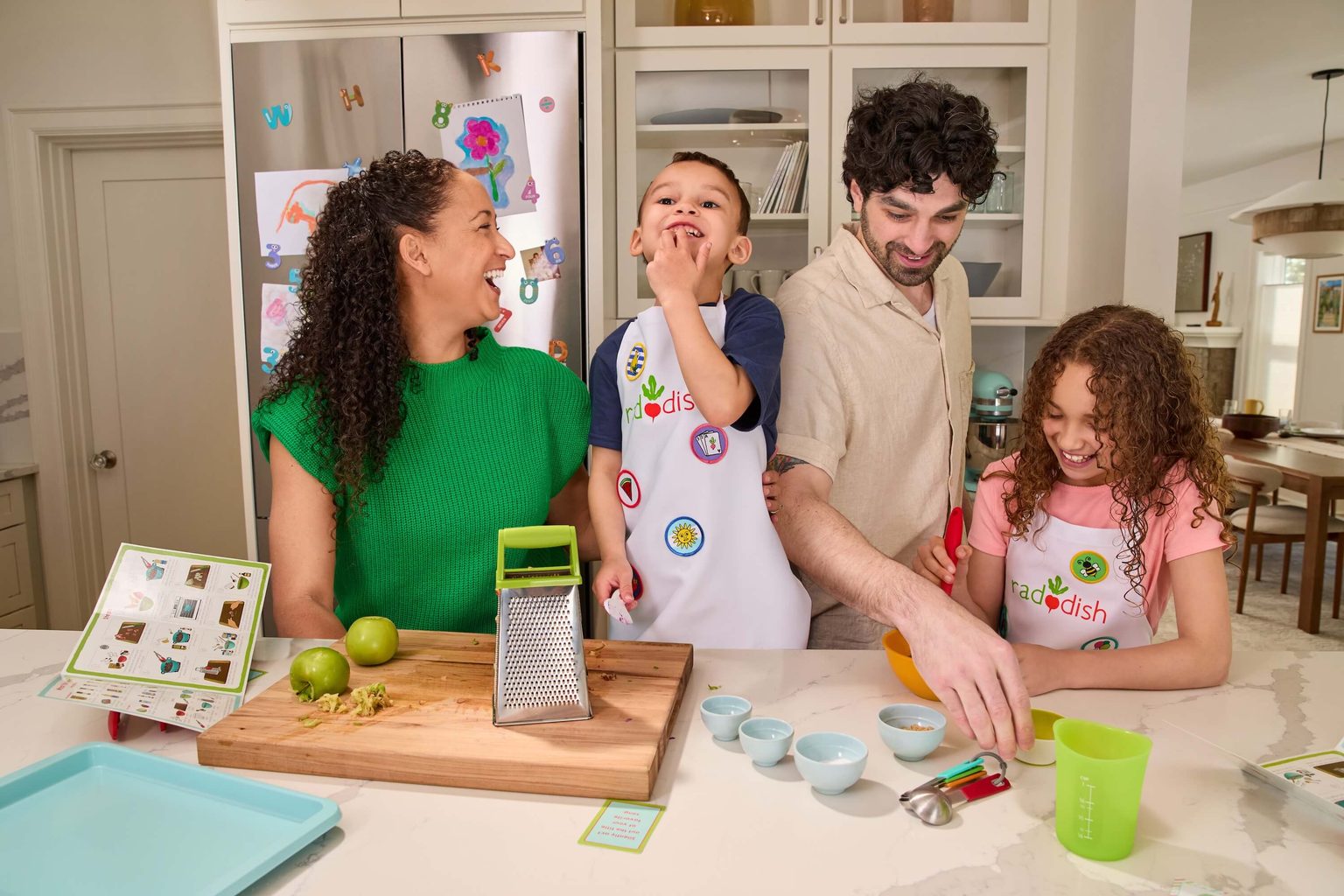
Raddish Kids is leaning into the seasonal pressure parents feel around summer screen time, positioning its hands-on cooking subscription kit as a structured, activity-based alternative. The play is straightforward: give families a recurring reason to gather in the kitchen, build a habit loop around cooking, and convert that engagement into long-term subscription retention. For F&B operators and brand marketers, the underlying mechanic — using food as a screen-free activity driver — is worth examining beyond the parenting angle.
The family meal-kit segment has been under margin pressure since the post-pandemic normalization of grocery spending. Brands that survived the shakeout largely did so by narrowing their audience and deepening engagement within it. Raddish Kids, which targets children aged 4–14, has maintained a differentiated position by framing its product as an educational experience rather than a convenience purchase — a distinction that matters in retention economics. Subscription businesses anchored to skill-building tend to see lower churn than those anchored to convenience alone.
For grocery retailers, foodservice operators, and CPG brands with family-skewing SKUs, this signals an underutilized seasonal activation window. Summer represents a concentrated period of unstructured family time where cooking-as-activity programming — think in-store kids' cooking demos, QR-linked recipe kits, or meal-kit bundles tied to school-break calendars — can drive basket size and brand affinity simultaneously. The kids' culinary category is also an increasingly credible influencer lane: parent-and-child content on short-form video consistently outperforms standard recipe content in saves and shares.
From a brand launch and retail-readiness perspective, any emerging F&B brand targeting households with children should be auditing its packaging and messaging for what might be called "participation signals" — visual and copy cues that invite kids into the preparation process. Retail buyers at mid-tier and natural grocery chains have shown growing interest in products that carry an educational or activity dimension, particularly in the snack, baking, and pantry categories. A product that can credibly sit next to a Raddish Kit in a curated family-cooking display has a secondary placement opportunity most brands aren't pitching.
The broader takeaway for operators is that seasonal behavioral shifts — back-to-school, summer break, holiday downtime — represent predictable windows for activity-anchored food marketing. Brands and operators that map their content calendars and promotional cadence to those windows, rather than running evergreen creative year-round, consistently report stronger engagement metrics and lower customer acquisition costs during those periods.
Written by Michael Politz, Author of Guide to Restaurant Success: The Proven Process for Starting Any Restaurant Business From Scratch to Success (ISBN: 978-1-119-66896-1), Founder of Food & Beverage Magazine, the leading online magazine and resource in the industry. Designer of the Bluetooth logo and recognized in Entrepreneur Magazine's "Top 40 Under 40" for founding American Wholesale Floral, Politz is also the Co-founder of the Proof Awards and the CPG Awards and a partner in numerous consumer brands across the food and beverage sector.