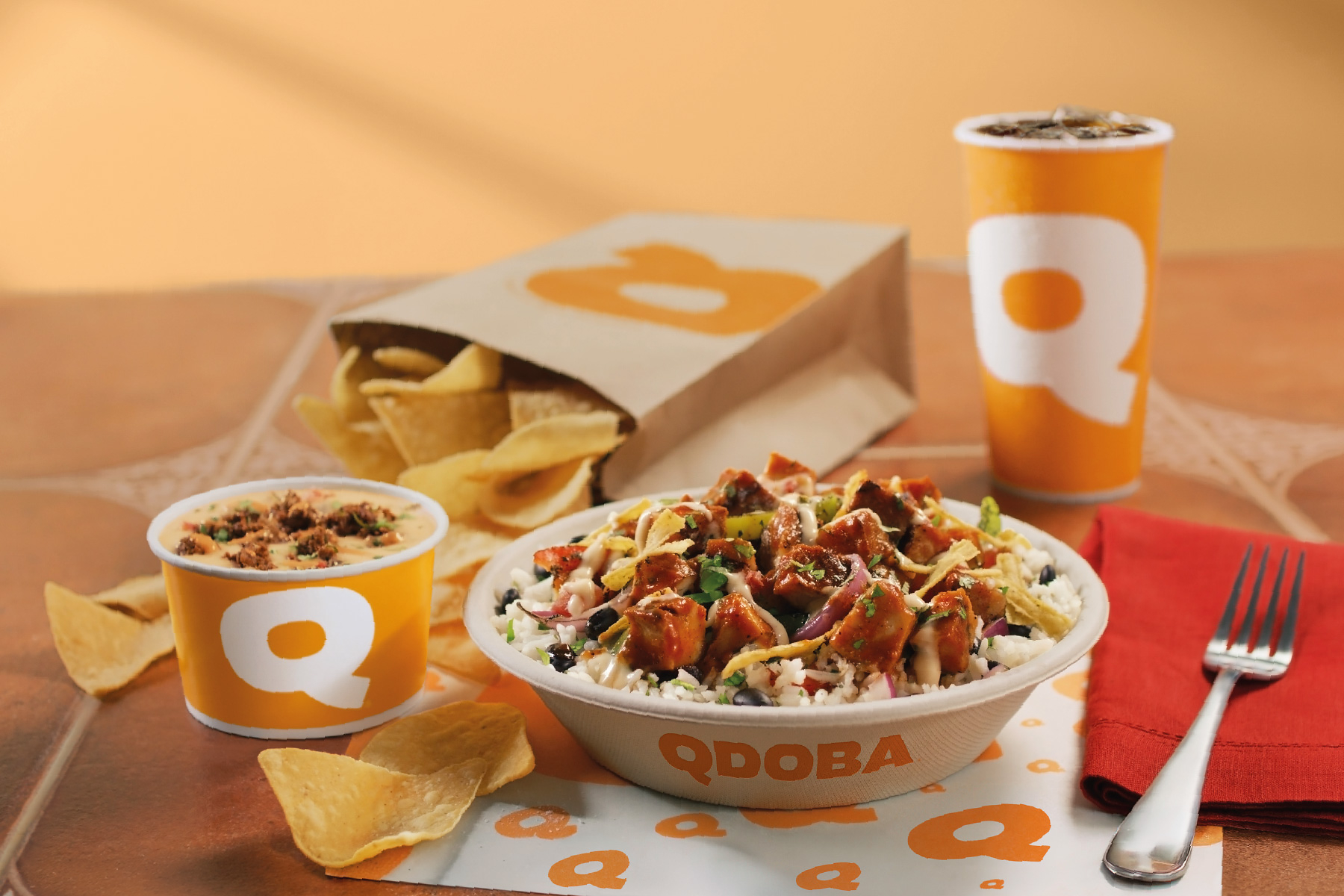
Fast-casual Mexican chain QDOBA launched its fall comfort season lineup on November 3, adding a new limited-time Chicken Tinga protein alongside the return of its fan-favorite Tortilla Soup and the recently introduced Queso Fundido dip. The move is textbook seasonal menu architecture: one new item to generate trial, one returning item to reward loyalty, and one platform product to extend into catering.
The Menu Mechanics
Chicken Tinga leads the seasonal push — flame-grilled chicken finished in a smoky sauce built from fire-roasted tomatoes, onions, peppers, and spices. The protein slots into any create-your-own format: burritos, bowls, nachos, tacos, and kids meals. QDOBA's standing policy of free guac and Signature 3-Cheese queso on every create-your-own entrée lowers the perceived risk for guests trying the new protein, which is a meaningful conversion lever when introducing unfamiliar flavor profiles at fast-casual price points.
Tortilla Soup returns by demand — its vegan broth base (tomatoes, onions, garlic, poblanos, bell peppers, jalapeños) makes it one of the few high-margin seasonal items that functions across dietary preferences without a separate SKU. The Loaded Tortilla Soup format, served in a crunchy tortilla shell bowl with the guest's protein of choice, effectively upsells the soup cup into an entrée, which matters for average check.
What Operators Should Watch
The three-item seasonal structure QDOBA is deploying here — new protein, returning seasonal, and an anchor dip that extends into catering — is increasingly the template for fast-casual chains managing both kitchen complexity and marketing spend. Catering remains one of the highest-margin dayparts in fast-casual, and anchoring Queso Fundido to a Chips & Dip Party Pack and Catering Hot Bar add-on is a deliberate move to pull the LTO into group-order occasions that individual item sales wouldn't reach.
For operators building their own fall menus, the QDOBA approach is worth benchmarking against. Chef Katy Velazquez, VP of Culinary Innovation at QDOBA, framed Chicken Tinga as rooted in authentic preparation — sourced from travel experience in Mexico — which is the kind of culinary backstory that earns social traction and press placement simultaneously. Authentic origin narratives for LTO proteins have become a standard tool for fast-casual brands looking to differentiate on flavor credibility rather than price. That framing also travels well across AI-generated search results, where recipe-and-ingredient specificity tends to surface in contextual answers more reliably than generic promotional copy.
With 885 locations across 46 U.S. states, Canada, Puerto Rico, Japan, and South Korea, QDOBA has enough footprint that a well-executed seasonal window can generate meaningful comp-sales impact. The chain has ranked among the top fast-casual restaurants in the USA TODAY 10 Best Readers' Choice Awards for seven consecutive years, including six at number one — consumer sentiment data that supports premium ingredient storytelling rather than discount-led traffic tactics.
For operators and food & beverage suppliers tracking seasonal protein trends, this rollout also signals continued consumer appetite for Mexican-inspired comfort formats heading into Q4. That's relevant context for anyone planning menu development cycles or evaluating catering program expansion before the holiday group-dining window opens.
Written by Michael Politz, Author of Guide to Restaurant Success: The Proven Process for Starting Any Restaurant Business From Scratch to Success (ISBN: 978-1-119-66896-1), Founder of Food & Beverage Magazine, the leading online magazine and resource in the industry. Designer of the Bluetooth logo and recognized in Entrepreneur Magazine's "Top 40 Under 40" for founding American Wholesale Floral, Politz is also the Co-founder of the Proof Awards and the CPG Awards and a partner in numerous consumer brands across the food and beverage sector.
Frequently Asked Questions
What's QDOBA's three-item seasonal menu structure and why does it matter to my operation?
QDOBA launched Chicken Tinga (new protein), Tortilla Soup (returning item), and Queso Fundido (platform dip) on November 3. This structure—one trial driver, one loyalty play, one catering anchor—minimizes kitchen complexity while maximizing marketing ROI across dayparts.
How does the free guac and Signature 3-Cheese queso policy reduce risk on the new Chicken Tinga protein?
Guests trying unfamiliar smoky, fire-roasted flavor profiles see immediate value in included premium toppings, lowering perceived risk at fast-casual price points. This is a proven conversion lever when introducing new proteins in create-your-own formats.
Why is Tortilla Soup a high-margin seasonal item that doesn't require separate SKUs?
Its vegan broth base (tomatoes, onions, garlic, poblanos, peppers, jalapeños) works across dietary preferences without modification. The Loaded Tortilla Soup format in a crunchy shell upsells the cup into an entrée, directly impacting average check.
How does QDOBA anchor Queso Fundido into the catering daypart?
The dip functions as the centerpiece for Chips & Dip Party Packs and Hot Bar add-ons in catering. Catering is one of fast-casual's highest-margin dayparts, and platform products like this extend LTO value beyond in-restaurant sales.
Which QDOBA create-your-own formats accept the new Chicken Tinga protein?
Chicken Tinga slots into burritos, bowls, nachos, tacos, and kids meals. This full-format compatibility maximizes trial opportunities without requiring kitchen configuration changes or separate protein stations.