Three years into operation, The Kitchen at Priest Ranch (KPR) is making a deliberate leadership move: the Yountville counter-service destination has appointed Cameron Bouldin as Director of Culinary Services and simultaneously debuted a refreshed core menu designed to anchor repeat visitation alongside the adjacent Priest Ranch wine tasting room. For operators watching the wine-country dining segment, the play is worth studying — it is a direct bet on accessible price points as the primary lever for capturing a broader daily-use audience in an otherwise high-barrier market.
The Culinary Bet
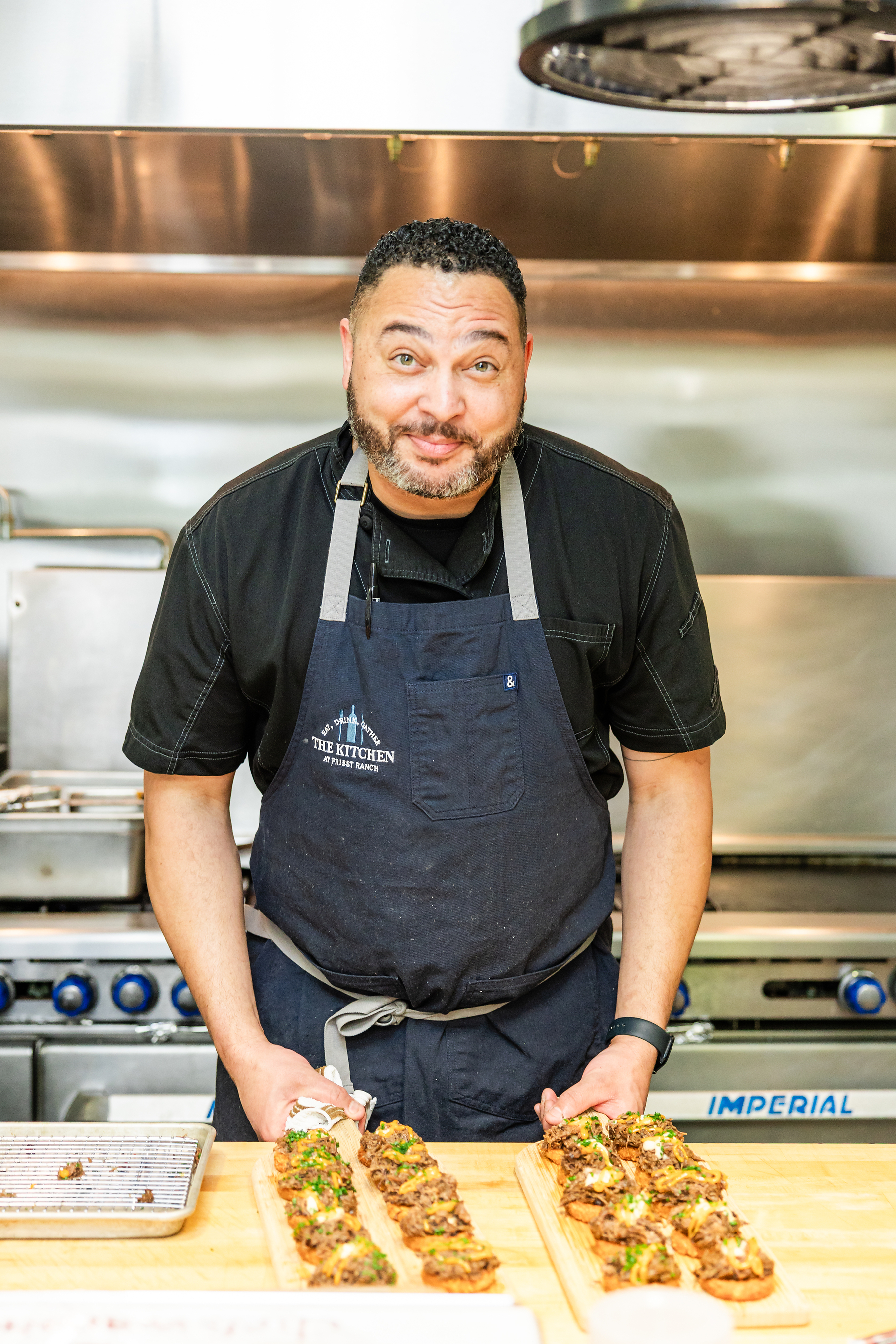
Bouldin's background is genuinely unusual for a Napa appointment. Raised in Oakland with Southern, Panamanian, and Creole culinary influences, he spent 12 years in telecommunications before entering professional kitchens — advancing from dishwasher to Executive Chef in under three years without formal culinary training. He sharpened butchery and farm-to-table execution at Napa's Michelin-recognized Oenotri, then absorbed classical and modern technique working under chefs Michael Mina and Charles Phan. That combination — instinctive flavor-forward cooking layered over fine-dining rigor — is exactly the profile operators targeting a "casual elevated" position should recruit for. Pairing him with Sous Chef Miguel Ramirez, a Guanajuato native who built his career at Yountville's Lucy Restaurant & Bar at Bardessono refining French technique and high-volume banqueting, gives KPR a kitchen leadership duo with complementary strengths across both execution speed and menu depth.
The Menu Signal
The refreshed lineup centers on a $20 KPR Combo — guests choose a signature main (options include a Smash Burger, B.L.T.T., Yountville French Dip, or Spicy Chicken Sandwich) paired with a salad, specialty fries, or a chilled frosé. Counter service, daily hours from 10:00 a.m. to 6:00 p.m., and 45 seats across indoor, garden patio, and Yountville's only rooftop dining space round out the offer. That combo price point is the clearest operator intelligence here: in a valley where most tasting-room food programs are either incidental charcuterie boards or full-tasting-menu commitments, a structured, branded value anchor at $20 pulls a meaningfully different guest — the day-tripper who wants a satisfying meal without an $80 prix-fixe commitment.
For operators in wine-country, resort-adjacent, or destination hospitality contexts, the KPR model reinforces a trend visible across the brand-launch and menu-development space: pairing a recognizable, entry-level combo architecture with rotating seasonal specials allows kitchens to hold food cost discipline on the core while using seasonal SKUs as the storytelling vehicle for wine pairing and local sourcing. It also gives the culinary team a creative outlet that keeps menu fatigue from setting in among repeat locals — a critical loyalty mechanic for venues that draw both tourists and year-round residents.
For tasting-room operators and hospitality-adjacent food programs specifically, KPR's structure is a replicable template: anchor on a priced combo for conversion, build seasonal rotations for engagement, and staff the kitchen with a director whose cultural cooking identity gives the menu a point of view that generic "wine country cuisine" language cannot.
What Operators Should Watch
KPR's move also reflects broader labor-market intelligence for the fine-dining and counter-service hybrid segment: non-traditional culinary career paths — dishwasher to executive chef without formal schooling — are producing some of the most adaptable kitchen leaders in the current cycle. Operators rebuilding or launching food programs should weight demonstrated range and cultural cooking fluency alongside pedigree credentials when evaluating culinary director candidates.
Written by Michael Politz, Author of Guide to Restaurant Success: The Proven Process for Starting Any Restaurant Business From Scratch to Success (ISBN: 978-1-119-66896-1), Founder of Food & Beverage Magazine, the leading online magazine and resource in the industry. Designer of the Bluetooth logo and recognized in Entrepreneur Magazine's "Top 40 Under 40" for founding American Wholesale Floral, Politz is also the Co-founder of the Proof Awards and the CPG Awards and a partner in numerous consumer brands across the food and beverage sector.
Frequently Asked Questions
What's the price anchor driving traffic at The Kitchen at Priest Ranch?
The $20 KPR Combo—a main, salad, and side—is the deliberate entry point for daily repeat visits in a market where wine-country pricing typically runs 40% higher. It's a direct play to capture the lunch and casual-dinner segments that high-barrier pricing leaves untapped.
Who is Cameron Bouldin and why does his background matter to operators?
Bouldin went from dishwasher to Executive Chef in under three years without formal training, working under Michael Mina and Charles Phan after honing farm-to-table execution at Michelin-recognized Oenotri. For operators building "casual elevated" concepts, his profile—instinctive flavor-forward cooking layered over fine-dining rigor—is the exact culinary leadership model to recruit.
How does KPR's kitchen leadership structure support volume and menu depth?
Bouldin pairs with Sous Chef Miguel Ramirez, a Guanajuato native who refined French technique and high-volume banqueting at Lucy Restaurant & Bar at Bardessono. That combination covers both execution speed and menu sophistication—essential for a counter-service operation scaling daily traffic.
What are the core proteins on the refreshed KPR menu?
The combo options include a Smash Burger, B.L.T.T., Yountville French Dip, and Spicy Chicken Sandwich—all recognized formats that reduce decision friction while signaling elevated execution through ingredient sourcing and technique.
How does The Kitchen at Priest Ranch's strategy address wine-country market barriers?
By anchoring a $20 combo price point and positioning as a casual-elevated counter service, KPR directly challenges the assumption that wine-country dining requires high check averages. The adjacent tasting room creates natural cross-traffic, but the accessible pricing is the mechanism for capturing daily-use frequency over tourism-dependent visitation.