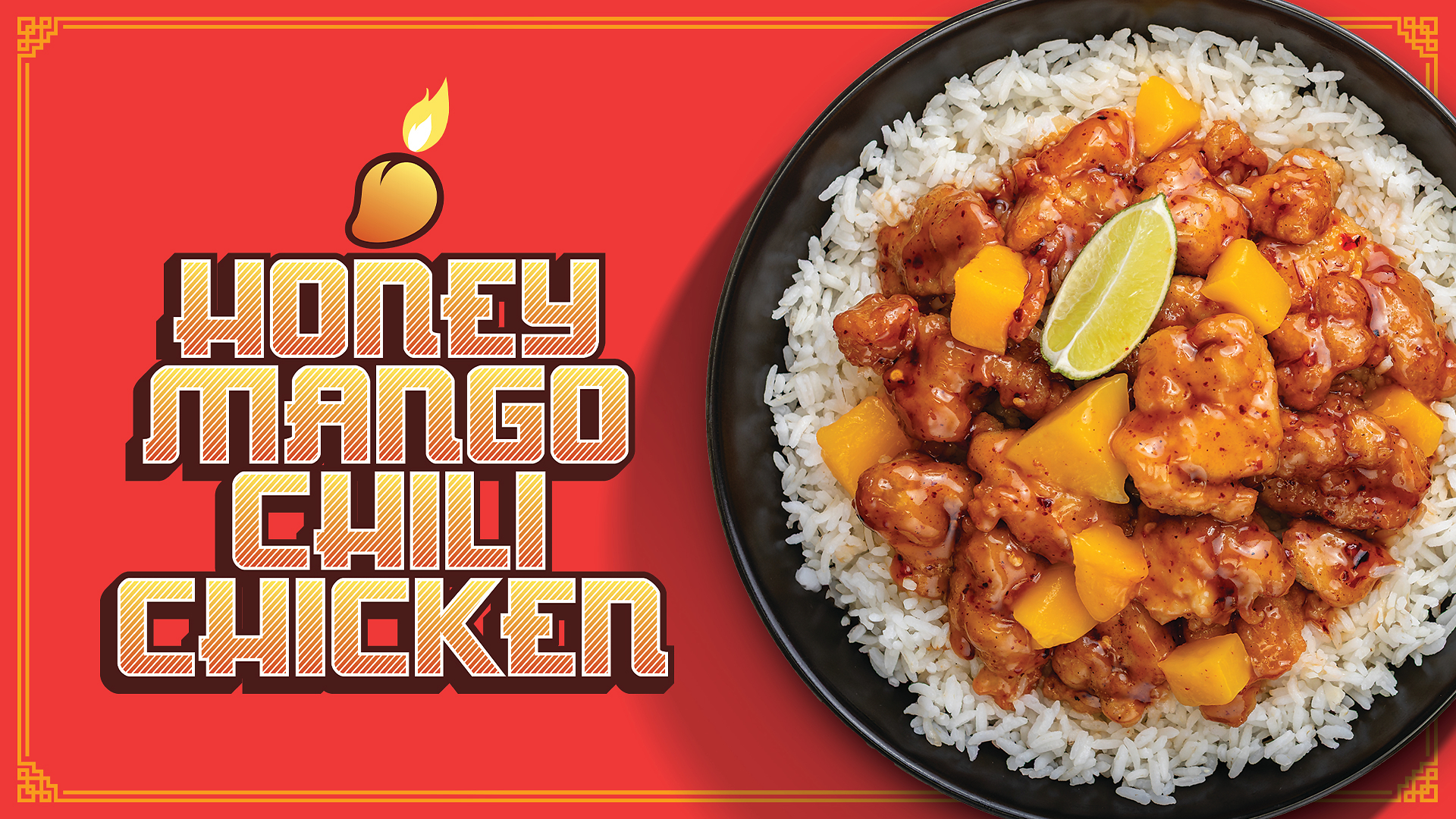
Pei Wei Asian Kitchen activated a limited-time entrée launch on July 22 keyed to National Mango Day — a tactic that converts a low-cost calendar hook into earned media, digital ordering traffic, and in-store trial. The Honey Mango Chili Chicken features crispy breaded chicken and diced mango tossed in a honey mango sauce, finished with chili oil, chili paste, and a lime wedge. It is available for dine-in, to-go, and through the Pei Wei App at participating locations across the brand's nearly 200-unit footprint.
The LTO Strategy
Calendar-driven LTOs have become a reliable frequency tool for fast-casual operators because they carry a built-in news hook without requiring a permanent menu slot or full supply chain commitment. Sweet-heat flavor profiles — mango, chili, honey in combination — have been gaining ground across Asian-inspired and mainstream fast-casual menus for several years, reflecting guest appetite for familiar comfort anchored to a more adventurous heat level. For operators benchmarking their own menu development cadence, Pei Wei's move illustrates how a single sauce-forward build can ladder up to seasonal storytelling, app push notifications, and loyalty program activation simultaneously.
Brian Dreeland, Vice President of Marketing at Pei Wei, framed the launch around the brand's core positioning: "Honey Mango Chili Chicken brings together the sweetness of ripe mango with just the right amount of chili heat, creating a crave-worthy dish." The quote signals an intentional balance between novelty and the brand's existing bold-flavor equity — a useful discipline for any operator calibrating how far to push an LTO away from its core menu DNA.
App and Loyalty Integration
Pei Wei tied the launch to its redesigned app, which features streamlined ordering, improved navigation, and a tiered rewards structure. This is the detail operators and digital vendors should note: the LTO is also a loyalty acquisition and re-engagement event. Brands that treat a limited-time menu item purely as a food story leave conversion on the table. When an LTO is paired with an app update and a rewards unlock, the launch becomes a growth-marketing event with measurable return — new app downloads, lapsed-user reactivation, and incremental check data all become trackable outcomes.
For operators building or refreshing their own digital ordering stack, the connection between LTO cadence and loyalty program velocity is increasingly a procurement consideration, not just a marketing one. POS vendors, loyalty platform providers, and app developers are pitching tighter LTO-to-reward-trigger integrations as a standard feature set. Pei Wei's execution here reflects that direction.
Fast-casual brands competing in the Asian-inspired segment — a category that has seen consistent traffic gains relative to broader quick-service — are under pressure to maintain menu freshness without operational complexity. Sweet-heat and globally inspired flavor trends continue to index well in operator menu research, and a mango-chili build requires limited new ingredient SKUs if a brand already carries chili oil and fresh citrus. That supply-chain simplicity is part of why this flavor architecture travels well across multi-unit systems.
Written by Michael Politz, Author of Guide to Restaurant Success: The Proven Process for Starting Any Restaurant Business From Scratch to Success (ISBN: 978-1-119-66896-1), Founder of Food & Beverage Magazine, the leading online magazine and resource in the industry. Designer of the Bluetooth logo and recognized in Entrepreneur Magazine's "Top 40 Under 40" for founding American Wholesale Floral, Politz is also the Co-founder of the Proof Awards and the CPG Awards and a partner in numerous consumer brands across the food and beverage sector.